
Getting dressed here means working with the weather, not against it. Between the heat, the humidity, and the strong sun, the wrong outfit can leave you sticky and uncomfortable before you even reach the MRT. If you are figuring out dressing for humid weather singapore residents deal with all year round, a few smart fabric and layering choices make a real difference. This guide is practical and inclusive, because staying cool and confident should be possible for every body shape and style.
The core idea is simple. Choose fabrics that breathe, cuts that let air move, and colours and layers that suit both the outdoor heat and the indoor air-conditioning. Once you understand those basics, dressing well becomes far less of a daily battle.
Fabrics That Actually Breathe
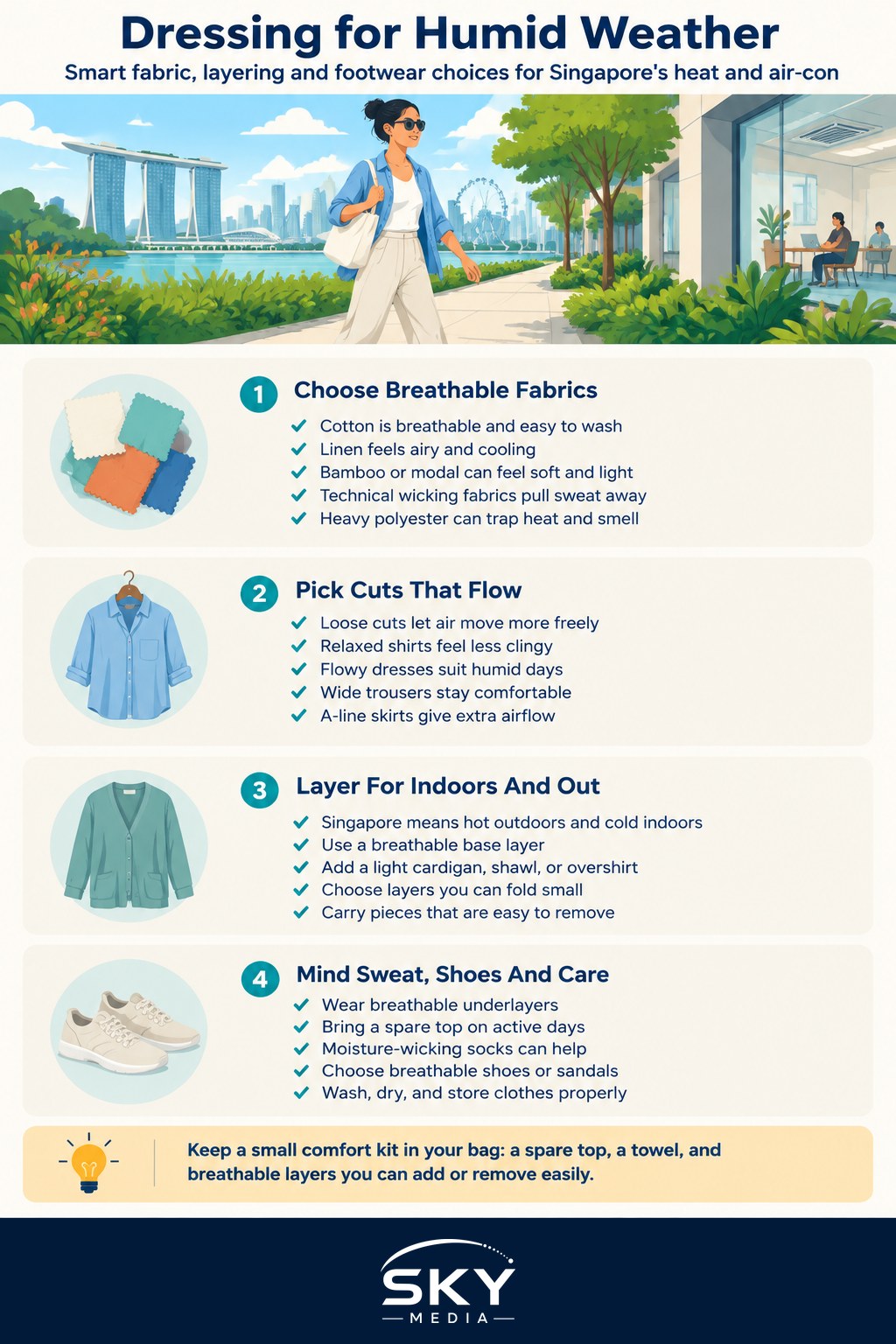
Fabric is the single biggest factor in staying comfortable. Natural and breathable materials let sweat evaporate and air circulate, while some synthetics trap heat and hold onto odour. That said, there are good technical fabrics designed to wick moisture, so it is worth reading labels rather than assuming.
| Fabric | Why it helps | Watch out for |
|---|---|---|
| Cotton | Breathable, soft, easy to wash | Can look creased, dries slower |
| Linen | Very airy, cooling | Wrinkles easily |
| Bamboo or modal | Soft, moisture-friendly | Varies by blend quality |
| Technical wicking | Pulls sweat off skin | Some hold odour over time |
| Heavy polyester | Durable | Can trap heat and smell |
Beyond the material, the weave and weight matter. Lighter, looser weaves feel cooler than dense ones. Loose cuts such as relaxed shirts, flowy dresses, wide trousers, and A-line skirts allow airflow, which keeps you more comfortable than tight clothing that clings when you sweat. Every shape can wear these; it is about finding the drape you like rather than covering up or squeezing in.
Lighter colours reflect more heat and are a sensible choice for long spells outdoors, while darker colours hide sweat marks better. Many people keep a mix so they can pick based on the day ahead.
Layering, Sweat And Odour
Singapore has two climates, the hot outdoors and the cold indoors. Offices, malls, buses, and restaurants can be chilly, so smart layering keeps you comfortable in both. A breathable base layer with a light cardigan, shawl, or overshirt lets you adjust as you move between them. Choose layers you can fold small and carry easily.
Managing sweat and odour is part of dressing well here, and there is nothing embarrassing about it, since everyone sweats in this weather. A few habits help a lot. Wear breathable underlayers, keep a spare top for very active days, and consider moisture-wicking socks to keep feet fresh. Antiperspirant, a small towel, and even a change of shirt in your bag can save the day.
Footwear deserves a mention too. Breathable shoes and sandals reduce sweaty feet, and rotating pairs lets them air out between wears. If you walk a lot, prioritise comfort and grip for sudden rain.
Caring for clothes properly keeps them fresh in the humidity. Washing promptly, drying fully, and storing garments in a ventilated space stops that musty smell. These guides go deeper:
- How to dry clothes in humid weather in Singapore
- How to care for delicate fabrics at home in Singapore
- How to build a travel capsule wardrobe in Singapore
Building A Practical Warm-Weather Wardrobe
You do not need a huge closet, just versatile pieces that mix and match. Think breathable tops, a couple of loose bottoms, a light dress or two, one reliable cardigan for cold interiors, and comfortable shoes. Add sun protection such as a hat and sunglasses for time outdoors. Prices range from budget to premium across our shops and markets, so set a range that suits you and ask retailers about fabric content rather than assuming a fixed cost.
Dressing for humid weather is mostly about breathable fabrics, relaxed cuts, and clever layering for the aircon. Get those right, keep a small comfort kit in your bag, and you can look put together and feel cool no matter how sticky the day gets.
Frequently Asked Questions
What should I wear to stay comfortable when moving between outdoors and aircon? Layer. Wear a breathable base with a light cardigan, shawl or overshirt you can fold small, so you can add it in cold offices, malls and buses and take it off outside.
Are light colours or dark colours better for humid weather? Light colours reflect more heat, so they are sensible for long spells outdoors, while dark colours hide sweat marks better. Many people keep a mix and pick based on how the day looks.
How do I deal with sweat marks and body odour at work? Wear breathable underlayers, use antiperspirant and keep a small towel and a spare top in your bag. Lightweight, loose clothes help, and washing promptly keeps fabric from holding smells.
Does moisture-wicking sportswear work for everyday wear? It can, since technical fabrics pull sweat off the skin, but some hold odour over time. Read the label, wash it promptly and let it dry fully. Heavy polyester tends to trap heat and smell.
What footwear is best for sweaty feet and sudden rain? Choose breathable shoes or sandals with good grip, and rotate pairs so each one airs out between wears. Moisture-wicking socks can keep feet fresher, and a quick-drying pair helps when downpours arrive without warning.
Further reading: A Guide to Hair Accessories for Humid Singapore