

If you have ever hung out a load of washing only to find it still damp and faintly musty a full day later, you know the particular frustration of drying clothes in humidity. In Singapore, where the air is warm and moisture-heavy for much of the year and sudden downpours can arrive without warning, getting laundry properly dry is a real everyday challenge. Damp clothes do not just feel unpleasant, they can develop that stale mildew smell and, over time, encourage mould on fabrics and in your wardrobe.
The good news is that a few adjustments to how you wash, hang and circulate air around your laundry make a big difference. This guide covers what to do in the machine, how to hang for maximum airflow, and the tools that speed things up when the weather refuses to cooperate.
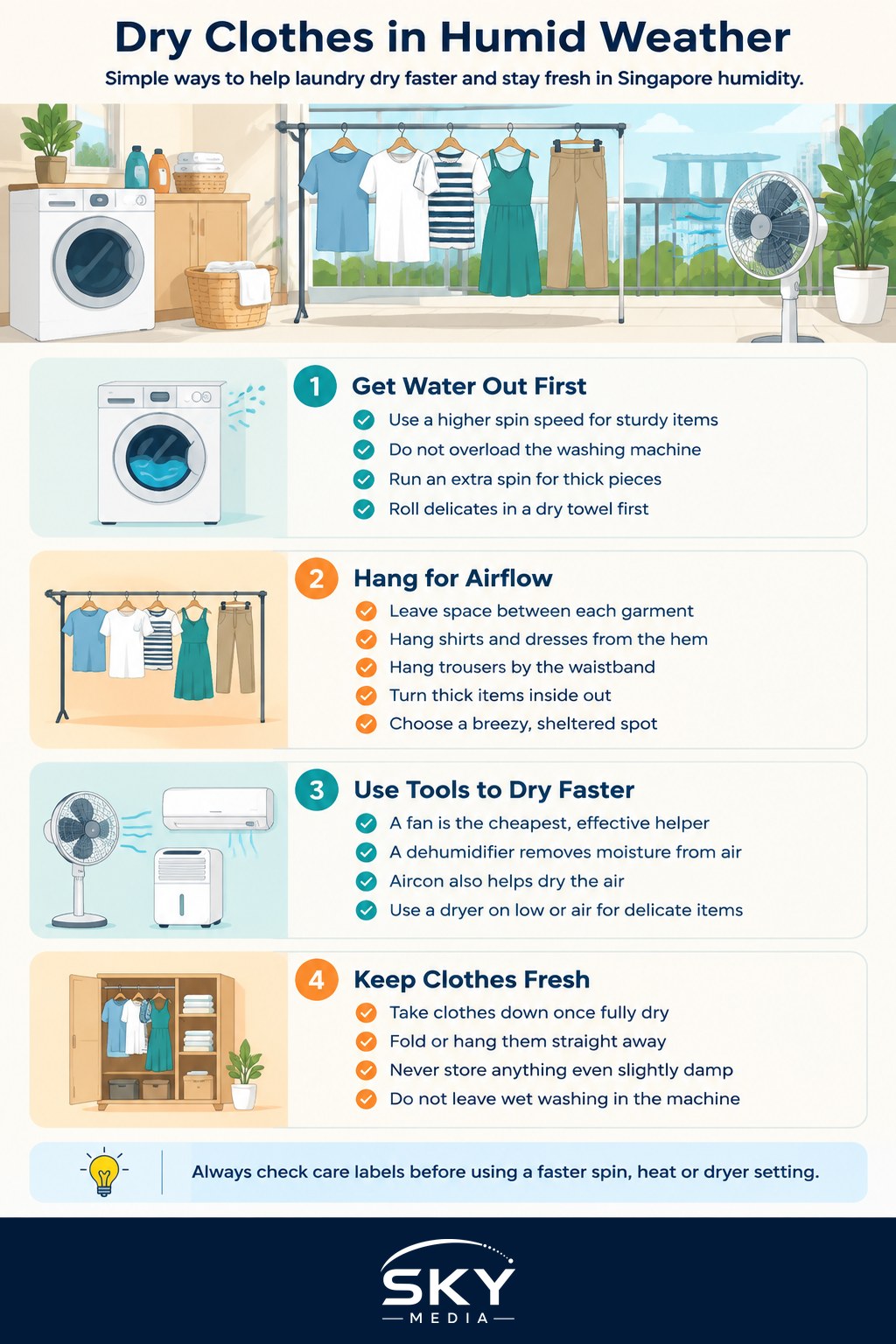
Get More Water Out Before You Hang
Drying starts in the washing machine, and the less water your clothes hold when they come out, the faster they will dry. This is your first and easiest win.
- Use a higher spin speed. A faster final spin extracts far more water, so check your machine settings and choose a higher spin cycle for sturdy items like towels, jeans and cotton. Always check the care label first, as delicates, wool and silk need a gentle spin or none at all.
- Do not overload. A packed machine cannot spin efficiently, so wash slightly smaller loads to let the drum work properly.
- Run an extra spin. For thick or heavy items, a second short spin cycle pulls out even more moisture before hanging.
For delicate pieces that cannot take a hard spin, gently roll them in a clean, dry towel and press to absorb excess water. Never wring silk or wool hard, as it can stretch and damage the fibres. Our guide on how to wash delicates, wool and silk explains the gentle handling these fabrics need.
Hang Smart: Airflow Is Everything
In humid weather, the enemy is still, damp air trapped between garments. The single most important principle is airflow, so your goal is to give every item as much moving air around it as possible.
- Space clothes out. Do not bunch garments together on the rack. Leave a gap between each piece so air can circulate on both sides.
- Hang by the right end. Hang shirts and dresses from the bottom hem, and trousers by the waistband, so thicker seams and waistbands are at the top where air reaches them.
- Turn thick items inside out. Pockets and waistbands hold moisture, and turning jeans and shorts inside out helps these damp spots dry.
- Choose the right spot. A breezy, sheltered balcony, a corridor with a through-draught, or a spot near an open window all beat a closed, still room. If rain threatens, dry undercover rather than risking a soaking.
If you live in an HDB flat or a smaller home with limited outdoor space, indoor drying is often the only option, and that makes airflow even more important. Position your drying rack where air moves rather than in a cramped, closed bathroom.
Speed Things Up With Fans, Aircon and Dehumidifiers
When natural drying is not enough, a few household tools transform your results. These are especially useful during long spells of wet weather.
- A standing or ceiling fan is the cheapest and most effective helper. Point a fan at your drying rack and the constant moving air can cut drying time dramatically. This is often the difference between clothes that dry and clothes that stay damp.
- A dehumidifier pulls moisture out of the air, which is exactly what you need. Run one in a closed room with your drying rack and clothes dry noticeably faster, with the bonus of protecting the room from damp.
- Air conditioning dries the air as it cools, so drying clothes in an air-conditioned room, ideally with a fan running too, works well.
- A clothes dryer, if you have one, is the fastest option, but always check care labels first, as heat can shrink or damage many fabrics. Use a low or air setting for anything delicate.
Whatever method you use, the aim is to get clothes fully dry as quickly as possible. Clothes that stay damp for a long time are where that musty smell and mould begin.
Avoiding the Damp Smell and Mould
Even dry-looking clothes can carry a stale odour if they took too long to dry or sat crumpled while still slightly damp. To keep laundry fresh:
- Take clothes down and fold or hang them as soon as they are fully dry, rather than leaving them piled up.
- Make absolutely sure items are bone dry before putting them away, since even slightly damp clothes in a closed wardrobe invite mildew.
- Do not leave wet washing sitting in the machine, as it sours quickly in the warmth. Hang it promptly.
If your clothes already smell musty, our guide on how to remove odours from clothes and shoes walks through how to freshen them. And because humidity is hard on stored clothing too, our guide to storing clothes in humid Singapore is worth reading to keep your wardrobe mould-free. For a broader routine, see our overview on how to care for your clothes in Singapore.
The Bottom Line
Drying clothes in humidity is all about removing as much water as early as possible and then keeping air moving around every garment. Spin well, hang with generous spacing, and reach for a fan, dehumidifier or aircon when the weather is against you. Take clothes down the moment they are dry and never store anything even slightly damp. Build these habits into your routine and the humid climate stops being a laundry headache, leaving your clothes fresh, dry and ready to wear. As always, check each garment’s care label before choosing a spin speed or heat setting.
Frequently Asked Questions
How long should clothes take to dry indoors in Singapore? It varies with the fabric, room airflow and weather, so there is no fixed time. Thick items like jeans and towels take longest. With a fan or dehumidifier running, drying is noticeably faster, and clothes should be bone dry before they go into the wardrobe.
Is it okay to dry clothes in an air-conditioned room? Yes, it works well. Air conditioning dries the air as it cools, so a drying rack in an air-conditioned room, ideally with a fan running too, speeds things up. Give each garment space so air can move around it.
Can I use a clothes dryer for all my laundry? Not for everything. A dryer is the fastest option, but heat can shrink or damage many fabrics, so check each care label first. Use a low or air setting for delicates, and air dry items like wool and silk.
What can I do if it rains for days and nothing dries? Maximise indoor airflow: aim a fan at the rack, run a dehumidifier in a closed room, space the clothes out, and use a higher spin speed in the machine. Wash smaller loads so each item dries quicker.
Why do my clothes still smell musty even after washing? They probably took too long to dry, which lets bacteria and mildew grow. Improve the spin, give clothes more airflow, and never leave wet washing sitting in the machine. Make sure items are fully dry before storing.
Further reading: Dry Cleaning in Singapore: What to Send Out and What to Wash · How to Stop Clothes Clinging in Singapore Humidity · How to Stop White Clothes Turning Yellow