
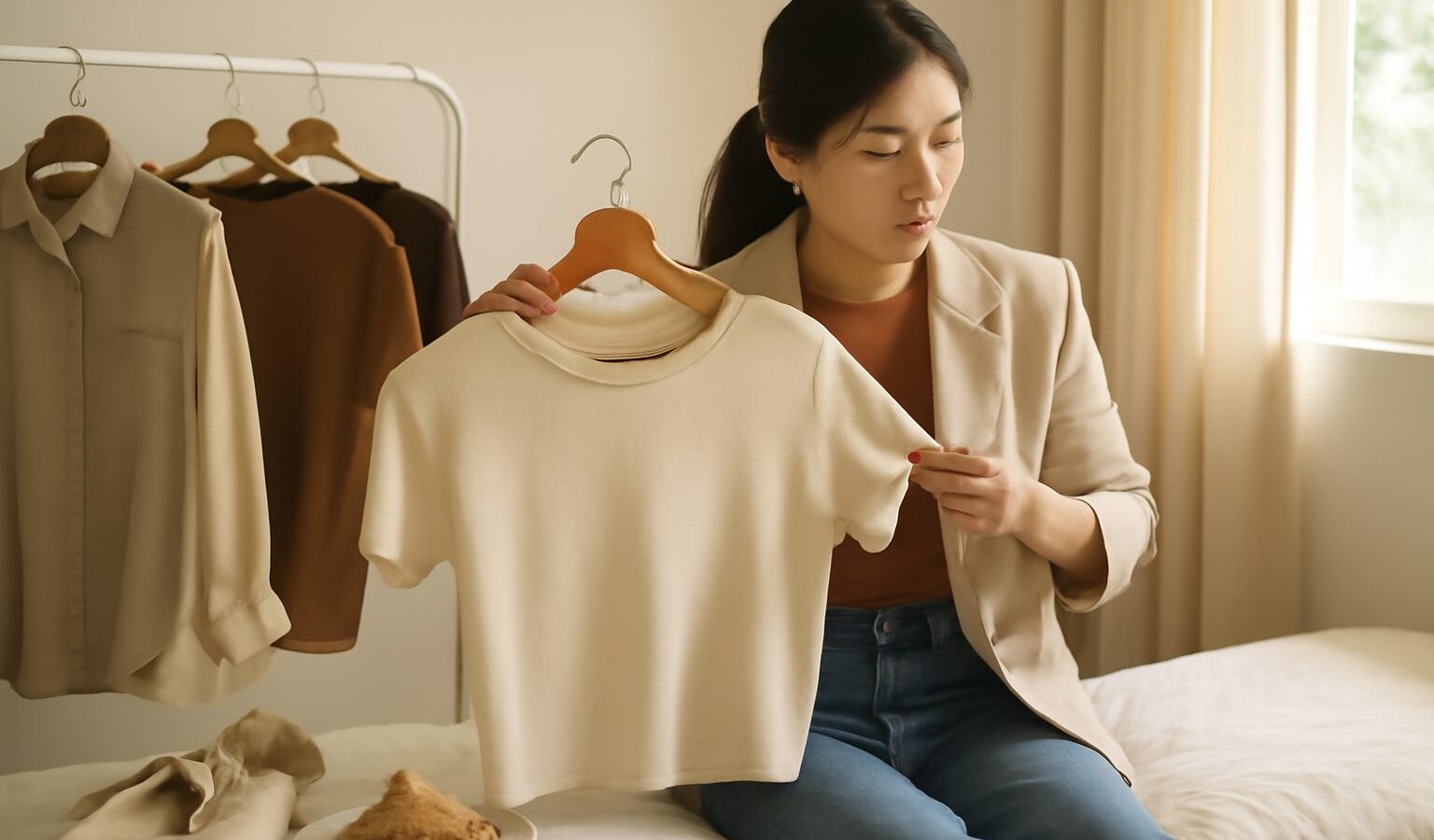
Dressing on a student budget is less about how little you spend and more about how well each dollar works. With limited money, allowances, and part-time income stretched thin, the winning approach is a small wardrobe of hard-working pieces, careful buying, and clothes that last. This guide lays out the practical tactics that let you look put together in Singapore without draining your account.
Start With Versatile Basics, Not Statement Pieces
The single biggest budget mistake is buying exciting, specific items that only work in one outfit. A loud printed shirt might be cheap, but if it pairs with nothing you own, its true cost per wear is enormous. Versatile basics do the opposite: they combine with almost everything, so a handful of them generates dozens of outfits.
For most students, a workable core looks like this:
- Two or three plain tees in neutral colours that suit the climate.
- One pair of well-fitting jeans and one pair of neutral trousers or a versatile skirt.
- A plain button shirt or blouse for anything slightly more formal.
- One lightweight layer, such as an overshirt or cardigan, for cold lecture halls and MRT rides.
- One pair of clean, plain sneakers and one slightly smarter shoe.
Build these first. Once the neutral base is solid, one or two cheaper statement pieces go a long way, because they now have a full wardrobe to lean on.
Where to Buy for Less
You do not need premium stores to dress well. The trick is matching the source to the item. Secondhand and thrift channels are unbeatable for value, especially for outer layers and denim, where older construction is often sturdier. Fast, affordable high-street shops are useful for fresh basics in the exact fit you need. And end-of-season sales let you buy the quality piece you wanted at a fraction of its opening price if you can wait.
If you are new to buying preloved, our guide to thrifting in Singapore and the walkthrough on buying secondhand clothes on Carousell both cover how to check condition and haggle politely.
Judge Every Purchase by Cost Per Wear
Price on the tag tells you almost nothing about value. What matters is cost per wear: the price divided by the number of times you will realistically use it. A $20 top worn twice costs $10 each time. A $60 pair of jeans worn twice a week for two years costs pennies per wear. Training yourself to think this way changes what looks cheap and what looks expensive.
| Item | Price paid | Times worn | Cost per wear |
|---|---|---|---|
| Trendy printed shirt | $25 | 4 | $6.25 |
| Plain everyday tee | $18 | 100 | $0.18 |
| Secondhand denim jacket | $30 | 80 | $0.38 |
| Going-out top for one event | $40 | 2 | $20.00 |
The pattern is clear. The cheapest items on the tag are frequently the most expensive per wear, while a slightly pricier basic you reach for constantly becomes almost free over time. For a deeper look at the maths, see our full explainer on cost per wear.
Care Is the Cheapest Upgrade There Is
Nothing wrecks a student budget faster than replacing clothes that failed early. Most do not wear out; they are worn out by careless laundering. In Singapore’s humidity, good care also keeps clothes fresh and mould-free between wears.
A few habits that cost nothing and add years:
- Wash less, and cooler. Frequent hot washes fade colour and break down fibres. Air out and spot-clean where you can.
- Turn garments inside out to protect prints and the outer face of denim.
- Skip the tumble dryer when possible. Line drying is gentler, free, and suits our climate.
- Deal with stains quickly. A fresh stain lifts easily; a set one may be permanent.
- Store dry. Damp cupboards breed mildew, so let everything dry fully before it goes away.
Our guide to caring for your clothes in Singapore goes further on humidity, storage, and stains.
Fit Beats Price Every Time
An inexpensive item that fits well looks far better than an expensive one that does not. Fit is where a modest budget can quietly outperform. When you shop, prioritise the shoulders and length on tops, and the waist and rise on trousers, since these are hard to alter. A simple hem or taken-in waist at a neighbourhood tailor is cheap and transforms a garment. Do not underestimate how much a small alteration lifts a thrifted find that was almost right.
Buy Slowly and Avoid the Trend Trap
Trends move fast and are designed to make last season feel wrong. On a tight budget, chasing them is a losing game. Aim for a wardrobe that is mostly quiet and lasting, with only a small, cheap slice given over to whatever is current. That way, when a trend passes, you have lost a few dollars rather than half your cupboard.
Before any purchase, pause and ask three questions: Do I already own something that does this job? Can I picture three outfits with it? Will I still wear it next year? If the answers are shaky, wait. The best budget discipline is simply buying less, but buying it better.
Looking Sharp Without the Spend
Dressing well on a student budget comes down to a repeatable formula: a small core of versatile basics, bought carefully from the right sources, judged by cost per wear, kept fit-correct, and looked after so it lasts. None of it requires a big allowance. What it requires is patience and a bit of thought, both of which are free.
Give yourself a season to build the core, then coast. Once the foundation is there, you will spend far less, waste almost nothing, and still walk into any lecture, interview, or night out looking like you tried. That is the quiet advantage of doing more with less.
Explore more: A Guide to Thrifting in Singapore · Understanding Cost Per Wear · Best Places for Affordable Fashion in Singapore