
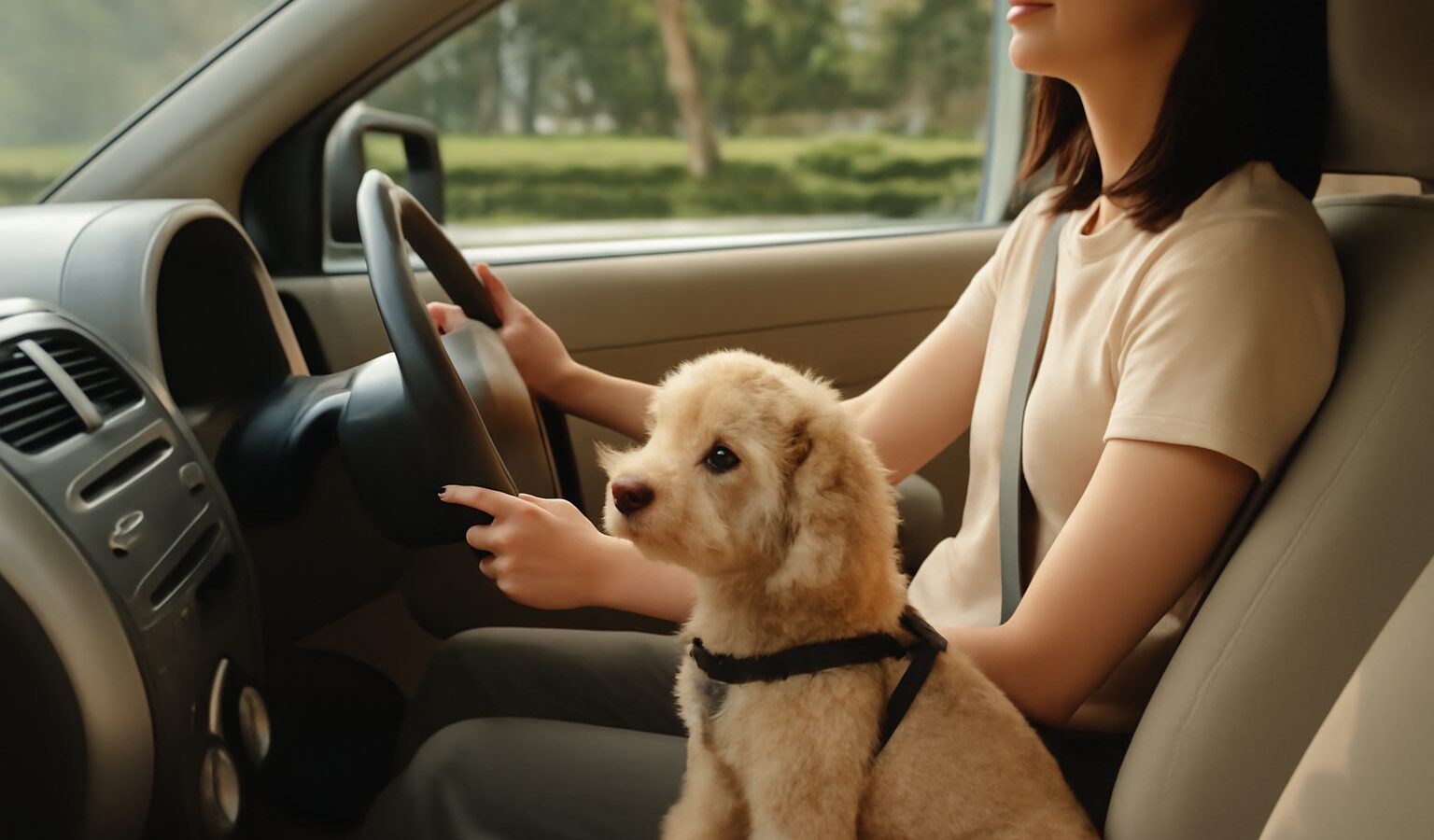
Whether it is a trip to the vet or a family outing, driving with your pet singapore owners do it all the time, and doing it safely protects both your animal and everyone in the car. An unrestrained pet is a genuine hazard. It can distract you, get hurt in a sudden stop, or become a flying object in a crash. With the right restraint and a few calm habits, though, car journeys can be safe and even enjoyable for your furry passenger. This guide covers how to travel with pets sensibly in our climate.
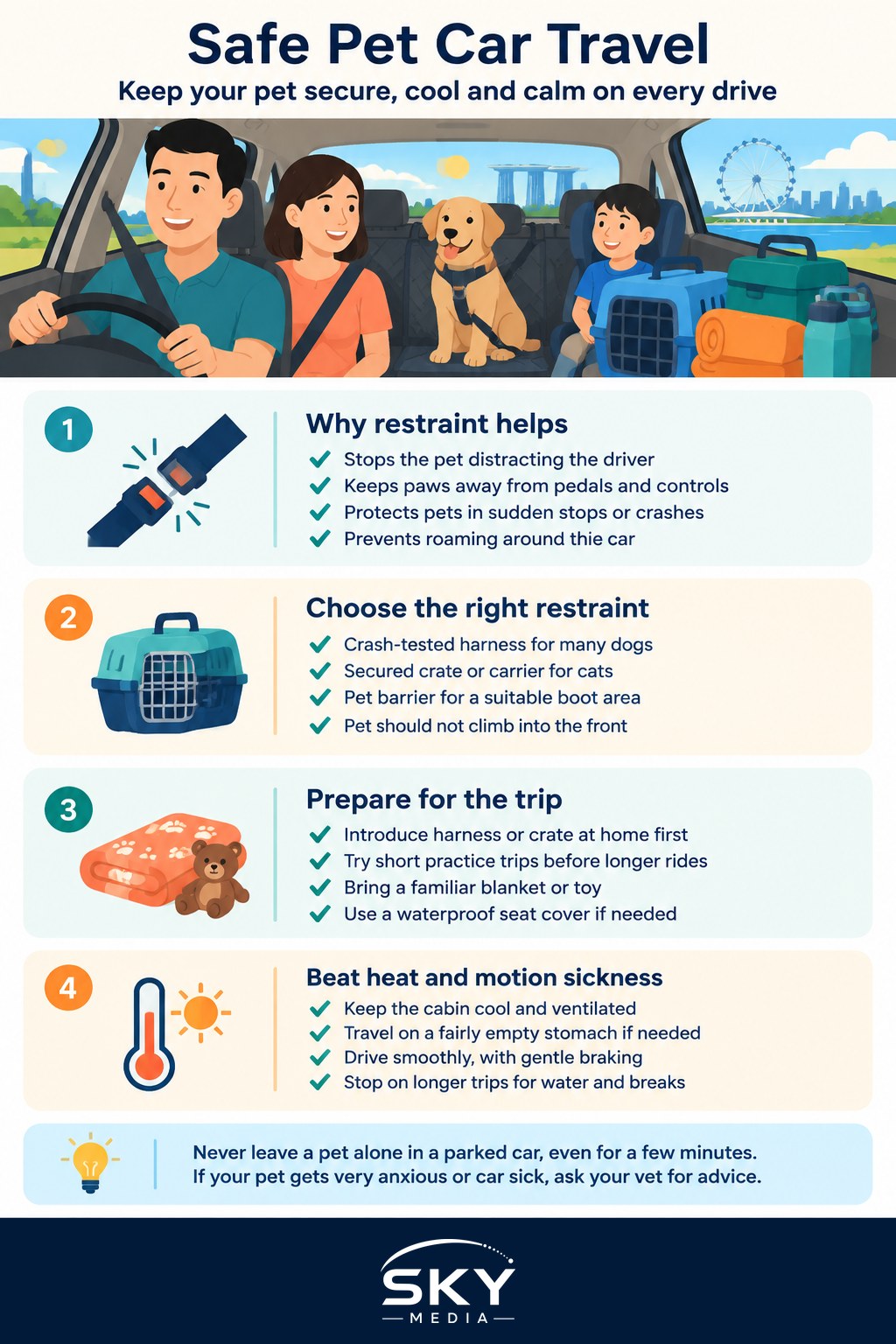
Why Restraint Matters
A loose pet in a moving car is a risk for everyone. A dog that climbs into your lap, a cat that wriggles under the pedals, or an animal that panics can all cause you to lose focus at exactly the wrong moment. In a collision, an unrestrained pet can be badly injured and can also strike other passengers with real force.
Restraint solves several problems at once. It keeps the animal secure, stops it from distracting the driver, and keeps it away from the pedals and controls. The main options are:
- A crash tested harness that clips into a seatbelt buckle, ideal for many dogs.
- A secured crate or carrier, which suits cats and smaller animals well.
- A pet barrier that keeps a dog in the boot area of a suitable vehicle.
Whichever you choose, the pet should not be able to roam freely, climb into the front, or be thrown around. Never let a dog hang its head out of the window either, however much it enjoys it, since debris and sudden movements can injure it.
Preparing Your Pet and the Car
A little preparation makes journeys far smoother, especially if your pet is not used to the car. Introduce the crate or harness at home first, so it feels familiar rather than frightening. Short practice trips help nervous animals learn that the car is nothing to fear.
Before you set off, think about comfort and hygiene. A familiar blanket or toy is reassuring, and a waterproof seat cover saves your upholstery from fur, mud, and the odd accident. Keep the cabin cool, because our heat builds up fast, and make sure fresh air or air conditioning reaches your pet.
The single most important safety rule in our climate deserves its own line. Never leave a pet alone in a parked car, even for a few minutes and even with a window cracked. Temperatures inside a car rise dangerously fast in Singapore’s sun and can be fatal to an animal very quickly. If you need to pop out somewhere pets cannot go, bring someone to stay with the animal or leave it at home.
Managing Car Sickness and Stress
Some pets, particularly younger ones, get anxious or car sick. Whining, drooling, panting, and restlessness are common signs. A calm approach usually helps more than anything.
- Travel on a fairly empty stomach for pets prone to sickness, but keep water available.
- Keep the cabin cool and well ventilated.
- Drive smoothly, avoiding harsh braking and sharp corners.
- Take breaks on longer trips so your pet can settle and relieve itself.
- Stay calm yourself, since animals pick up on a tense driver.
For animals that find the car very stressful, it is worth speaking to your vet about ways to help. Building up gradually from very short trips is often the most effective long term fix.
Longer Trips and Crossing the Causeway
If you plan a longer journey or a trip up to Malaysia, extra planning pays off. Bring water, a travel bowl, waste bags, and any medication your pet needs. Plan stops where your pet can stretch and drink, and never rush an anxious animal.
Travelling across the border with a pet involves separate rules and paperwork on animal movement, which sit outside the scope of driving advice. Check the current requirements with the relevant authorities well ahead of time so you are not caught out at the checkpoint. Our guide on building a car emergency kit is worth a look before any longer drive, and what to check before a long drive helps make sure the car itself is ready.
The Bottom Line
Driving with your pet is easy and safe once you make restraint a habit. A crash tested harness, a secured crate, or a proper barrier keeps your animal safe and keeps you focused on the road. Add a cool cabin, smooth driving, and the absolute rule of never leaving a pet in a parked car, and journeys become calm for everyone. With a little preparation and patience, even a nervous pet can learn to travel happily. For any anxiety or car sickness that does not improve, your vet is the best person to ask.
Frequently Asked Questions
Can my dog sit on the front seat of the car? It is safer in the back, secured with a crash-tested harness or a crate. A dog in the front can distract you, get in the way of the pedals and controls, or be hurt if an airbag deploys. Keep the animal restrained at all times.
Is it okay to leave my pet in the car for just a few minutes? No, never leave a pet alone in a parked car, even with a window cracked. Temperatures rise dangerously fast under Singapore’s sun and can be fatal very quickly. Bring someone to stay with the animal or leave it at home.
How do I get a nervous cat used to car travel? Introduce the carrier at home first so it feels familiar, then build up from very short trips. A familiar blanket helps, and so does smooth driving. If your cat stays very stressed, ask your vet for advice.
What can I do about my pet’s car sickness? Travel on a fairly empty stomach while keeping water available, keep the cabin cool and drive smoothly. Take breaks on longer trips. If it does not improve, your vet is the best person to ask.
What do I need to bring for a longer trip with my pet? Pack water, a travel bowl, waste bags and any medication your pet needs. Plan stops where they can stretch and drink. For crossing the border, check animal movement rules with the relevant authorities well ahead.
Further reading: Pet Taxis and Pet Transport Services in Singapore · How to Remove Pet Fur and Smells From Your Car