

For most expectant mothers, driving while pregnant singapore roads present no special problem, and staying mobile is a big part of keeping life normal through the months ahead. The key is a few sensible adjustments, above all wearing your seatbelt correctly, so both you and your baby are protected. This article is general information, not medical advice. Every pregnancy is different, so any concerns about driving, seatbelts, or comfort should be discussed with your own doctor, who knows your situation best.
Wearing Your Seatbelt the Right Way
The most important safety point is also the most misunderstood. You should keep wearing your seatbelt throughout pregnancy. Skipping it is far more dangerous than any perceived risk from the belt itself. What matters is wearing it correctly so it protects you without pressing on the bump.
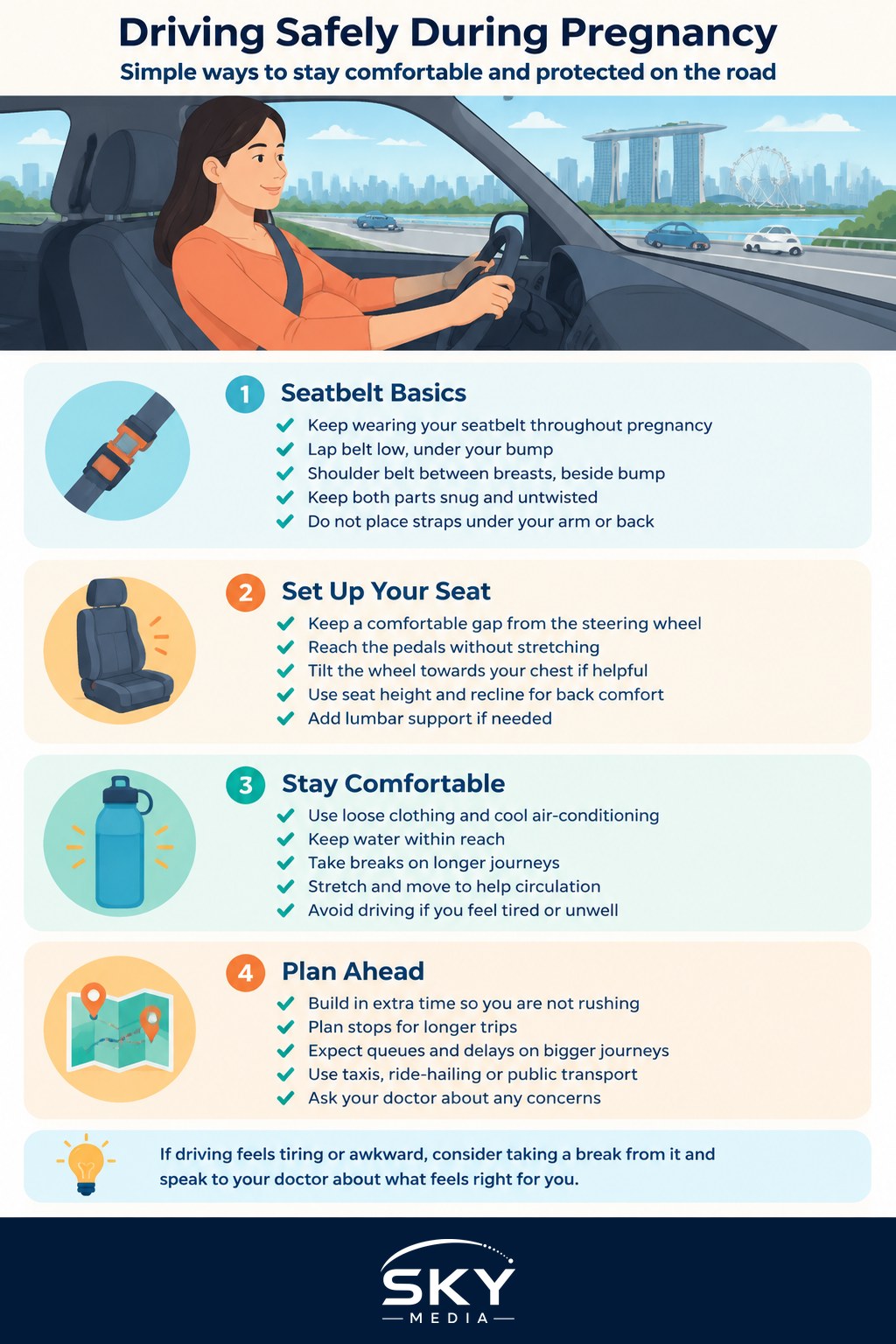
Position the belt so it works around your bump, not across it:
- Place the lap portion low, under your bump, across your hips and the tops of your thighs.
- Never let the lap belt ride up across the middle of your belly.
- Run the shoulder belt between your breasts and to the side of the bump.
- Keep both parts snug, with no slack and no twists.
- Do not tuck the shoulder strap under your arm or behind your back.
The idea is that in a sudden stop, the strong bones of your hips and shoulders take the load, not your abdomen. If the belt ever feels like it is sitting wrongly, adjust your seat and posture rather than loosening the belt. Any specific worries about belt positioning are worth raising with your doctor.
Adjusting Your Seat and Position
As your bump grows, your driving position needs small tweaks for both comfort and safety. The steering wheel and airbag are designed to protect you, but you want sensible distance from them.
Aim to keep a comfortable gap between your bump and the steering wheel while still reaching the pedals easily. Many drivers find tilting the wheel down toward the chest rather than the belly helps. If your car lets you, adjust the seat height and recline slightly to ease pressure on your back.
Comfort matters more than you might expect, since a cramped, aching drive is a distracted drive. A small cushion for lumbar support, loose clothing, and the air conditioning set to a comfortable level all help, especially in our heat. Keep water within reach and take breaks on longer journeys to stretch and move, which also helps circulation.
Managing Comfort, Fatigue, and Longer Drives
Pregnancy can bring tiredness, nausea, and the need for more frequent breaks, all of which affect driving. Listen to your body rather than pushing through.
- Plan longer journeys with regular stops to stretch, walk, and use the toilet.
- Avoid driving when you feel very tired, faint, or unwell.
- Keep snacks and water handy to steady energy and hydration.
- Build in extra time so you are never rushing, especially near your due date.
If you drive across the Causeway or take longer trips, factor in queues and the chance of delays, and make sure you can stop comfortably. Staying alert is just as important now as ever, and our guide on staying alert on long drives has useful tips that apply well during pregnancy.
There may come a point, particularly in the later weeks, when driving feels awkward or uncomfortable. There is no fixed rule about when to stop, and it is a personal decision best made with your doctor’s input. Many mothers naturally drive less as the due date approaches and lean on other options.
Planning Ahead and Alternatives
It helps to think ahead about how you will get around if driving becomes uncomfortable or you would simply rather not. Singapore’s transport network makes this easy for many trips.
Ride hailing, taxis, and our public transport can cover a lot of journeys without the strain of driving and parking. Concession and priority seating on the MRT and buses can make these trips more comfortable too. Our guide on transport for families and seniors covers gentler ways to get around when driving is not ideal.
If you do keep driving, keep your car in good order so you are never stranded. A reliable, well maintained car is one less thing to worry about. Our article on what to check before a long drive is a handy pre trip routine.
The Bottom Line
Driving while pregnant is safe and normal for most mothers, provided you wear your seatbelt correctly with the lap strap low under the bump, adjust your seat sensibly, and stop when you feel tired or unwell. Because every pregnancy is different, treat this as general guidance and speak to your doctor about any concerns, from seatbelt positioning to when it feels right to stop driving. Look after your comfort, give yourself extra time, and you can stay mobile and relaxed through the months ahead.
Frequently Asked Questions
Is it safe to keep driving in the third trimester? Many mothers continue to drive late in pregnancy, but there is no fixed rule on when to stop. It is a personal decision best made with your doctor. Many drivers naturally drive less as the due date nears and lean on alternatives.
What if the seatbelt feels uncomfortable on my bump? Adjust your seat and posture rather than loosening or removing the belt. The lap part should sit low under the bump across the hips, and the shoulder part between the breasts. If discomfort continues, raise it with your doctor.
Should I worry about the airbag when my bump gets bigger? Airbags are designed to protect you, but you want a sensible gap between your bump and the steering wheel while still reaching the pedals comfortably. Tilt the wheel towards your chest rather than your belly. Ask your doctor if you have concerns.
When should I avoid driving during pregnancy? Avoid driving when you feel very tired, faint, nauseous or unwell. Pregnancy can bring fatigue and the need for frequent breaks, so listen to your body. Build in extra time and use a taxi or public transport on bad days.
What are my options if driving becomes uncomfortable? Taxis, ride-hailing and public transport can cover many trips, and priority seating on the MRT and buses helps comfort. Planning these alternatives early means you are not stuck when driving no longer feels right.
Further reading: Travelling While Pregnant: A Practical Guide