
If you have been searching for drying rack Singapore tips, start here. Most people think the problem with laundry in a small flat is the rack. Often it is the way the rack is used. A drying rack in Singapore has to work against high humidity, sudden afternoon storms and very little floor space, so where you put it, how you load it and when you wash matter as much as the model you bought.
This guide is about getting better results from the setup you already have. If you are still choosing hardware, see our guides on picking a clothes drying rack for Singapore flats and choosing a ceiling laundry rack for indoor drying.
Why Clothes Dry Slowly Indoors Here
Clothes dry when water evaporates from the fabric and moving air carries that moisture away. In Singapore, the air is already holding a lot of moisture for much of the year, so evaporation is slower than in a dry climate. Indoors, the air near a crowded rack quickly becomes even more humid, and if nothing moves it along, drying stalls.
That stalled moisture is what causes the sour, musty smell many people notice on towels and thick T-shirts. The smell usually comes from bacteria growing while fabric stays damp for too long. The goal of every tip below is simple: shorten the time your clothes spend wet.
Find the Best Spot in Your Flat
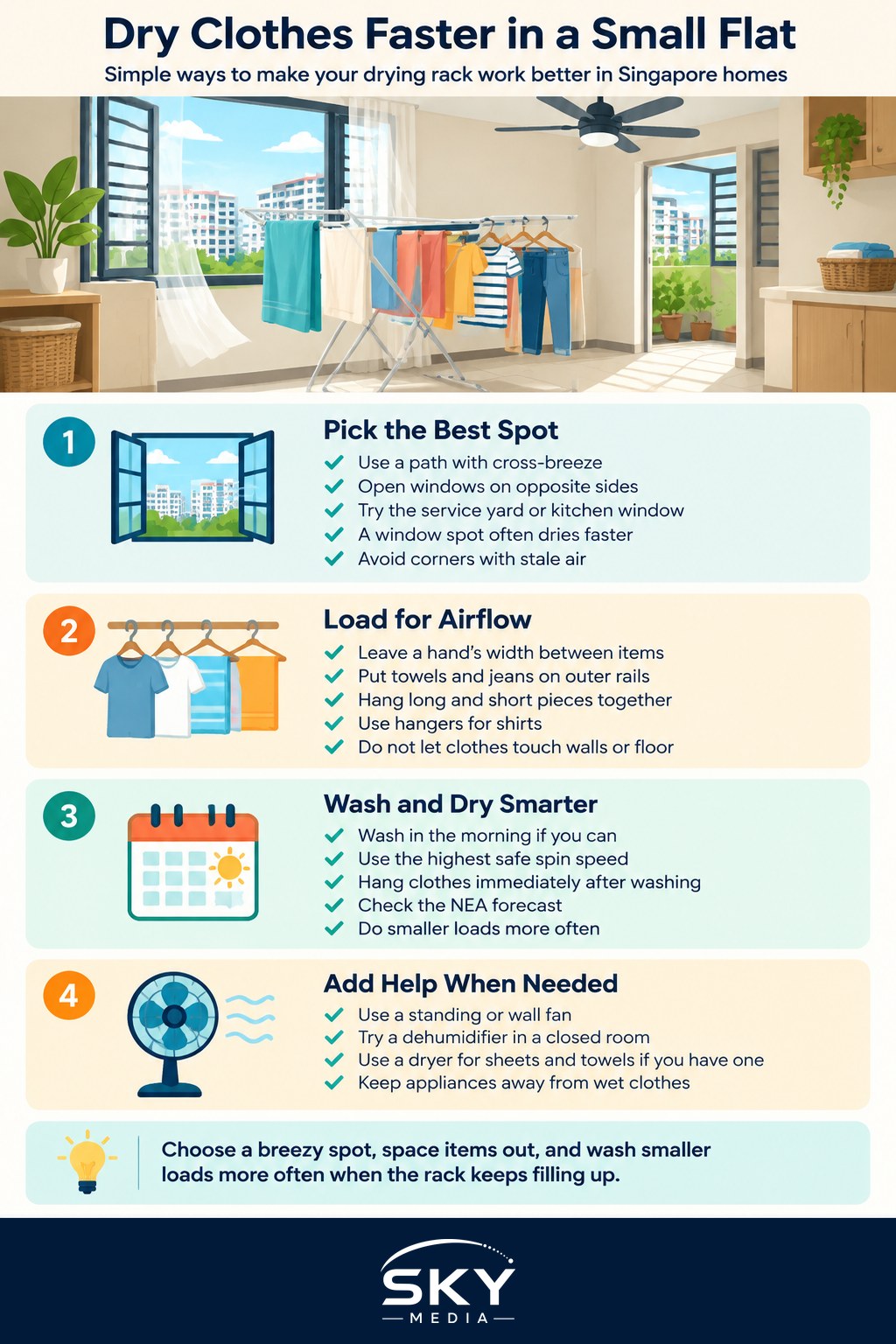
Before moving anything, spend a day noticing where air naturally flows in your home. Open windows on opposite sides and see where you feel a breeze. That cross-ventilation path is prime drying space.
Common options in HDB flats and small condos:
- Service yard or kitchen window. Many HDB flats have bamboo pole holders outside the kitchen or service yard window. They get excellent airflow but are exposed to rain. Always secure poles properly and never overload them, since items falling from height are dangerous. Check HDB guidance on the safe use of these holders.
- Near a window in the living room. A spot by an open window with a cross breeze often dries clothes faster than a dim corner of the service yard with no air movement.
- Bathroom with an exhaust fan. Useful for a few small items, but bathrooms are already humid, so only use this if the fan runs while clothes hang.
- Bedroom with aircon. Air conditioning removes moisture from the air, so a rack in an air-conditioned room overnight can work well. Keep the door closed and do not block the unit’s airflow.
- Ceiling rack in the yard. It saves floor space and uses the warmer air near the ceiling, but only helps if there is still some air movement around it.
Avoid tucking a rack behind a door, into a corridor nook with no window, or right against a wall. Those spots trap moist air around the fabric.
Load the Rack for Airflow, Not Capacity
A rack advertised to hold a full load will hold it, but it may not dry it. Spacing is the single biggest improvement most households can make.
- Leave a gap between items. Aim for roughly a hand’s width between garments so air can pass through.
- Hang heavy items on the outer rails. Towels, jeans and hoodies need the most airflow. Put them where air hits first, and keep light items like underwear and socks in the middle.
- Alternate long and short pieces. Hanging a long towel next to a short top creates a gap at the bottom where air can circulate.
- Turn thick items inside out. Jeans pockets and hoodie linings dry faster when exposed. Flip them halfway through if you are home.
- Use hangers for shirts. A shirt on a hanger dries with both sides open to the air, while a shirt folded over a rail has a double layer that stays wet in the middle.
- Do not let items touch the floor or wall. Contact points stay damp the longest.
If the rack is constantly overloaded, the honest fix is to wash smaller loads more often rather than buying a bigger rack.
The table below compares common setups so you can match the rack position to what you are drying.
| Setup | Best for | Airflow tip | Watch out for |
|---|---|---|---|
| Bamboo poles outside the window | Bedsheets, towels, large loads | Space items so the wind passes through | Rain, overloading and falling items |
| Floor rack by an open window | Daily clothes for one or two people | Place it across the breeze path, not along a wall | Blocking walkways in a small living room |
| Ceiling rack in the service yard | Shirts on hangers, light loads | Run a fan below on still days | Heat and stale air if the yard is enclosed |
| Floor rack in an aircon room | Overnight drying during wet spells | Keep the door closed and leave space around the unit | Higher electricity use if run just for drying |
Build a Daily Laundry Routine
Timing makes a real difference in a hot, humid city.
- Wash in the morning. Clothes hung early get the warmer, breezier part of the day. A load started late at night sits damp until morning.
- Use the highest safe spin speed. A stronger spin removes more water before the clothes reach the rack. Check care labels for delicate items.
- Hang immediately. Wet clothes left in the drum start to smell within hours.
- Check the weather forecast. The National Environment Agency (NEA) provides forecasts through its website and the myENV app. On days with afternoon thunderstorms expected, start indoors or bring outdoor items in early.
- Do small daily loads. For a couple or small family, a small load every day or every other day spreads clothes across the rack instead of overwhelming it once a week.
- Rotate halfway. If you can, move the wettest items to the best airflow spot after a few hours.
Add Airflow When the Air Is Still
On still, overcast days or during the monsoon seasons, add a little help:
- A standing or wall fan pointed across the rack, on a low or medium setting, speeds drying noticeably and uses relatively little electricity.
- A dehumidifier in a closed room pulls moisture out of the air and works well for small flats with limited window space. Empty the tank regularly and clean the filter.
- A tumble dryer or washer dryer is the backup for bedsheets and towels during long wet spells, if you have one.
Keep fans and electrical appliances well away from dripping clothes and wet floors.
Keep the Space Tidy
In a small flat, a rack that never folds away becomes permanent furniture. Fold or collapse it once the load is dry, and give it a fixed home such as the service yard or beside the washing machine. Ideas from our guide to maximising storage in a small HDB flat can help you find a slot for it.
A few habits keep the rack itself in good shape:
- Wipe down rails every few weeks, since dust and detergent residue can mark clean clothes.
- Check joints and hinges for rust if the rack lives near a window.
- Replace cracked plastic clips before they snap and drop items, especially on outdoor poles.
Quick Fixes for Common Problems
- Towels still smell after drying. Wash smaller loads, avoid overdosing detergent, and hang towels fully open on the outer rails.
- Clothes take more than a day to dry. Move the rack into a breeze path or add a fan.
- Mould spots on walls near the rack. The room needs more ventilation. Open windows, run an exhaust fan or use a dehumidifier.
- Rack blocks the walkway. Switch to smaller daily loads so the rack can fold away sooner.
With the right spot, sensible spacing and a simple routine, even a small rack in a small flat can keep up with a busy household.