

Finding the right clothes drying rack in Singapore is less about looks and more about two stubborn facts: the air is humid almost all year, and most homes have very little spare floor space. A rack that works well in a dry, roomy house elsewhere can leave your shirts damp and musty here, or end up blocking the only walkway in your service yard.
This guide compares the main types of racks you will see in shops and online, explains which suit which kind of home, and lists the practical checks worth doing before you pay. For techniques on getting laundry dry on wet days, see our guide on how to dry clothes in humid weather.
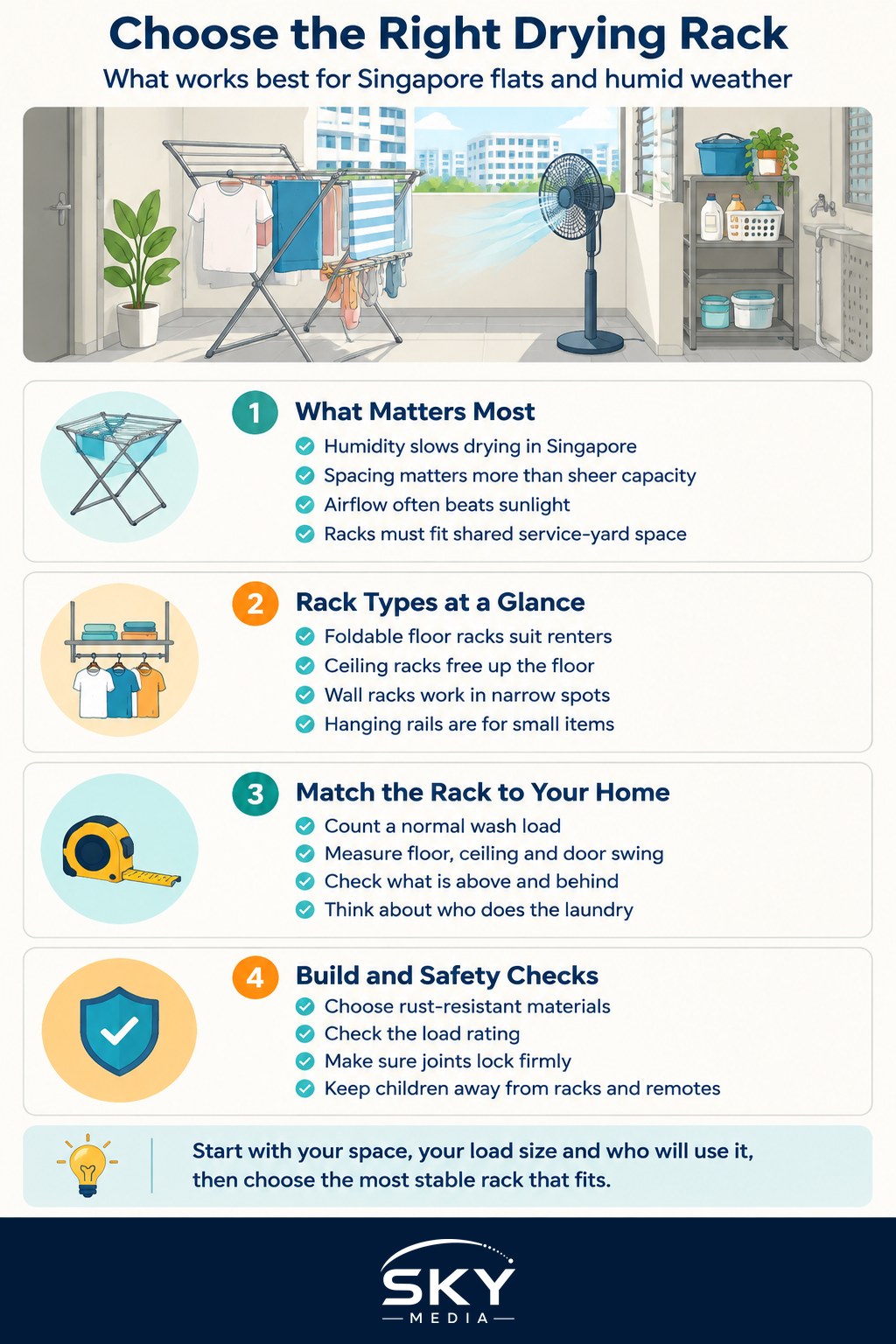
Why Drying Racks Work Differently in Singapore Homes
Clothes dry when moisture can leave the fabric and move away. In Singapore, the surrounding air is often already holding a lot of moisture, so evaporation is slower than many newcomers expect. That changes what makes a good rack:
- Spacing matters more than capacity. A rack that crams twenty items close together will dry slowly because damp air gets trapped between garments. Fewer items with gaps between them often dry faster overall.
- Airflow beats sunlight on many days. During monsoon months or in units that face away from the sun, a rack placed near a fan, an open window or a dehumidifier may outperform one left in a dim corner of the yard.
- Materials face constant damp. Steel that is not properly coated can rust, and rust marks transfer onto clothes. Plastic joints can become brittle with heat and UV over time.
- Space is shared with other uses. In many HDB flats the service yard also holds the washing machine, storage and sometimes a water heater, so a rack must fit around what is already there.
Keeping these points in mind helps you avoid buying the biggest rack you can find when a smaller, better-placed one would serve you better.
The Main Types of Clothes Drying Racks Compared
Most racks sold locally fall into a handful of categories. The table below sets out how they compare for a typical Singapore home.
| Rack type | Best for | Space needed | Main drawbacks |
|---|---|---|---|
| Foldable floor rack (A-frame or wing style) | Renters, small loads, drying in the living room | Medium floor area when open, very little when folded | Takes floor space while in use; light models can tip over near fans |
| Ceiling-mounted pulley or manual rack | Service yards and balconies with a solid ceiling | No floor space; needs ceiling clearance | Requires drilling and proper installation; landlord approval may be needed |
| Automated or motorised ceiling rack | Households that do laundry often and want convenience | No floor space; needs ceiling and power point | Higher upfront cost; needs installation and occasional servicing |
| Wall-mounted fold-out rack | Narrow yards, bathrooms, corridors inside the unit | Wall area only; folds flat | Limited capacity; wall must support the load |
| Over-door or radiator-style hanging rack | Small items, socks, underwear, travel | Almost none | Very limited capacity; can mark doors |
| Rolling garment rail with hangers | Shirts and dresses that should dry on hangers | Floor space similar to a narrow wardrobe | Bulky; less useful for towels and bedding |
If you are curious about the motorised option in more depth, our separate piece on an automated laundry drying rack for your home covers how those systems work.
Foldable floor racks
These are the most flexible choice and the easiest to move between rooms. Look for wide feet or a stable base, joints that lock firmly when open, and enough rails to hang bedsheets in a loose fold. Wing-style designs with side flaps let you adjust capacity depending on the day’s load.
Ceiling-mounted racks
Manual pulley systems and fixed ceiling bars keep laundry above head height, where warm air tends to collect, and free up the floor completely. They suit owners who are happy to drill. Tenants should ask the landlord first, since many tenancy agreements restrict drilling or fixtures.
Wall-mounted and hanging options
For studio units, rented rooms or bathrooms, fold-out wall racks and over-door hangers are useful backups rather than main racks. They handle small items well and disappear when not in use.
How to Match a Rack to Your Home and Routine
Start with how you live rather than with the product listings.
- Count a normal load. Note how many items come out of one wash, including towels. Choose a rack that holds that load with space between pieces, not one that only fits it when packed tight.
- Measure the spot. Measure the floor area, ceiling height and any window or door swing where the rack will sit. Remember that a ceiling rack needs clearance for you to reach it and for clothes to hang without touching the floor or machines below.
- Check what is above and behind. Before drilling, find out what runs through the ceiling or wall. If unsure, use a qualified installer.
- Think about who does the laundry. Older family members may struggle with high manual racks or heavy floor racks. A lower rack, or a lowering mechanism, may suit them better.
- Consider bamboo pole holders. Many HDB flats have external pole holders. Rules about using them, and safety around items falling, are set by HDB and your town council. Check current guidance with them before relying on outdoor poles, and never lean out unsafely.
Materials, Build Quality and Safety Checks
A rack you use every day in damp conditions needs to be sturdy. When comparing options in a shop or reading product details online, check:
- Rust resistance. Stainless steel or aluminium frames, or steel with a good powder coating, tend to cope better with humidity than bare metal. Check the end caps and joints, where rust often starts.
- Load rating. Reputable products state a maximum load. Wet towels and jeans are much heavier than dry ones, so give yourself a margin.
- Locking joints. Folding racks should click or lock open. Wobbly joints are the most common reason racks collapse.
- Installation support. For ceiling and wall racks, find out whether installation is included and what fixings are used. For motorised racks, ask about warranty and servicing terms, which vary by seller.
- Child safety. Keep floor racks away from where young children climb, and secure motorised rack remotes out of reach.
Placement Tips That Make Any Rack Dry Faster
The rack is only part of the result. Where and how you use it makes a big difference.
- Place it where air moves: near an open window, under a ceiling fan, or in the path of a standing fan set to a gentle speed.
- If you use a dehumidifier, run it in a smaller closed room with the rack, so it pulls moisture from a limited volume of air.
- Hang thick items such as towels and jeans on outer rails where air reaches them first, and thinner items towards the middle.
- Shake garments out and leave a hand’s width between pieces where possible.
- Avoid drying in a closed bedroom without ventilation, which can make the room damp and encourage mould.
Our guide to drying laundry in humid weather in Singapore has more ideas for stubborn loads during the wet season.
Care and Storage to Make Your Rack Last
A little upkeep stops a rack from becoming a source of stains or smells:
- Wipe the rails occasionally with a damp cloth and dry them, especially if you hang clothes that still have detergent residue.
- Check joints and screws every few months and tighten anything loose.
- For pulley ceiling racks, inspect the cord for fraying and replace it before it fails.
- Fold and store floor racks in a dry place rather than leaving them in a wet yard.
- If you spot rust, stop using that section for light-coloured clothes until it is treated or replaced.
Choosing a rack with your space, your weekly load and Singapore’s humidity in mind will save you from damp-smelling clothes and cluttered rooms. Start with a sturdy foldable rack if you rent or are unsure, and consider a ceiling system once you know your home and routine well.
Further reading: Choosing a Heat-Pump or Condenser Dryer · How to Use a Drying Rack Better in Small Flats · How to Choose a Ceiling Laundry Rack for Indoor Drying in Singapore