
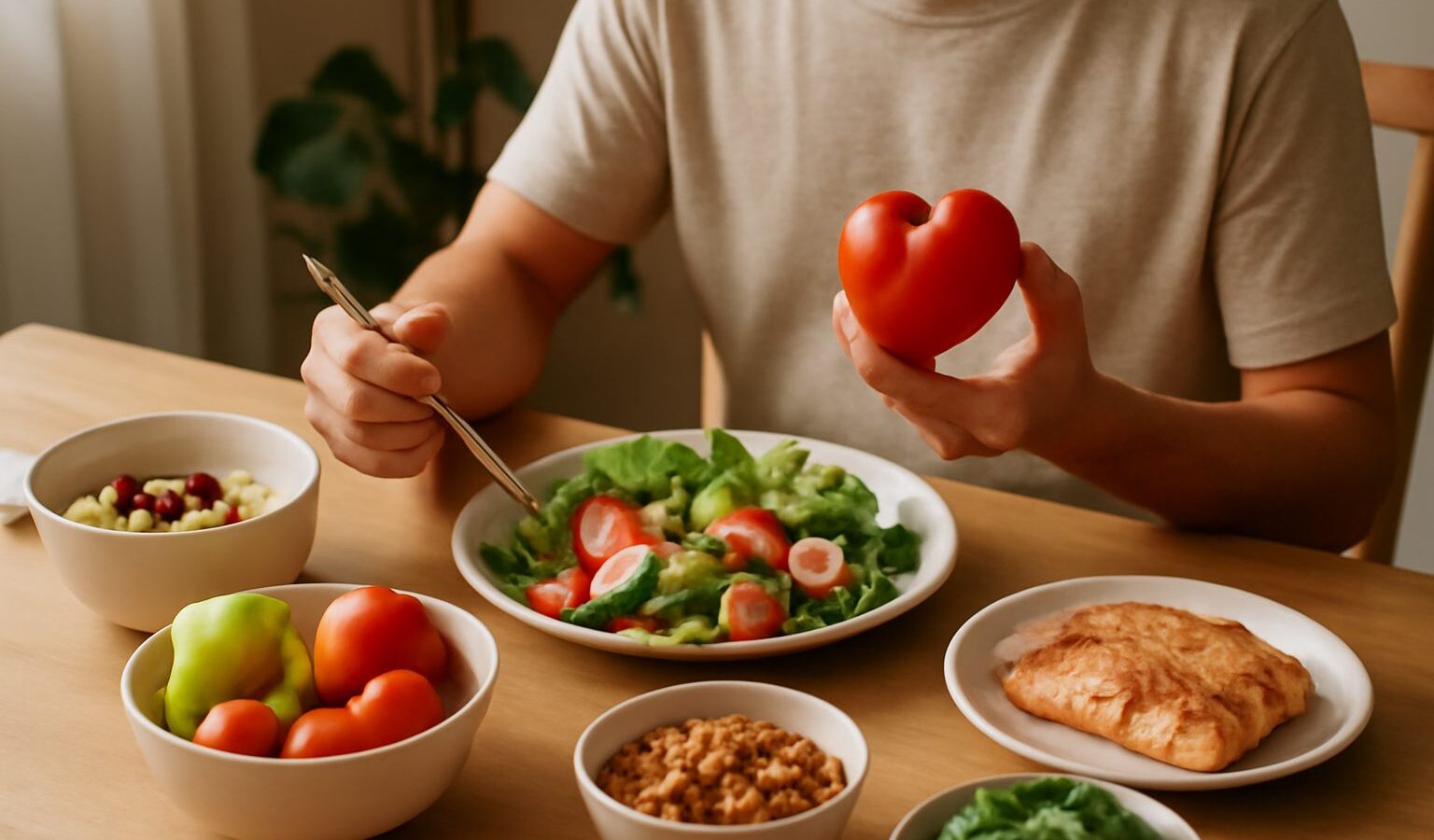
Looking after your heart can sound complicated, full of numbers and forbidden foods, but the everyday version is simpler and kinder than you might think. Heart healthy eating in Singapore is mostly about small, steady choices around the meals you already enjoy, from the hawker centre to the family dinner table. This is general information, not medical advice, so if you have heart concerns, high cholesterol, high blood pressure, or another condition, please work with a doctor or dietitian who can tailor guidance to you. Think of this as a friendly starting point, not a prescription.
What Heart Healthy Eating Really Means
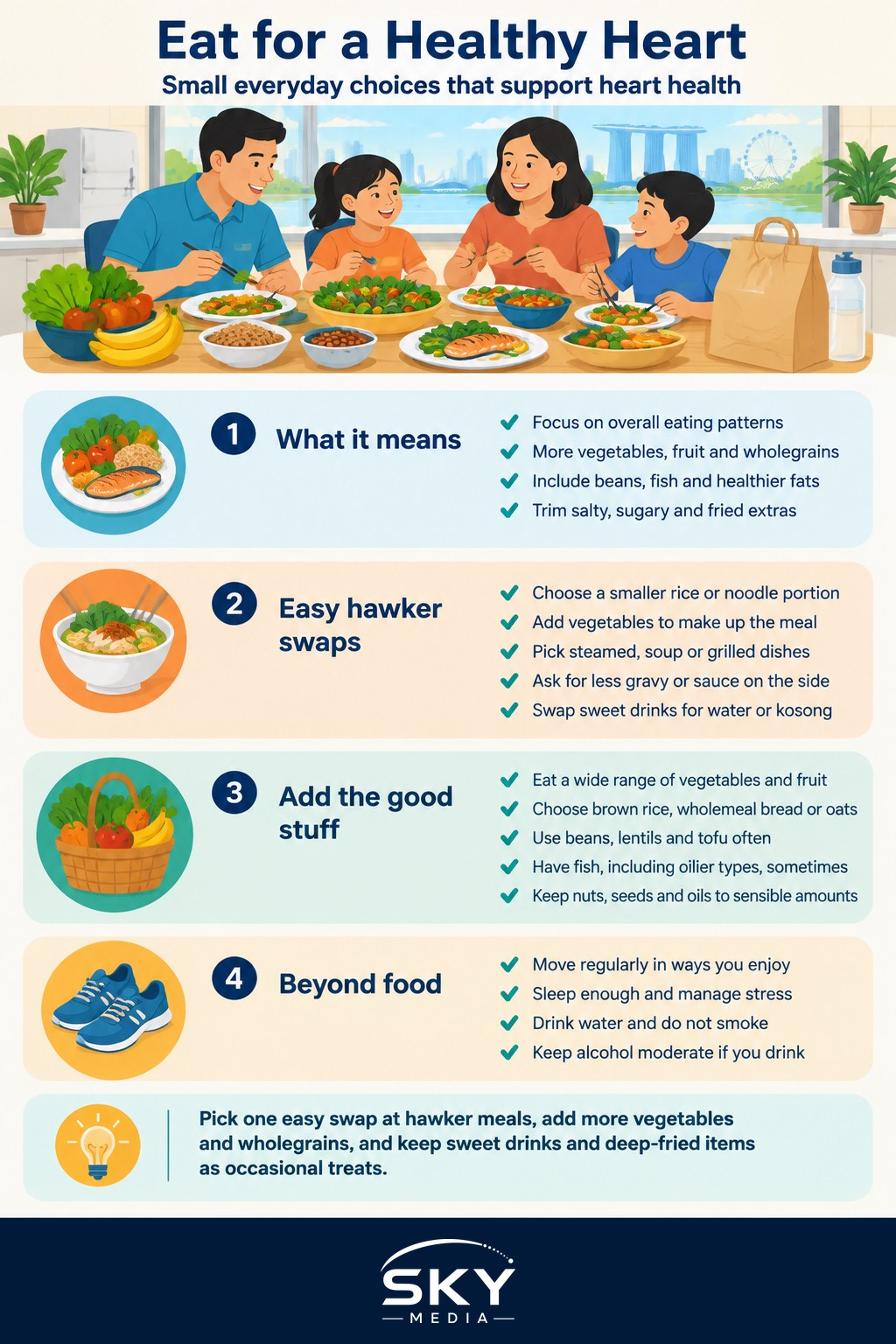
At its core, eating for your heart is about a pattern, not a single miracle food. The general picture is familiar: plenty of vegetables and fruit, wholegrains, beans and other plant proteins, some fish, healthier fats, and less of the salty, sugary, and deep-fried extras. No single meal makes or breaks your heart health, and you do not need to eat perfectly. What matters is the overall direction of your choices over weeks and months.
It also helps to let go of the idea that heart healthy food is bland or foreign to local tastes. Much of what supports the heart is already part of our cuisine, from vegetable-rich stir-fries and fish dishes to soups and wholegrains. The goal is to lean into those, and gently trim the parts that we tend to overdo, rather than giving up the food we love.
Everyday Swaps at the Hawker Centre
Since so many of us eat out, the biggest wins come from small tweaks to your usual order. These are nudges, not rules, and you can apply them most of the time while still enjoying your favourites.
| Instead of | Try | Why it helps your heart |
|---|---|---|
| Extra rice or noodles | A smaller portion, add vegetables | Better portions and more fibre |
| Deep-fried dishes | Steamed, soup, or grilled options | Less unhealthy fat overall |
| Drowning food in gravy | Sauce on the side, less of it | Cuts down salt and hidden fat |
| Sugary drinks and bubble tea | Water, or teh and kopi kosong | Less added sugar |
| Fatty meats and skin | Leaner cuts, fish, or tofu | Gentler on cholesterol |
You do not have to make every swap at once. Pick one or two that feel easy, keep them up, and add more over time. Consistency beats a brief burst of perfection.
Eat More of the Good Stuff
Heart healthy eating is not only about cutting back; it is just as much about adding in. Crowding your plate with the good things naturally leaves less room for the extras.
- Vegetables and fruit, aiming for variety and colour across the week.
- Wholegrains such as brown rice, wholemeal bread, and oats in place of some refined versions.
- Beans, lentils, tofu, and other plant proteins as regular options.
- Fish, including oilier types, a couple of times a week if you enjoy it.
- Healthier fats from nuts, seeds, and oils used in sensible amounts.
These foods bring fibre, healthier fats, and nutrients that support your heart, and they are widely available at wet markets and supermarkets here. Building meals around them is the single most useful habit for most people.
Watch Salt, Sugar, and Unhealthy Fats
Three things are worth keeping a gentle eye on, since local food can be generous with all of them. Salt hides in sauces, soups, preserved foods, and many hawker gravies, so tasting before adding more and asking for less salt where you can both help. Added sugar shows up in drinks most of all, so cutting back on sweet beverages is often the highest-impact change a person can make. Unhealthy fats concentrate in deep-fried items, fatty meats, and some baked goods, so leaning towards steamed, grilled, or soup options makes a real difference.
None of this requires obsessive tracking or banning your favourite meals. The idea is to notice where these tend to pile up and to trim them a little, most of the time, while still leaving room to enjoy a treat. Small reductions, kept up, add up to a meaningful shift over a year.
Habits Beyond the Plate
Food is powerful, but your heart benefits from the wider picture too. Regular movement that you enjoy, whether brisk walking, swimming, or the park connector network, supports your heart and complements good eating. Enough sleep, managing stress, staying hydrated in our heat and humidity, and not smoking all matter alongside your diet. If you drink alcohol, keeping it moderate is wiser for your heart.
None of these need to be dramatic. A daily walk, a water bottle on your desk, and a slightly earlier bedtime are the kind of ordinary habits that quietly protect your heart over time. Pair them with your eating changes and they reinforce each other.
When to See a Doctor
Diet is one piece of heart health, and it works best alongside proper medical care. Please see a GP or polyclinic to understand your own numbers, such as blood pressure and cholesterol, and to get advice suited to you, especially if you have a family history of heart disease, diabetes, or existing conditions. Singapore’s Screen for Life programme and HPB resources on HealthHub are good places to learn about local screening and healthy eating. Do not rely on internet targets; let a professional guide any specific goals or medication.
Some symptoms need urgent action. If you or someone nearby has chest pain or pressure, breathlessness, cold sweats, or pain spreading to the arm, jaw, or back, call 995 or go to A&E immediately, as these can be signs of a heart attack. Do not wait to see if it passes. Everyday heart healthy eating is a gentle, long-term investment, and knowing when to seek help is part of looking after yourself well.
Explore more
Two everyday habits do a lot for your heart, so read how to cut down on sugar and eating more fibre for better health. For putting it all together on busy days, our healthy meal ideas for busy people pair naturally with heart-friendly choices.
Frequently Asked Questions
Are eggs bad for my heart if I eat them every day? For many people, eggs can fit into a heart-friendly diet when the rest of the meal is balanced, and how they are cooked matters. Boiled or steamed is better than fried in lots of oil. If you have high cholesterol or diabetes, ask your doctor about how many suit you.
Is coconut milk in curries and lemak dishes bad for the heart? Coconut milk is rich in saturated fat, so it is best enjoyed in smaller portions rather than every day. You can eat less of the gravy, add more vegetables, or choose lighter versions of the dish. A dietitian can tailor advice if you have high cholesterol.
Should I drink the soup from noodles and bak kut teh? The soup often carries much of the salt, so leaving some behind is a simple way to cut back. Sip a little for flavour rather than finishing the bowl. If you have high blood pressure, your doctor may suggest being stricter.
Which cooking oil is better for a healthy heart at home? Oils higher in unsaturated fats, such as many plant oils, are generally better choices than butter or lard, but all oils are calorie-rich. Use them in modest amounts and favour steaming, boiling or stir-frying over deep-frying. A dietitian can advise on specific choices.
If heart disease runs in my family, what should I do first? Tell your GP about your family history and get your blood pressure, cholesterol and blood sugar checked. A family history raises your risk but does not mean the outcome is fixed. Healthy eating, movement and not smoking still help, and Screen for Life may apply to you.
Official sources: Health Promotion Board
Further reading: Cardiac Rehabilitation After a Heart Attack in Singapore