
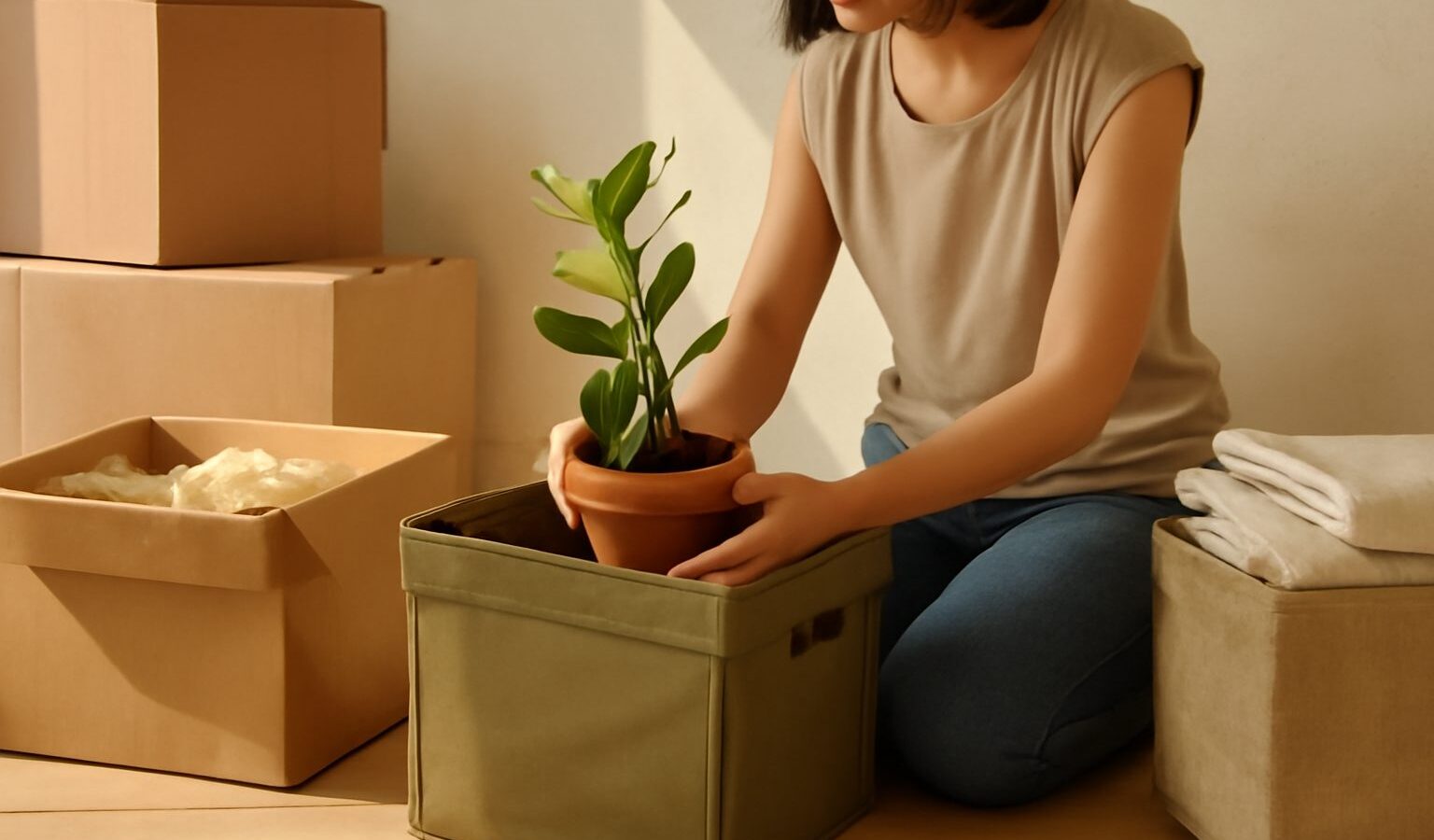
A typical flat move in Singapore produces a surprising pile of rubbish: flattened cartons, metres of bubble wrap, rolls of tape and bags of foam peanuts that nobody wants afterwards. If you are searching for eco friendly moving boxes in Singapore, the good news is that most of that waste is optional. With a little planning, you can pack an entire HDB flat or condo using materials that are rented, borrowed, reused or easily recycled.
This guide sticks to the supplies themselves: what to pack in, what to wrap with, what to fill gaps with and what to do with it all once you have unpacked. It is a practical companion to the wider question of planning a low-waste move.

Start With a Supplies Audit Before You Buy Anything
Before ordering a single carton, walk through your home and look at what you already own. Most households have more packing capacity than they think.
- Suitcases and duffel bags are free, sturdy boxes with wheels. Fill them with clothes, shoes and soft furnishings.
- Laundry baskets, storage tubs and IKEA-style bags can carry pantry items, toys and bathroom bottles.
- Drawers can often travel with their contents left inside if your movers agree. Secure them with a strap or a length of cloth rather than tape.
- Towels, bedsheets, T-shirts and tea towels are excellent wrapping for crockery and glassware.
- Old newspapers and paper bags from deliveries make good void fill.
Once you know what you have, you can estimate the gap. A simple rule is to count rooms, then list the categories that genuinely need rigid containers: books, kitchenware, fragile decor and electronics. Everything soft can usually travel in what you already own.
Choosing Your Boxes: Rent, Reuse or Buy Recycled
Boxes are the biggest single item on most moving lists, and they are where you have the most choice. Here is how the main options compare.
| Option | How it works | Best for | Things to check |
|---|---|---|---|
| Rented plastic crates | A provider drops off stackable lidded crates and collects them after the move | Condo and HDB moves with lift access, tight timelines | Rental period, deposit terms, delivery and collection charges, crate size |
| Secondhand cartons | Collected from friends, neighbours or online giveaway groups | Budget moves, small flats | Dryness, no pest signs, strength of the base |
| Boxes supplied by your mover | Some movers lend or resell reused cartons | Full-service moves | Whether you can return them afterwards |
| New recycled-content cartons | Bought from packaging suppliers | When reuse options run out | Recycled content claims, wall strength for heavy items |
Rented crates are usually the lowest-waste choice because nothing is thrown away. They also stack neatly in a lorry and do not collapse in Singapore’s humidity the way damp cardboard can. The trade-off is timing: you need to unpack by the collection date. Ask the provider for the rental period, the deposit and what happens if a crate is damaged, since terms differ between companies.
Secondhand cartons are easy to find because people finish moving every week. Neighbourhood chat groups, Facebook giveaway groups and freecycle-style platforms regularly list bundles of boxes. Check each one carefully. Avoid cartons that smell musty, show water stains or have signs of cockroaches, because you do not want to carry pests into a new home.
New cartons are fine if you need them. Choose plain brown boxes without glossy printing, buy only the number you need, and plan to pass them on afterwards.
Wrapping Fragile Items Without Bubble Wrap
Bubble wrap is light and protective, but it is single-use plastic that is hard to recycle well. You can protect most fragile items with materials already in the house.
- Plates: stand them on their edges like files in a cabinet, with a folded tea towel or a sheet of packing paper between each one. Plates packed upright resist breaking far better than a flat stack.
- Glasses and mugs: slip each into a clean sock or wrap in a T-shirt, then pack snugly so nothing rattles.
- Bowls: nest them with a cloth between each, then wrap the stack as a single unit.
- Picture frames and mirrors: sandwich between two pieces of flattened carton and wrap with a blanket or a duvet.
- Electronics: use original boxes if you kept them. Otherwise wrap in a towel and pack in a crate with cushions around the sides.
If you need something beyond textiles, look for kraft packing paper, honeycomb paper wrap or corrugated paper rolls. These protect well and can go into the recycling bin afterwards as long as they stay clean and dry.
Filling Gaps and Sealing Boxes the Low-Waste Way
Empty space inside a box is what breaks things. Fill it with:
- Scrunched newspaper or delivery paper
- Rolled socks, scarves and soft toys
- Cushion covers stuffed with clothes
- Shredded paper from your own document clear-out
Avoid polystyrene peanuts. They are messy, hard to reuse and are not accepted in Singapore’s blue recycling bins.
For sealing, rented crates usually have interlocking lids, so no tape is needed. For cartons, paper tape (gummed or self-adhesive) is a good swap for plastic tape because the box can be recycled without peeling it off. Use tape sparingly: folding the flaps in an overlapping pattern holds light boxes closed on their own. Label boxes with a reusable tag or write directly on the carton with a marker instead of using sticky labels.
Keep Packing Supplies Out of the Bin After You Unpack
The supplies you used only stay eco-friendly if they get a second life. Plan this before moving day so the boxes do not end up blocking your new corridor for weeks.
- Return rented crates on time and in good condition. Wipe them out and stack them by the door before the collection slot.
- Pass on cartons and paper. Flatten good boxes and list them in the same giveaway group you sourced from. Someone else is always moving.
- Keep a small reserve. Store a few sturdy boxes and a bundle of packing paper for future storage, returns or gifts.
- Recycle what is left. Clean, dry cardboard and paper can go into the blue recycling bins found at HDB blocks and in many condos. Remove any plastic tape where you can, and do not include cartons soaked with food or oil. Check the National Environment Agency (NEA) guidance on what is and is not accepted, as the list is sometimes updated.
- Donate or reuse textiles. The towels and sheets you used for wrapping simply go back into the linen cupboard, which is the whole point.
A Simple Low-Waste Packing Kit for a Typical Flat
If you want a starting checklist, a practical kit for a small to mid-sized flat might include:
- Rented crates or reused cartons for books, kitchenware and fragile items
- Your own suitcases, baskets and bags for clothes and soft goods
- A pile of towels, sheets and T-shirts for wrapping
- A roll of paper tape and a marker
- A stack of newspaper or kraft paper for filling gaps
- A few straps or lengths of cloth for drawers and doors
Notice what is missing: bubble wrap, foam peanuts, plastic tape and stacks of brand-new boxes. Most moves do not need them.
Moving is also a natural time to rethink how you live in a space. If the new place needs work, our guide to an eco-friendly home renovation in Singapore covers materials and contractors, and building a sustainable, eco-friendly home looks at the daily habits worth setting up once the boxes are gone. If you are moving with children, it is a good moment to try some ideas from teaching your family eco-friendly habits, such as letting them help sort the recycling.