

Many households in Singapore employ a domestic helper, which comes with responsibilities. This guide covers what it involves, employer responsibilities, key considerations, and doing it responsibly. This is a general overview; always refer to MOM.
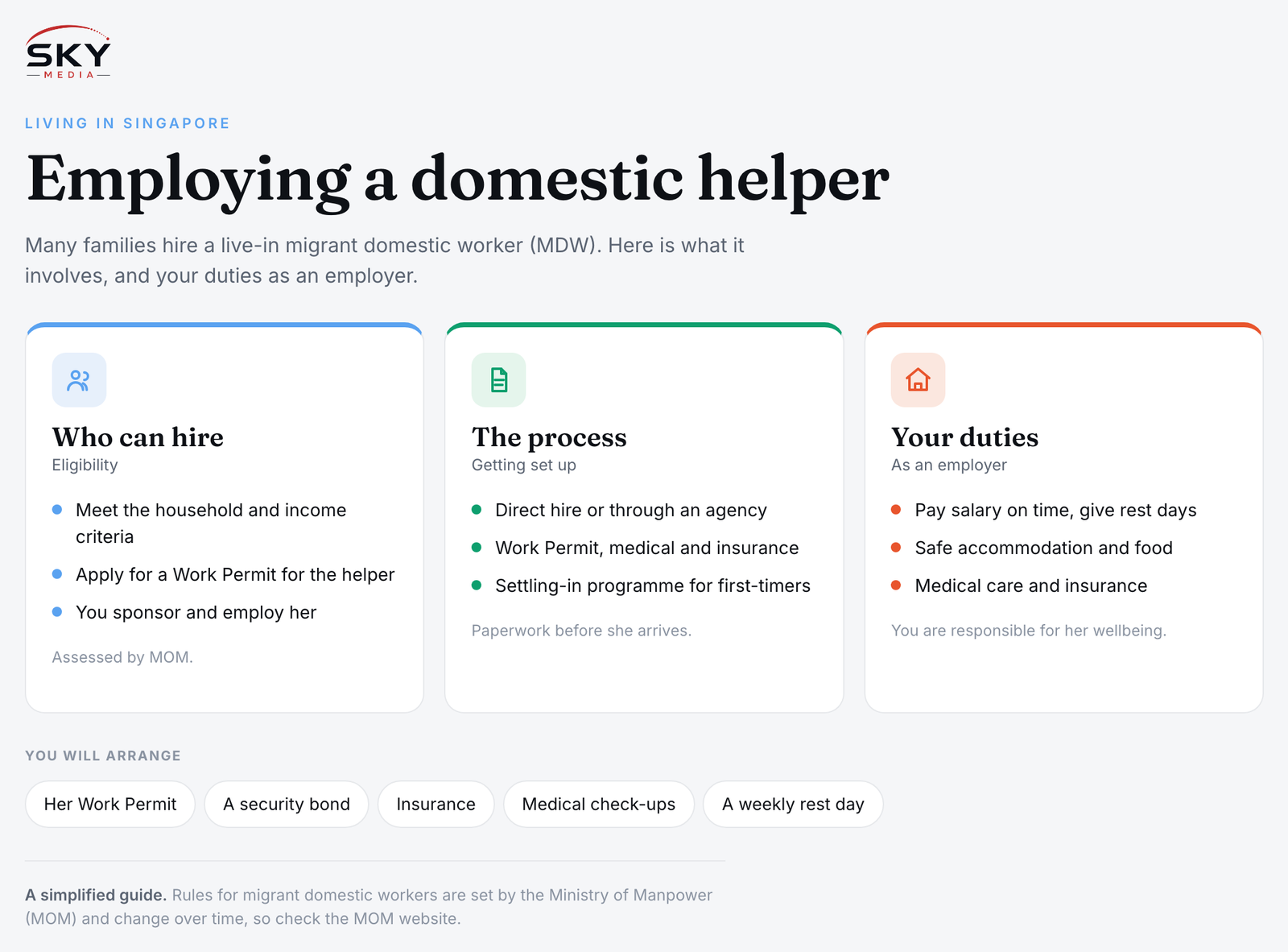
Employing a helper in Singapore
Employing a domestic helper, or foreign domestic worker, to assist with household work and care is common in Singapore, and many households, including expat families and locals, do so. Employing a helper involves becoming an employer with real responsibilities and obligations, both legal and ethical, toward the helper, as well as navigating the requirements and process involved. It is a significant undertaking that should be approached responsibly and with proper understanding, not just as a convenience. The employment of foreign domestic workers is governed by requirements and responsibilities set by the authorities, designed to protect the welfare of helpers and set out employers’ obligations. Understanding what employing a helper involves helps you approach it properly. Understanding employing a helper in Singapore, that it is common but involves becoming an employer with real legal and ethical responsibilities, helps you approach it seriously, so you can approach employing a domestic helper in Singapore as a significant undertaking that makes you an employer with genuine responsibilities and obligations toward the helper, governed by requirements set by the authorities, to be approached responsibly and with proper understanding rather than merely as a convenience.
Employer responsibilities
| Aspect | Broadly |
|---|---|
| Legal obligations | Requirements set by the authorities |
| The helper’s welfare | Wellbeing and fair treatment |
| Fair employment | Proper conditions and pay |
| Ongoing duties | Responsibilities throughout employment |
Employing a domestic helper comes with significant employer responsibilities, both legal and ethical. Legal obligations include the various requirements set by the authorities for employing a foreign domestic worker, from the employment process to ongoing duties, which employers must understand and meet. The helper’s welfare is a central responsibility, with employers expected and required to ensure their helper’s wellbeing, fair treatment, proper rest and living conditions, and dignity. Fair employment, including proper conditions, pay and treatment, is both a legal and ethical duty. And there are ongoing responsibilities throughout the employment. Because these obligations are set by the authorities and are important, understanding and meeting them via official sources is essential. Understanding employer responsibilities, legal obligations, the helper’s welfare, fair employment, and ongoing duties, helps you approach employing a helper responsibly, so you can recognise that employing a domestic helper makes you an employer with significant responsibilities, legal obligations set by the authorities, and ethical duties to ensure your helper’s welfare, fair treatment and dignity, meeting these obligations properly throughout the employment and relying on official sources such as MOM for the requirements.
Key considerations
Employing a domestic helper involves several key considerations beyond the responsibilities. The requirements and process for employing a foreign domestic worker, set by the authorities, must be understood and followed, including eligibility, the employment process, and associated obligations and costs. The costs of employing a helper, including various fees, levies and the helper’s pay and upkeep, should be understood and budgeted for. The responsibilities and commitment involved, including the ongoing duty of care and being a responsible employer, are significant. And the human dimension, treating your helper fairly, with respect and dignity, and building a good working relationship, is central. Because the requirements and specifics are set by the authorities and can change, referring to official sources is essential. Understanding the key considerations, the requirements and process, costs, responsibilities, and the human dimension, helps you approach employment thoughtfully, so you can consider employing a domestic helper by understanding the requirements and process, the costs, the significant responsibilities, and the important human dimension of treating your helper fairly and with dignity, approaching it as a responsible employer and relying on official sources such as MOM for the current requirements.
Doing it responsibly
Employing a domestic helper responsibly means fulfilling your legal obligations, ensuring your helper’s welfare and fair treatment, and being a good, respectful employer. This involves understanding and meeting the requirements and obligations set by the authorities; ensuring your helper’s wellbeing, proper rest, fair conditions, pay and dignity; treating your helper with respect, fairness and consideration as a person and a worker; and building a good, respectful working relationship. Responsible employment is both a legal requirement and an ethical duty, and it benefits both the helper and the household. Falling short of these responsibilities is unacceptable and can have consequences. Relying on official sources for the requirements, and approaching employment ethically, ensures you do it responsibly. Understanding how to employ a helper responsibly, by meeting legal obligations, ensuring welfare and fair treatment, and being a respectful employer, helps you do it properly, so you can employ a domestic helper responsibly in Singapore by understanding and meeting your legal obligations, ensuring your helper’s welfare, fair treatment, proper conditions and dignity, and being a good, respectful employer, recognising this as both a legal requirement and an ethical duty, and relying on official sources such as MOM for the requirements.
The human dimension
An essential aspect of employing a domestic helper, beyond the legal and practical, is the human dimension: your helper is a person and a worker deserving of respect, fairness, dignity and consideration. Treating your helper well, ensuring their welfare, wellbeing, fair treatment and proper conditions, and building a respectful, considerate working relationship, is both an ethical duty and the foundation of a positive employment. Recognising the significant commitment and responsibility involved in having someone work and often live in your household, and approaching it with humanity and respect, is central to responsible employment. This human dimension matters as much as the practical and legal aspects. Understanding the human dimension of employing a helper, that your helper is a person deserving of respect, fairness and dignity, helps you approach employment ethically, so you can recognise the essential human dimension of employing a domestic helper, treating your helper with respect, fairness, dignity and consideration as a person and a worker, ensuring their welfare and building a positive, respectful working relationship, understanding that this ethical, humane approach is central to responsible employment alongside meeting your legal obligations.
The takeaway
Employing a domestic helper is common in Singapore but is a significant undertaking that makes you an employer with real legal and ethical responsibilities toward the helper, governed by requirements set by the authorities. Employer responsibilities include legal obligations, ensuring the helper’s welfare, fair employment, and ongoing duties. Key considerations include the requirements and process, costs, the significant responsibilities, and the important human dimension. Doing it responsibly means meeting your legal obligations, ensuring your helper’s welfare and fair treatment, and being a good, respectful employer, recognising both the legal requirements and the ethical, human duty to treat your helper with dignity. This is a general overview; because the requirements are set by the authorities and can change, always refer to official sources such as the Ministry of Manpower (MOM) for the specifics.
Explore more: The Employment Act: a guide for employers · Relocating with family · Elderly care options