
If you are fascinated by science and want your work to touch human health, a biotech career in Singapore can be genuinely meaningful. Biotechnology and pharmaceuticals cover the research, development, testing, manufacturing, and regulation of medicines, therapies, diagnostics, and related products. Singapore has invested heavily in this sector over the years, which means a range of roles for scientists and non-scientists alike. This guide explores the field generally, the roles you might grow into, the skills that help, and honest ways to begin.
What the Sector Looks Like
Biotech and pharma span a long journey, from an idea in a laboratory to a product that reaches patients safely. Along that path sit many different jobs, and not all of them require a laboratory coat.
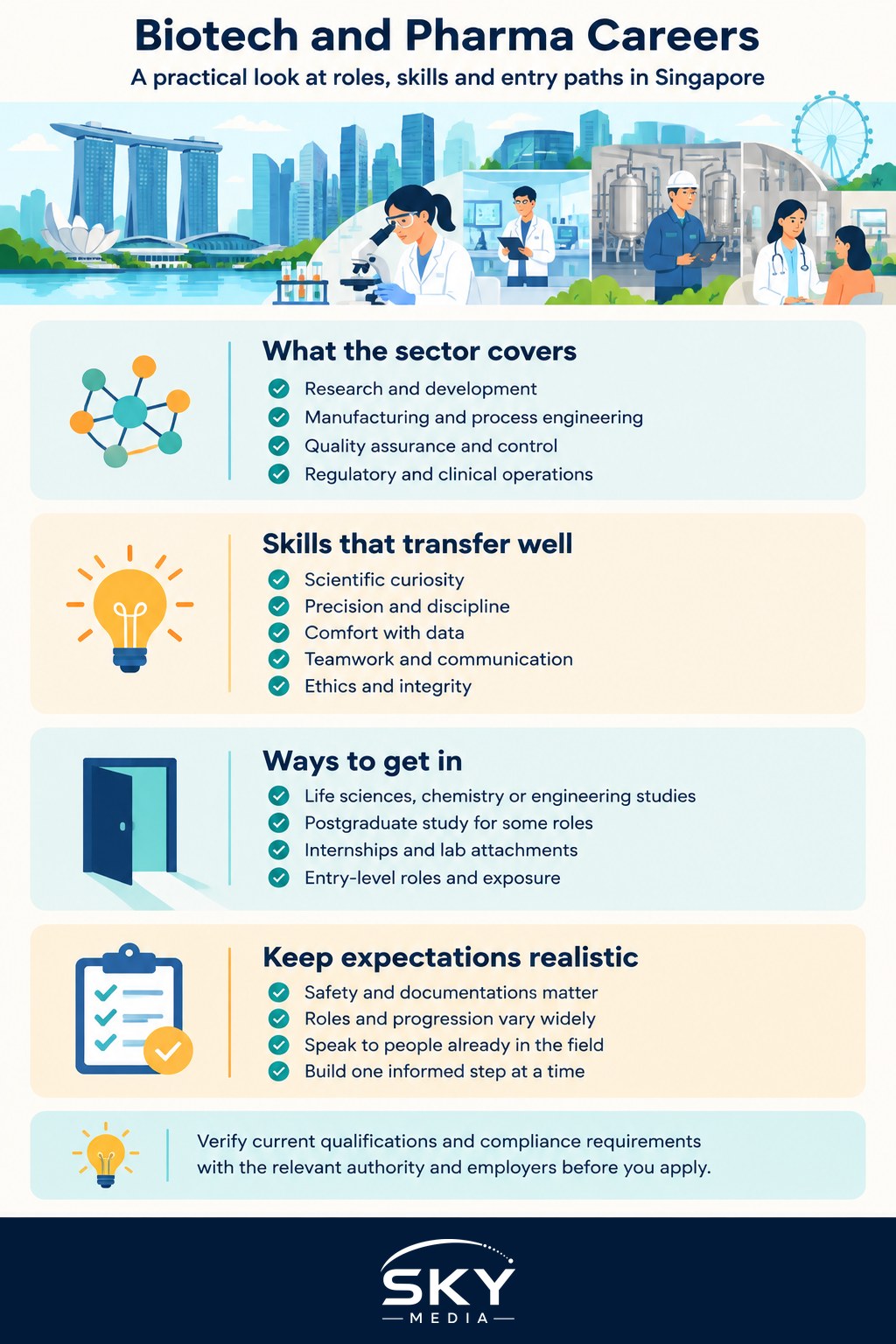
Broadly, you might find roles in:
- Research and development, discovering and refining new treatments and technologies.
- Manufacturing and process engineering, producing products at scale under strict quality controls.
- Quality assurance and quality control, making sure everything meets required standards.
- Regulatory affairs, guiding products through approval and compliance.
- Clinical operations, coordinating the trials that test safety and effectiveness.
- Commercial and support functions, including business development, supply chain, and market access.
This variety is good news. Someone with a life-sciences degree, an engineering background, a quality mindset, or strong project skills can all find a place. If you are weighing this against neighbouring fields, our guides on exploring a career in healthcare and exploring a career in engineering are useful companions, since the sectors often overlap.
Skills and Backgrounds That Help
Because the sector is broad, the skills that matter depend on the role. That said, some qualities travel well across biotech and pharma:
- Scientific curiosity. A genuine interest in biology, chemistry, or engineering keeps you motivated through detailed work.
- Precision and discipline. This is a highly regulated field where accuracy and documentation matter enormously.
- Comfort with data. Interpreting results and spotting patterns is central to many roles.
- Teamwork and communication. Progress depends on scientists, engineers, and specialists working together.
- Ethics and integrity. Because the work affects patient safety, trustworthiness is essential.
Many roles also reward the ability to keep improving in a specialised area over time. Our guide on how to become a subject matter expert can help you build that depth deliberately rather than by accident.
Pathways Into Biotech and Pharma
Entry routes vary widely. Research and technical roles often start with relevant studies in the life sciences, chemistry, engineering, or related fields, sometimes followed by postgraduate work for more advanced positions. Manufacturing, quality, and operations roles may accept a broader mix of backgrounds, especially where a strong attention to process is what counts.
If you are still deciding, a few steps can help you learn the reality:
- Seek exposure. Internships, laboratory attachments, and entry-level roles reveal what the day-to-day is really like.
- Talk to insiders. Our guide on how informational interviews work shows how to have these conversations gracefully.
- Keep building relevant skills. Data literacy, laboratory technique, quality systems, and regulatory awareness are all valuable depending on your direction.
This is an area where you should verify current requirements carefully. Product safety, clinical trials, and manufacturing standards in Singapore are overseen by the relevant regulators, including the Health Sciences Authority, and requirements for specific roles, licences, and registrations change over time. Rather than relying on any single article or course, confirm the current qualification and compliance expectations with the appropriate authority and with employers you are interested in. Local platforms such as MyCareersFuture and SkillsFuture can point you toward training and openings, and reputable industry bodies can help you stay current.
An Honest, Encouraging Word
A biotech career can be intellectually rich and quietly rewarding, since your work may help people live healthier lives. It can also involve long timelines, strict processes, and plenty of documentation, because safety demands care at every step. Roles, pay, and progression vary widely across the sector, so research current market realities rather than assuming, and speak to people doing the work you are drawn to.
The encouraging news is that the field needs many kinds of talent, not only star researchers. Whether your strength is science, engineering, quality, coordination, or communication, there may be a place for you. Start by learning the landscape, seeking honest conversations, and gaining any exposure you can. A biotech career in Singapore is a realistic goal for someone willing to be precise, patient, and endlessly curious. Take one informed step this month, and build from there.