

An allied health career in Singapore is a strong choice for people who want hands-on, human work that helps others move, recover, and live more fully. Physiotherapy is one of the best known allied health fields, but the family is much bigger, and each role plays a distinct part in a patient’s recovery and wellbeing. If you like a mix of science, movement, and genuine human contact, this is a space worth exploring.
This guide covers what physiotherapy and the wider allied health fields involve, where the work happens locally, and the honest realities of getting in. These are regulated, licensed professions, so we will also point you to the right bodies to confirm the current requirements before you commit.
What is allied health, and where does physiotherapy fit?
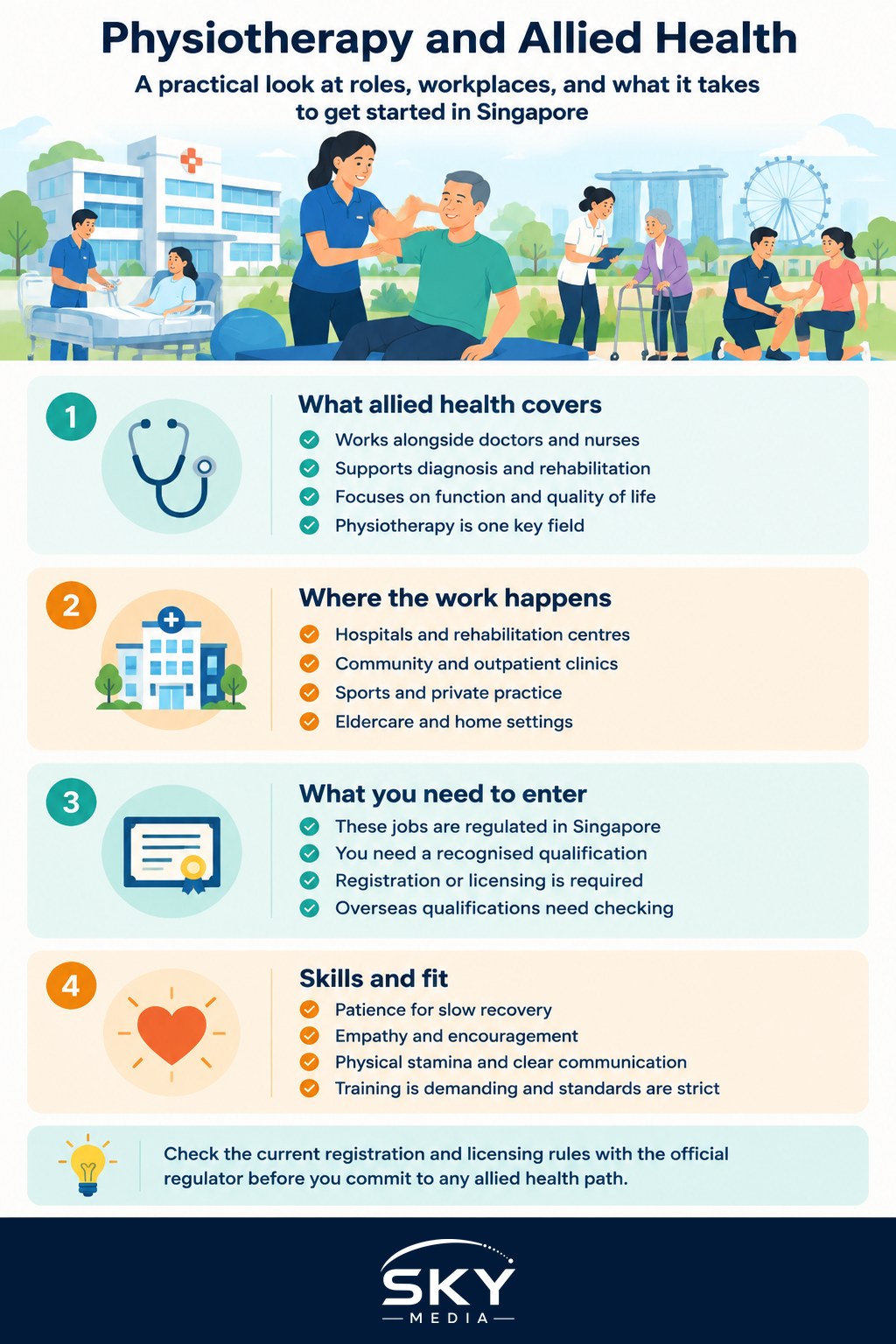
Allied health refers to a group of healthcare professions that work alongside doctors and nurses to support diagnosis, treatment, rehabilitation, and daily function. Physiotherapy is one well-known member, but the field is broad.
- Physiotherapists help people restore movement and manage pain after injury, surgery, or illness, using exercise, hands-on techniques, and education.
- Occupational therapists help people regain the skills for daily living and work.
- Speech therapists support communication and swallowing.
- Dietitians, radiographers, medical laboratory scientists, and others each cover specialised parts of care.
What ties them together is a focus on function and quality of life. The work is practical and often deeply satisfying, because you see people improve over time.
Where the work happens
In Singapore, allied health professionals work across many settings:
- Hospitals and rehabilitation centres, where much acute and recovery work happens.
- Community and outpatient clinics, supporting ongoing care closer to home.
- Sports and private practice, working with athletes and active people.
- Eldercare and home settings, which are growing as the population ages.
Singapore’s ageing population and steady focus on health mean allied health roles are meaningful and in ongoing demand. That is encouraging, though it does not remove the need for strong qualifications and real commitment.
Qualifications, registration, and licensing
This is the crucial part. Physiotherapy and many allied health professions in Singapore are regulated and require licensing or registration. To practise, you generally need a recognised qualification in your specific field and you must be registered or licensed with the appropriate regulatory body before you can work under that professional title. Supervised practice and other conditions may also apply.
Because requirements, recognised qualifications, and the exact list of regulated professions change over time, do not rely on old advice. Check the current rules directly with the relevant allied health regulatory body and health authority in Singapore for your specific profession. If you trained overseas, confirm early whether your qualification is recognised and what extra steps apply. Use this article as an overview, and let the official regulator give you the precise, up-to-date picture.
If you are still weighing options, our guide on choosing your first career path can help you think through a training-heavy commitment before you begin.
Skills and qualities that help
Beyond the academic route, certain traits make this work sustainable and rewarding.
- Patience. Recovery is often slow, and progress comes in small steps.
- Empathy and encouragement. You motivate people through discomfort and setbacks.
- Physical stamina. Many roles involve being on your feet and hands-on.
- Clear communication. You explain exercises and plans so patients can follow them at home.
These strengths carry across the wider healthcare sector, and some people find a related fit in fitness and wellness if clinical work is not quite right for them.
Is it the right fit for you?
Be realistic about the trade-offs. The training is demanding, the standards are strict, and the work can be physically and emotionally tiring. Progress with patients is not always fast, and some cases are hard. The reward is steady, meaningful work with clear professional standing and the satisfaction of helping people regain what illness or injury took from them.
A good early move is to talk to practitioners about their real week. Use the approach in our guide on how informational interviews work to ask what the job is actually like day to day.
Getting started
If this path still appeals, take it step by step. Build a strong foundation in the sciences, decide which allied health field draws you, confirm the current registration and licensing requirements with the official regulator, and seek attachments or volunteer experience to test the fit. It is a committed path and outcomes vary, so go in with realistic expectations and steady effort. Done with care, an allied health career in Singapore can be one of the most hands-on and genuinely rewarding directions you could take.
Frequently Asked Questions
What is the difference between a physiotherapist and an occupational therapist? Physiotherapists focus on movement, strength and pain, while occupational therapists help people regain skills for daily living and work, such as dressing, cooking or returning to a job. Both aid recovery but use different approaches. Their training and registration also differ.
Which allied health profession suits someone who likes working with children? Paediatric work exists in physiotherapy, occupational therapy and speech therapy, among others. Each helps children with movement, daily skills or communication. Shadowing or volunteering with children’s services can show which area feels right for you.
Is physiotherapy physically tiring, and can I work long term? It can be, with hands-on techniques, long periods on your feet and lifting. Good technique, rest and varied tasks help sustain a long career. Some practitioners move into teaching, management or research later on.
Can I switch from a fitness trainer role to physiotherapy? Fitness experience is a useful foundation, but physiotherapy is a regulated profession requiring a recognised qualification and registration. Check entry requirements with the relevant regulatory body and the programmes you are considering. Do not assume fitness certificates are sufficient.
How can I tell which allied health field is right for me? Talk to practitioners in several fields, shadow them where allowed, and notice whether you prefer movement, communication, diet, imaging or lab work. Volunteering in care settings helps too. Compare training length and requirements before committing.
Further reading: Exploring a Career in Sports and Coaching in Singapore