

There is a kind of Chinese music so old and so calm that it feels like time slowing down. Nanyin, sometimes called nanguan, is one of the oldest surviving forms of Chinese music, and it has quietly found a home here. Nanyin music singapore is kept alive by dedicated community groups and passionate practitioners who trace this art back many centuries. This guide is a warm, beginner friendly way to discover it.
What Nanyin Is
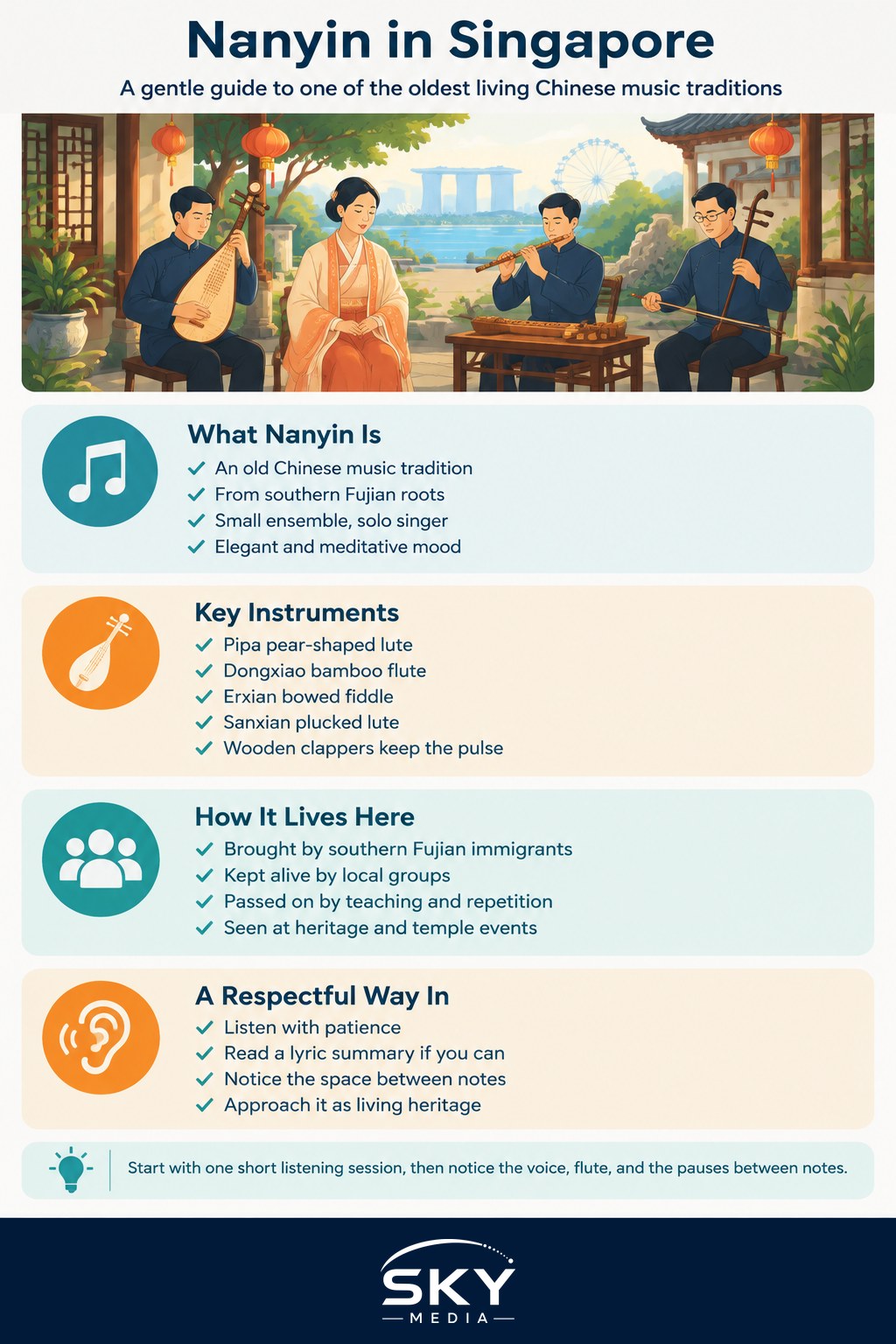
Nanyin means “southern sound,” and it comes from the Minnan region of southern Fujian, the same cultural roots shared by many Hokkien families in Singapore. It is a refined chamber music tradition, usually performed by a small ensemble with a solo singer. The mood is graceful and unhurried, built for close listening rather than big spectacle.
The music is often described as elegant and meditative. Melodies unfold slowly, the singing is delicate, and the whole ensemble breathes together. Lyrics are typically sung in the Minnan dialect and draw on classical poetry and old stories, which is part of why nanyin is treasured as a cultural heritage form. UNESCO has recognised nanyin as an important intangible cultural heritage, a reminder of how significant this living tradition is.
It is worth saying plainly that nanyin is not background music. It rewards patience. Give it your attention and it opens up like a quiet conversation from another age.
The Instruments and Their Sound
A traditional nanyin ensemble is small and intimate. The core instruments give the music its distinctive gentle texture.
- The pipa, a pear shaped lute, often held in a more horizontal position in nanyin than in other Chinese music. If the pipa draws you in, our guide on learning the pipa is a friendly starting point.
- The dongxiao, a vertical bamboo flute with a soft, breathy tone that carries much of the melody’s feeling.
- The erxian or a bowed two string fiddle, adding a singing line alongside the voice. The related erhu shares that expressive bowed character.
- The sanxian, a three string plucked lute that supports the harmony and rhythm.
- Small percussion, especially wooden clappers held by the singer, which keep the gentle pulse.
Together these instruments create a sound that is spare and transparent. You can hear each line clearly, which makes nanyin a lovely study in how a few voices can weave something rich. Listening closely is a skill you can build, and our piece on how to listen to music more deeply offers approachable tips.
How Nanyin Lives in Singapore
Nanyin arrived with southern Fujian immigrants and has been nurtured here by community associations and cultural groups for generations. These groups gather to practise, teach, and perform, often passing the tradition from older members to younger ones by ear and by patient repetition. That living chain of teachers and students is exactly what keeps an ancient art from fading.
You may find nanyin performed at cultural festivals, heritage events, temple celebrations, and community showcases. Because it is a niche and specialised tradition, performances are less frequent than pop shows, so it is worth keeping an eye on arts and heritage listings. When you do catch one, you are witnessing something rare and carefully guarded.
If you are drawn to the wider landscape of local Chinese ensemble music, you might also enjoy exploring Chinese orchestra music, which sits in a related but distinct world.
How to Begin Appreciating It
Getting into nanyin does not require any special knowledge. Here is a gentle path in.
- Start with short listening sessions. Put on one piece, sit still, and just follow the voice and the flute. Let the slowness be the point.
- Read a translation or summary of the lyrics if you can find one. Knowing the story behind a song deepens the feeling, even when the dialect is unfamiliar.
- Notice the space between the notes. Nanyin is as much about stillness and breath as it is about melody.
- If you are curious about the broader family of traditional and world sounds, seek out recordings from other cultures to widen your ears in a friendly way.
Approaching With Respect
Because nanyin is a living heritage tradition tied to real communities, approach it with the same respect you would offer any cultural practice. Watch performances quietly, avoid treating it as a mere curiosity, and appreciate the years of devotion that go into mastering it. If you ever get the chance to learn from a community group, come with humility and patience, since much of the art is taught slowly and by ear.
Nanyin is a quiet treasure. It asks a little patience and gives back a deep, calming beauty that few other traditions offer. Come with open ears and an open heart, and let one of the oldest living sounds in Chinese music find you.