

Ask a young child what a cow says and they will tell you instantly. Ask whether they have ever seen one up close, and in a city like Singapore the answer is often no. The good news is that farm animal experiences in Singapore do exist, if you know where to look. From goats and rabbits to ponies, chickens and fish ponds, there are several kinds of places where children can see, feed or learn about animals that usually live only in picture books.
This guide focuses on the animal side of a farm outing: what kinds of experiences are available, how to choose one for your child’s age, and how to keep both children and animals safe and comfortable.
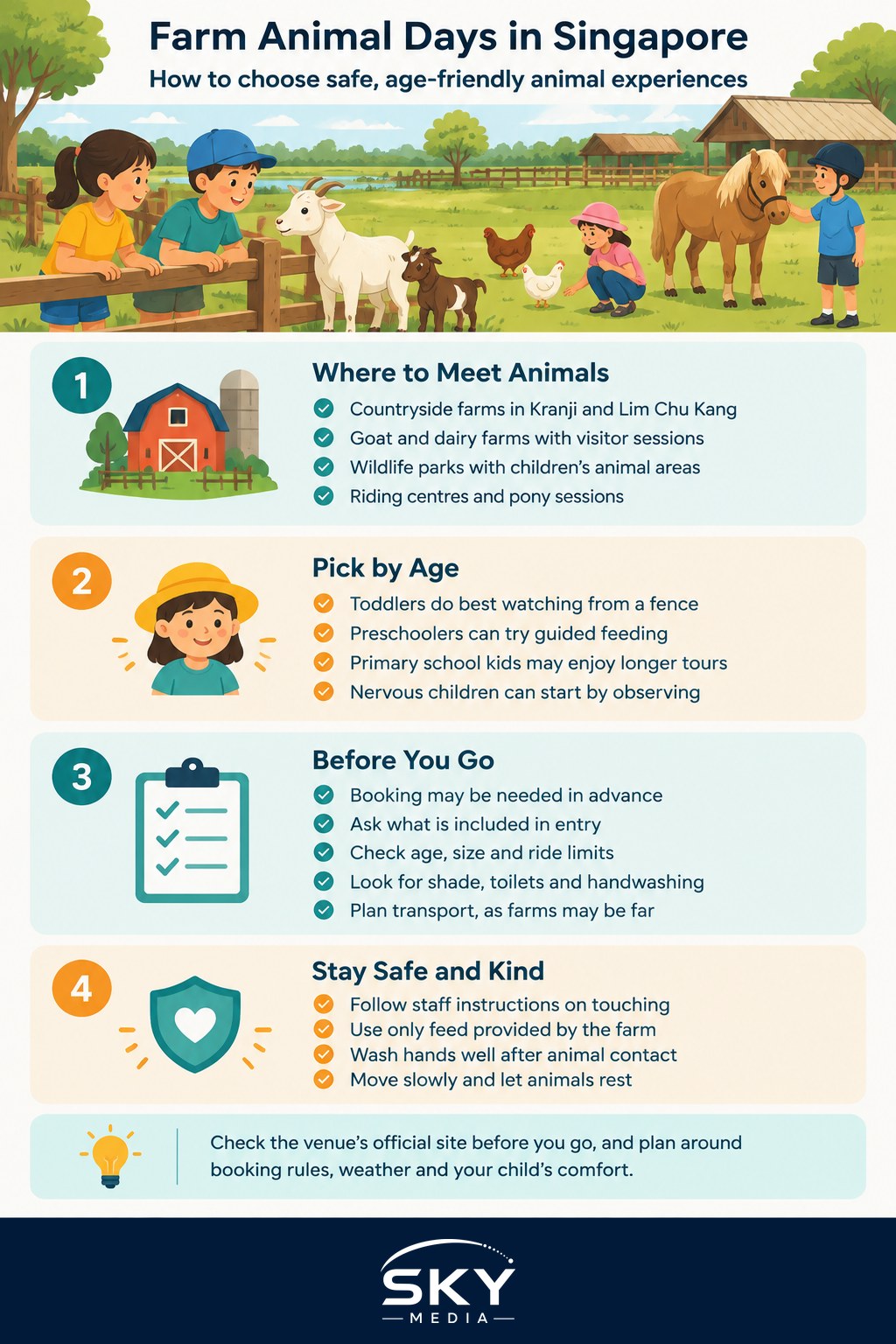
Types of Places Where Kids Meet Farm Animals
Singapore has limited farmland, so animal experiences are spread across a few different kinds of venues. Opening days, activities and booking rules change, so always check each venue’s official website or social media before you go.
Countryside farms. The Kranji and Lim Chu Kang area in the northwest is home to most of Singapore’s remaining farms. Some are working farms that welcome visitors, and a few keep goats, chickens or other animals that children can watch. Our Kranji countryside and farms guide covers the area more broadly.
Goat and dairy farms. Some farms that produce goat’s milk run visitor sessions where children can watch milking or feeding and learn how milk gets from farm to bottle. These are usually more about observing than touching.
Wildlife and zoological parks. Larger animal parks sometimes include children’s sections with domestic and farm animals, plus scheduled feeding sessions or keeper talks.
Horse riding centres and stables. Some offer pony rides or introductory sessions for young children, as well as the chance to see horses being groomed. Ask about minimum age, height and weight rules.
Petting zoos at events. Travelling animal displays sometimes appear at malls, school carnivals or private parties. These are short and convenient, but quality varies, so look closely at how animals are housed and handled.
Community and hydroponic farms. These focus on plants rather than animals, but some also keep chickens, fish or bees. They can be a good add-on to an animal outing. See our guide to community and hydroponic farms for ideas.
Choosing the Right Experience for Your Child’s Age
Not every experience suits every child. Match the outing to your child’s age, attention span and comfort with animals.
| Child’s age | What usually works | What to watch for |
|---|---|---|
| Toddlers (1 to 3) | Watching animals from a fence, short visits, feeding through a barrier if allowed | Putting hands in mouths after touching, getting startled, naps |
| Preschoolers (4 to 6) | Guided feeding, simple farm talks, gentle petting of calm animals | Overexcitement, chasing animals, heat |
| Primary school (7 to 12) | Longer tours, learning how farms work, pony rides where offered | Boredom on long talks, following rules without reminders |
| Mixed-age families | Places with both animals and open space or plant areas | Different energy levels, finding a shaded rest spot |
For a nervous child, start with animals behind a fence. Let them watch other children first, and never force them to touch an animal. Curiosity usually grows with time.
What to Check Before You Go
A few questions save a lot of disappointment:
- Is booking required? Many farm visits and feeding sessions need advance booking, and some only open on certain days.
- What is included? Ask whether feeding, guided tours or rides are part of the entry or charged separately.
- Are there age or size limits? Especially for pony rides or hands-on sessions.
- Is there shade and shelter? Singapore’s heat and sudden rain can end an outing quickly.
- Are there toilets and handwashing points? This matters a lot with young children.
- Is it stroller friendly? Farm paths can be gravel, grass or mud.
- How do you get there? Countryside farms are often far from MRT stations, so check bus routes or plan a car or ride-hail trip both ways.
- What is the cancellation policy? Weather can force changes.
Keeping Children and Animals Safe
Farm animals are not pets, and even gentle ones can bite, kick or push when frightened. Keeping the visit safe makes it fun for everyone.
Before touching any animal
- Follow the staff’s instructions on whether and how animals may be touched or fed.
- Only feed animals the food provided by the farm. Never bring your own snacks for them, as human food can make animals ill.
- Teach children to move slowly, speak softly and approach from the side, not from behind.
- Keep fingers flat when offering food, so little fingers are not mistaken for a snack.
Hygiene
- Animals can carry germs, even when they look clean. Make sure everyone washes their hands with soap and water after touching animals, fences or feed.
- Hand sanitiser is a helpful backup, but handwashing is better.
- Do not let children eat, drink or put fingers or pacifiers in their mouths in animal areas.
- If someone in your family is pregnant, has a weak immune system or a relevant health condition, check with a doctor before close contact with farm animals.
Heat and weather
- Go early in the morning or later in the afternoon when it is cooler.
- Bring water, hats and sunscreen, and use insect repellent in grassy areas.
- Wear closed shoes that can get dirty.
Teaching Kids to Respect Animals
A farm visit is a great chance to teach kindness and responsibility.
- Explain that animals have feelings and need rest. If an animal walks away, it does not want to be touched.
- Talk about where food comes from: eggs, milk and vegetables. This links nicely with meals at home.
- Encourage questions for farm staff, such as what the animals eat or how they are cared for.
- Afterwards, draw the animals, read a farm-themed book or keep a simple nature journal.
Notice how animals are kept, too. Clean water, shade, space and calm handling are good signs. If something looks wrong, you can raise it with the venue, or with AVS, the Animal and Veterinary Service under NParks, which oversees animal welfare in Singapore.
Making It a Full Family Day Out
Farm animal visits often take only an hour or two, so consider pairing them with something else nearby.
- Combine a countryside farm visit with lunch at a farm cafe or a picnic, where allowed.
- Add a short nature walk, staying on marked paths and following NParks rules.
- Visit a plant farm or market to pick up fresh produce to cook together at home.
- Choose a gentle activity afterwards so tired children can wind down.
If you are looking for a gift for an animal-loving child, a farm visit or riding session can make a memorable present. Our list of unique experience gifts in Singapore has more ideas along those lines.
With a little planning, a farm animal outing can be one of the most memorable family days in Singapore, full of muddy shoes, happy faces and plenty of questions on the ride home.
Frequently Asked Questions
Can children feed the animals at a farm with their own snacks? No. Only feed animals the food provided by the farm, because human food can make them ill. Follow the staff’s instructions on whether and how animals may be fed, and keep fingers flat when offering food so little fingers are not mistaken for a snack.
Is it safe for a pregnant mother to visit a farm with animals? Animals can carry germs even when they look clean, so check with your doctor before close contact with farm animals. If you do go, stay behind barriers, avoid touching animals or fences, and wash hands with soap and water afterwards.
How do I get to the Kranji farms without a car? Countryside farms are often far from MRT stations, so check bus routes in advance or plan a ride-hail trip both ways. Confirm each venue’s opening days and whether booking is required before you leave.
What if my child is scared of animals? Start with animals behind a fence and let your child watch other children first. Never force them to touch an animal. Curiosity usually grows with time, and a calm, short visit builds more confidence than a long one.
What time of day is best for a farm visit in Singapore’s heat? Go early in the morning or later in the afternoon when it is cooler. Bring water, hats and sunscreen, use insect repellent in grassy areas and wear closed shoes. Sudden rain can end an outing, so check shelter and the cancellation policy.
Further reading: Best Bird Feeding and Animal Encounters for Kids in Singapore · Horse Riding in Singapore