
Film photography has a steady following in Singapore, and walking into a film camera shop for the first time can be both exciting and confusing. Shelves of old bodies, lenses with unfamiliar names and boxes of film in different formats all look appealing, but a beginner has no easy way to tell a reliable camera from a pretty paperweight.
This guide is about the practical side of shopping: the kinds of shops you will find, what to check before you pay, how buying film and developing works, and the questions worth asking. It does not recommend specific stores, because shops open, close and move, and stock changes every week. Use it as a checklist to take with you.
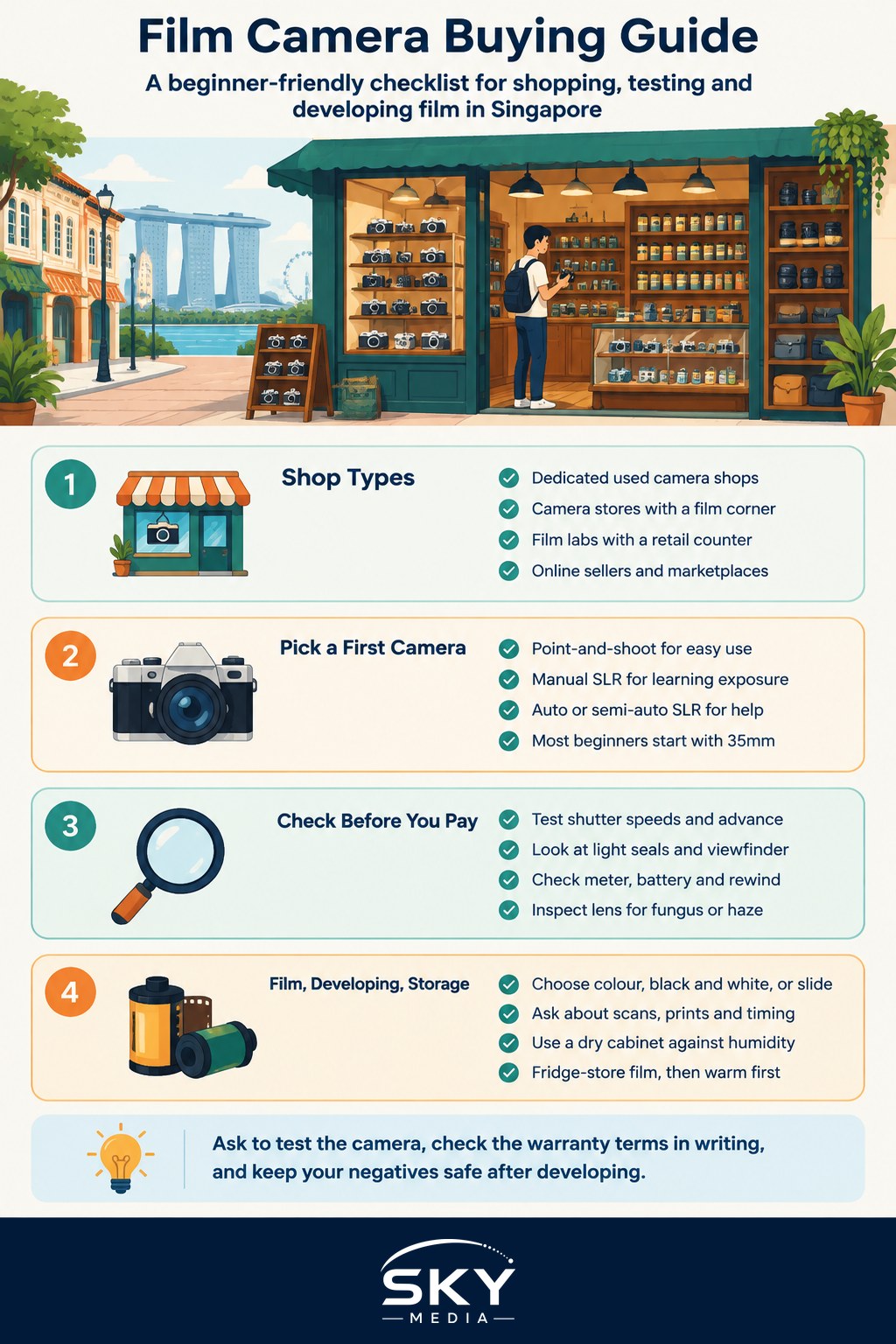
The Types of Film Camera Shops You Will Find
Film gear in Singapore is sold through a few different kinds of outlets. Each has strengths and trade-offs.
- Dedicated used camera shops. Often found in older shopping centres around the city that have long housed camera retailers. They usually stock a wide range of film bodies and lenses, and staff tend to know the equipment well.
- General camera stores with a film corner. Mainly digital retailers that carry fresh film, a few cameras and accessories. Good for film stock and batteries, less so for choice of bodies.
- Film labs with a retail counter. Shops that develop and scan film and also sell film, simple cameras and sometimes refurbished bodies. Handy because you can buy, shoot and develop in one place.
- Online sellers and marketplaces. Individual sellers, small resellers and community groups. Prices can be attractive, but you cannot handle the camera first and returns may be limited.
For a beginner, a physical shop is usually the safer first purchase. You can hold the camera, test it and ask questions, and many shops offer some form of short warranty or exchange period on used items. Always ask what the terms are and get them in writing on the receipt.
Choosing Your First Film Camera
Before visiting a shop, decide roughly what kind of camera you want. That narrows the shelves quickly. If you are still deciding between film and digital altogether, our guide to choosing your first camera covers the bigger picture.
| Camera type | How it works | Good for | Watch out for |
|---|---|---|---|
| Point-and-shoot (35mm compact) | Automatic focus and exposure, fixed lens | Casual everyday shooting, travel, people who want simplicity | Popular models can be priced high; electronics are hard to repair |
| Manual SLR (35mm) | You set aperture, shutter speed and focus, with interchangeable lenses | Learning exposure properly, flexible lens choice | Light meter may need a battery or may be inaccurate |
| Auto or semi-auto SLR (35mm) | Camera helps with exposure, sometimes autofocus | Beginners who want lens choice without full manual control | Battery-dependent electronics, check all modes work |
| Rangefinder | Focus by aligning two images in the viewfinder | Compact, quiet shooting, street and travel | Rangefinder alignment and patch brightness need checking |
| Medium format (120 film) | Larger negatives, fewer shots per roll | Detailed images, slower deliberate shooting | Bigger, heavier, higher film and developing cost per shot |
Most beginners start with 35mm because film is easier to find, labs process it routinely and the cameras are lighter. Medium format is rewarding but costs more per frame.
What to Check on a Used Film Camera
Old cameras can work beautifully for decades, but they can also hide faults. Ask the staff if you can test the camera, and go through this list:
- Shutter speeds. Open the back (without film), set different speeds and fire the shutter while looking through it at a light source. Slow speeds should sound noticeably longer than fast ones. Sticky or inconsistent speeds are a warning sign.
- Light seals. The foam strips around the film door and hinge break down over time. Crumbly, sticky or missing seals can cause light leaks. Seals can be replaced, but factor that into the price.
- Light meter. If the camera has a meter, compare its reading with a phone light meter app. A dead or wildly wrong meter is not fatal, but you should know about it.
- Film advance and rewind. The lever or motor should advance smoothly and the frame counter should move.
- Battery type. Some older cameras were designed for mercury batteries that are no longer sold. Ask what the camera uses and whether an adapter or alternative is needed.
- Viewfinder. Look for heavy haze, dark patches or a misaligned focusing aid.
For the lens, shine a torch through it and look for:
- Fungus, which appears as fine thread or web patterns. This is common in humid climates and is a serious issue.
- Haze that makes the glass look cloudy.
- Scratches on the front element. Light marks may not show in photos, deep ones can.
- Smooth focusing and aperture blades that snap cleanly and are free of oil.
If you are not sure what you are seeing, ask the staff to show you. A good shop will explain faults honestly.
Buying Film and Getting It Developed
Film prices have risen in recent years and availability of particular stocks comes and goes, so check current prices in shops rather than relying on old forum posts. Beginners usually choose between:
- Colour negative film, which is forgiving of exposure mistakes and the easiest to develop.
- Black and white film, which some labs process less frequently.
- Slide film, which needs accurate exposure and is better saved for later.
Most labs offer developing alone, developing plus scanning at different resolutions, and prints. Ask about turnaround time, how scans are delivered and whether they return your negatives. Keep your negatives: they are your original images.
Storing Film Gear in Singapore’s Humidity
Singapore’s heat and humidity are hard on old cameras and on film itself.
- Use a dry box or dry cabinet for cameras and lenses to help prevent fungus. Keep humidity moderate rather than extremely dry.
- Store unused film in the fridge in its packaging, and let it warm up to room temperature before loading to avoid condensation.
- Do not leave loaded cameras in hot cars or in direct sun.
- Get exposed film developed promptly, as latent images can degrade in heat.
Questions to Ask Before You Pay
Bring these questions to the counter:
- Has this camera been tested or serviced, and what was done?
- Is there a warranty or exchange period, and what does it cover?
- What battery does it take, and do you stock it?
- Can I shoot a test roll and return if there is a fault?
- Do you have a strap, lens cap or case included?
A beginner who asks questions, tests the camera and budgets for a few rolls of film and developing will have a far better first experience than one who buys the cheapest body online. Start simple, shoot often, and upgrade only when you know what you actually want. When you are ready to compare film with modern options, our broader camera buying guide is a useful next step.
Frequently Asked Questions
Is shooting film cheaper than digital in the long run? Usually not. A digital camera costs more up front but each extra shot is almost free, while film means paying for every roll and for developing and scanning. Film appeals because it slows you down, so budget for a few rolls rather than expecting savings.
Can airport X-ray machines damage my film? Repeated scans can fog film, and faster films are more at risk, so protect important rolls. You can ask for a hand inspection at security, pack film in clear bags for easy checks, and keep it in your cabin bag. Follow the airport’s current rules.
How do I load a roll of film without ruining it? Load it in dim light rather than direct sun, make sure the leader is caught properly on the take-up spool, and advance a couple of frames while checking the rewind knob turns. Ask the shop staff to show you the first time, since each camera loads slightly differently.
Is a disposable camera a good way to try film? It is a low-commitment way to taste the process, but you get little control and fewer chances to learn exposure. If you enjoy it, moving to a simple point-and-shoot or manual SLR from a reputable shop lets you improve. Remember to budget for developing.
Further reading: Shooting With a Disposable Film Camera: Tips and Where to Develop