
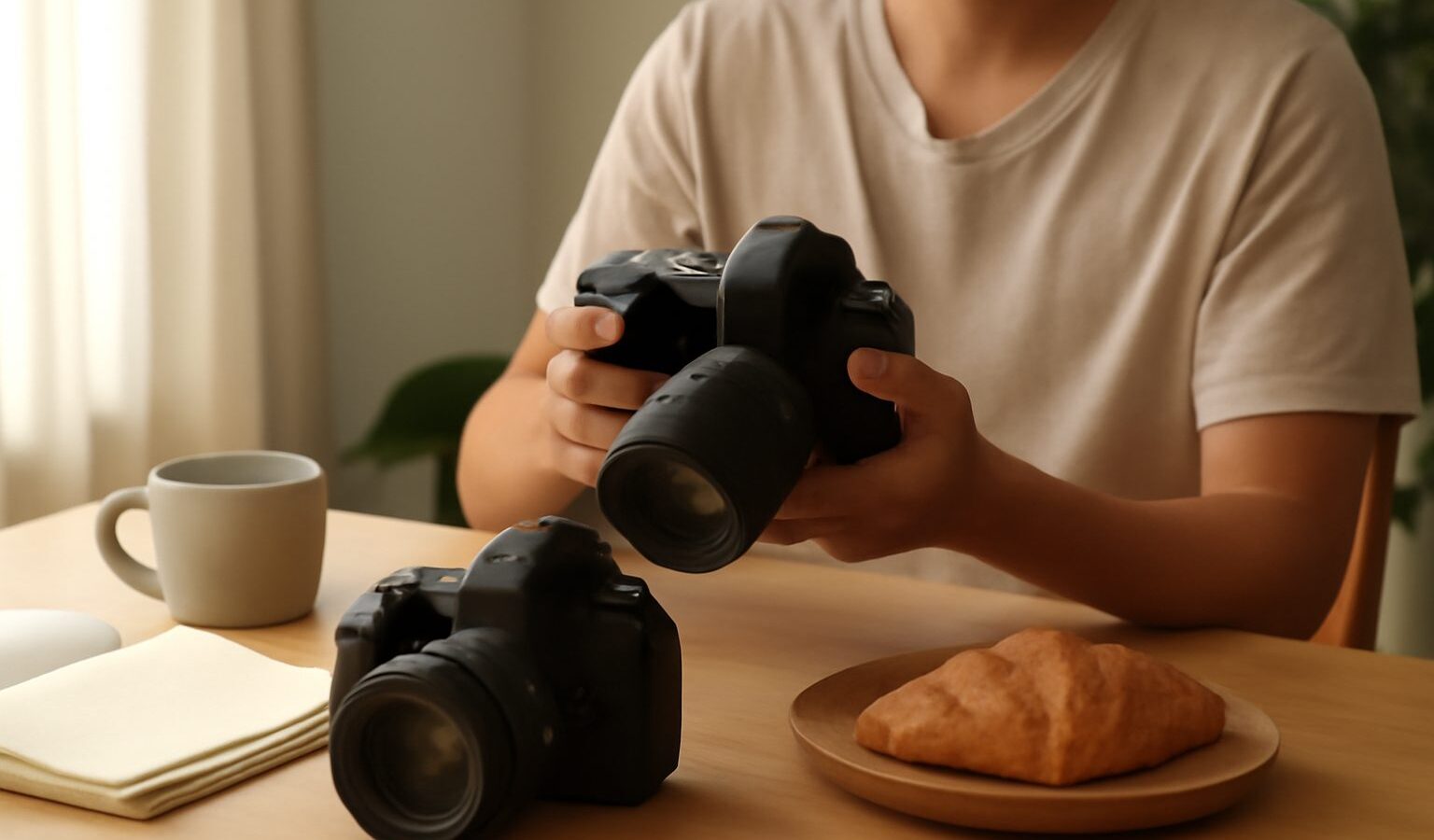
Buying your first camera is exciting, and it can also be overwhelming. Shop windows and online listings throw around numbers and initials that mean little to a beginner, and it is easy to overspend on features you will never use. This guide cuts through the noise. The aim is to help you match a camera to how you actually shoot and to your budget, rather than chasing the biggest specification sheet. Prices and models change quickly, so we will talk in plain terms about types and trade-offs, and leave you to check current specs and prices before you buy.
The best first camera is the one you will carry, understand and enjoy. A modest camera you use every week beats an expensive one that stays in the cupboard because it feels intimidating.
Start With How You Want to Shoot
Before you look at any camera, think about the pictures you want to take. Your habits should drive the purchase, not the other way round.
- Do you mostly shoot food, family and travel snaps? A compact, light setup you can slip into a bag matters more than raw power.
- Are you drawn to portraits with a soft, blurred background? Then the ability to change lenses becomes important.
- Do you dream of sports or wildlife at the Botanic Gardens? Fast focus and a longer reach will matter.
- Will you carry it around Singapore all day in the heat? Weight and size become deciding factors quickly.
Being honest here saves money. Many beginners buy for the photographer they imagine becoming rather than the one they are. Buy for how you shoot now, and upgrade later if a genuine limit appears.
Understanding the Main Camera Types
There are three broad options a beginner will meet, and each suits a different person. Here is a plain comparison to help you weigh them up.
| Camera type | Strengths | Trade-offs |
|---|---|---|
| Smartphone | Always with you, easy, great in good light | Struggles in low light, limited zoom and control |
| Mirrorless | Compact, modern, changeable lenses, strong video | Batteries drain faster, can cost more |
| DSLR | Long battery life, huge lens choice, often cheaper used | Bulkier and heavier to carry all day |
Your phone is a real camera, and for many people it is enough. Learn its manual or pro mode, its portrait setting and its night mode before assuming you need to spend anything at all. If you outgrow it, a mirrorless camera is where most beginners land today, because it is compact and future-friendly. A DSLR still makes sense if you find a good used deal or want the longest battery life, though the industry has largely shifted towards mirrorless.
Avoid getting stuck on sensor sizes and megapixel counts. For a first camera, an entry-level model from any established brand will produce lovely results. Content and light matter far more than a slightly larger sensor.
Setting a Realistic Budget
It is tempting to spend everything on the camera body, but a camera is a system, not a single object. Spread your budget sensibly.
- The body and a kit lens. Most beginner cameras come with a basic zoom lens that covers everyday shooting. This is a perfectly good place to begin.
- A memory card. Buy a reputable card with enough speed and space, since a slow or tiny card will frustrate you fast.
- A spare battery. Nothing ends a day at Sentosa faster than a dead battery with no backup.
- Basic care items. A cleaning cloth, a blower and a dry storage solution for our climate.
Consider buying the body second-hand from a reputable local dealer to stretch your budget, then putting the savings towards a better lens later. A good lens often improves your photos more than a newer body does. Because prices shift, compare a few sellers and check current figures rather than trusting an old article.
Lenses, Extras and What Can Wait
If your camera lets you change lenses, the kit lens it comes with is genuinely fine for learning. When you are ready for more, an affordable prime lens, often called a nifty-fifty, gives lovely background blur for portraits and food, and it is one of the most enjoyable upgrades a beginner can make.
Some extras are worth it early, and others can wait.
- Worth it soon: a spare battery, a decent card, a simple bag, and a way to keep gear dry.
- Can wait: filters, flashes, gimbals and a second lens, until you know what your shooting actually needs.
Resist the urge to buy accessories for problems you do not have yet. Let real frustrations, not marketing, guide your next purchase.
Caring for a Camera in the Singapore Climate
This is the part visitors from drier places overlook, and it matters here. Singapore’s humidity encourages fungus to grow on lenses and inside cameras, which can permanently damage the glass. Walking from an air-conditioned mall into the outdoor heat also fogs your lens with condensation.
A few habits protect your investment:
- Store your gear in a dry cabinet or an airtight box with silica gel, kept at a sensible humidity.
- Let the camera adjust gradually when moving between cold and hot spaces, rather than shooting immediately.
- Wipe off sweat and sea spray after a day outdoors, especially near the coast.
- Keep the camera out of direct rain, and carry a simple cover during our sudden downpours.
These small steps add years to a camera’s life and keep your images sharp.
Choosing your first camera comes down to matching gear to how you shoot, spending sensibly across the whole system, and protecting it from our climate. Get those three right and you will have a camera you actually enjoy using, which is the only kind that makes better photographs.
Explore more
Once your gear is sorted, put it to work with our guide to photography basics for beginners, and learn how to hold and stabilise your camera for sharper shots. When you are weighing systems more closely, see our take on mirrorless versus DSLR and which to buy.