

Plenty of people in Singapore run on their own, follow a free plan from an app, or join a group for weekend long runs. So why pay for a personal running coach? For some runners, a coach is the difference between stalling and steady progress, or between finishing a race and finishing it injured. For others, it is money better spent elsewhere.
This guide focuses on one-to-one and small-group coaching: who genuinely benefits, the coaching formats available, what to check before you sign up, and how to tell whether the arrangement is working. If you are searching for a running coach in Singapore, it should help you shortlist with confidence.
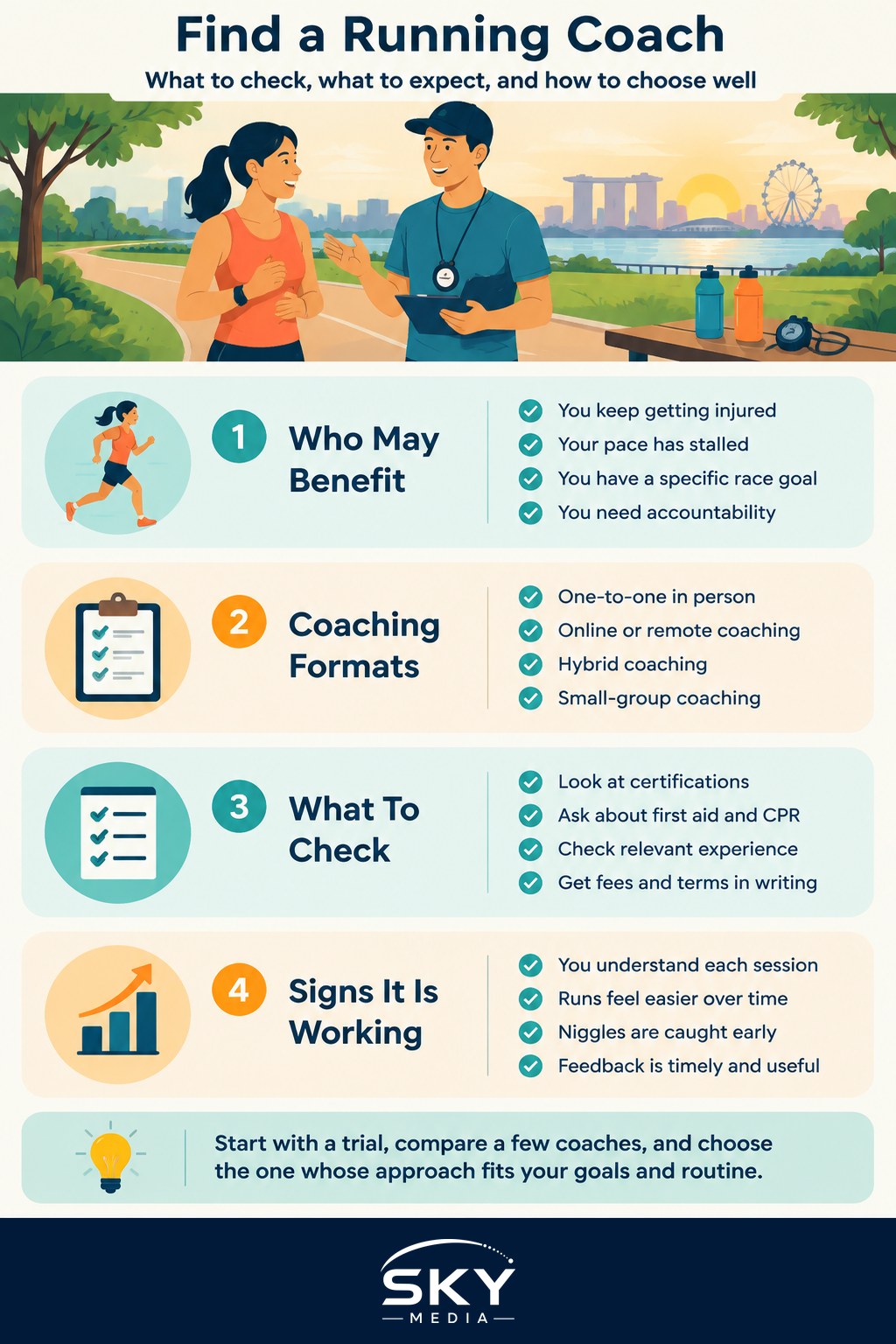
Who Actually Needs a Running Coach
A coach is not essential for running. But personal coaching tends to pay off in a few situations:
- You keep getting injured. Repeated shin, knee or foot niggles often point to training load or form issues that an experienced eye can spot. A coach is not a substitute for a physiotherapist or doctor, though, so get any persistent pain checked first.
- You have plateaued. If your times have not improved for months despite consistent running, structured workouts and a periodised plan can unlock progress.
- You are training for a specific goal. A first marathon, a qualifying time, or a trail ultra all benefit from a plan built around your schedule and race date.
- You need accountability. Some runners simply train better when someone is expecting a report.
- You are returning after a break, such as after pregnancy, illness or a long layoff, and want a careful build-up. Check with your doctor before restarting if you have had a medical issue.
If you are brand new and just want to get moving, a free beginner programme may be enough to start. Our guide on how to start running in Singapore covers that first stage.
Coaching Formats Compared
Running coaches in Singapore typically offer several formats. The right one depends on your budget, goals and how much face-to-face contact you want.
| Format | What you get | Suits | Trade-offs |
|---|---|---|---|
| One-to-one in person | Sessions at a track or park, live form cues, tailored plan | Injury-prone runners, form work, beginners wanting close guidance | Usually the most expensive; schedule depends on coach |
| Online or remote coaching | Plan delivered through an app, feedback on uploaded runs, regular check-ins | Busy professionals, experienced runners, frequent travellers | No live form correction unless you send video |
| Hybrid | Online plan plus occasional in-person sessions | Runners who want structure with periodic form checks | Need to coordinate both parts |
| Small-group coaching | Shared sessions with a few runners of similar level | Social runners on a tighter budget | Less individual attention |
| One-off assessment | Gait or form analysis, often with video, plus advice | Runners wanting a check-up rather than ongoing coaching | No ongoing accountability |
Prices vary widely by coach, format and session length, so ask for a clear written breakdown rather than relying on any figure you have heard elsewhere.
Credentials and Experience to Check
There is no single mandatory licence for running coaches in Singapore, so it is up to you to check background. Useful things to ask about:
- Coaching certifications. Many coaches hold qualifications from recognised athletics or coaching bodies, at home or overseas. Ask which body issued it and what level it is.
- First aid and CPR training, which is sensible for anyone running sessions outdoors in our heat.
- Relevant experience. A coach who has helped people with goals like yours, whether a first 10km or a sub-3 marathon, is more useful than one with impressive personal race times alone.
- Approach to injury. A good coach will refer you to a doctor or physiotherapist when something sounds medical, rather than trying to diagnose it.
- Insurance, particularly for in-person sessions.
Be cautious of anyone promising guaranteed times, pushing supplements, or dismissing pain as something to run through.
Questions to Ask Before You Pay
A short trial or consultation call is the best way to judge fit. Questions worth asking:
- How do you build a plan, and how often is it adjusted?
- How do you communicate, and how quickly do you usually reply?
- Will you review my runs from a watch or app, and what data do you look at?
- How do you handle heat and humidity in training? Singapore’s climate means paces often need adjusting, and a thoughtful coach will plan for early-morning or evening sessions.
- What happens if I get sick, travel, or miss a week?
- What is included in the fee, and what are the cancellation and refund terms?
- Is there a minimum commitment period?
Get the key terms in writing, especially the fee, what it covers, and how to end the arrangement.
Where to Look for a Coach
Without naming specific businesses, here are the usual routes:
- Running clubs. Many clubs have coaches who also take private clients. Our overview of running clubs in Singapore explains how clubs work.
- Personal trainers with a running focus. Some gyms and studios have trainers who specialise in endurance. If you are based in town, see our guide to finding a personal fitness coach near Orchard for how to vet trainers generally.
- Running and sports stores, which sometimes host coached sessions or can point you to coaches.
- Word of mouth from runners at your regular route or parkrun-style events.
- Online coaching platforms and social media, where you can see a coach’s content and approach before contacting them. Check reviews, and ask for references from past clients.
How to Tell if Coaching Is Working
Give any new arrangement a fair window, usually a full training block of several weeks, before judging it. Signs it is working:
- You understand why each session is in your plan.
- Easy runs feel easier, and you recover better between hard sessions.
- Niggles are caught early and the plan adapts.
- Progress shows up in training data or a test run, even before race day.
- You feel motivated rather than constantly drained.
Warning signs include one-size-fits-all plans that never change, slow or no feedback, and pressure to keep training through pain. If those appear, raise them with the coach, and do not be afraid to switch.
Making It Work Long Term
Coaching is a partnership. You get the most from it by logging your runs honestly, flagging sleep, stress or work travel, and being upfront about how much time you really have. In return, a good running coach gives you a plan that fits Singapore’s heat, your schedule and your goals, and helps you keep running for years rather than months. Start with a trial, compare two or three coaches, and pick the one whose approach makes sense to you.