

A small device on your wrist will not do your workouts for you, but it can be a surprisingly good coach and cheerleader. Among the many fitness trackers Singapore shoppers can pick from, there is something for every budget and goal, from a simple step-counting band to a GPS watch built for marathon training. This guide explains what these wearables actually measure, how to choose one that fits your life, and how to use it well in our hot and humid climate, without letting the numbers take over.
A quick and important note first. This is general information to help you get moving, not medical advice, and a consumer tracker is not a medical device. Please consult a doctor before starting a new exercise programme, especially if you have a health condition, are older, are pregnant, or are returning after a break. Treat any worrying reading as a prompt to see a professional, not a diagnosis.
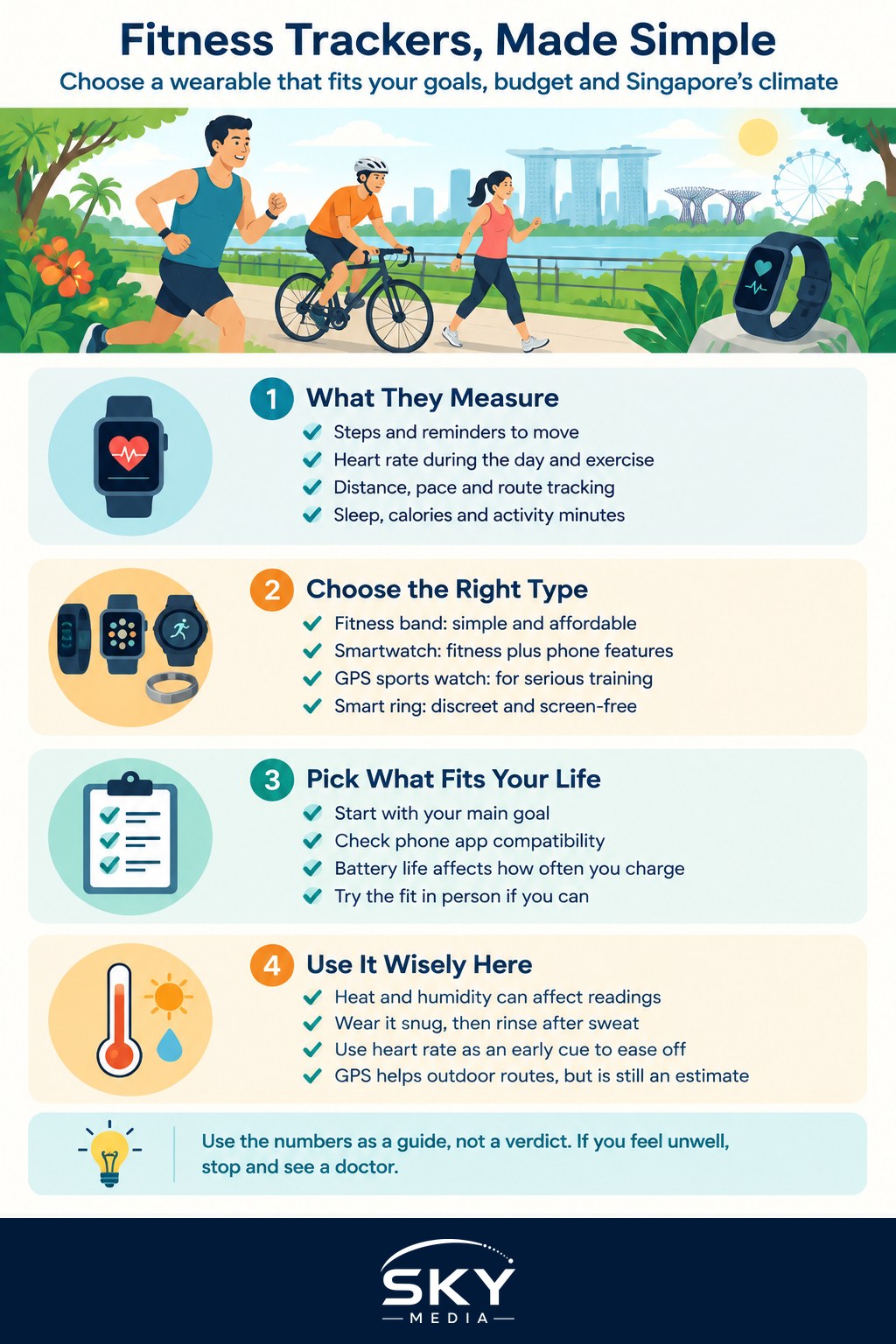
What Fitness Trackers Actually Measure
Most modern wearables track a similar core set of things, then add features as you move up in price. Understanding what each metric means helps you choose sensibly and avoid paying for functions you will never use.
- Steps and movement: The classic step count, plus reminders to move if you have been sitting too long. A gentle nudge that helps with everyday activity.
- Heart rate: An optical sensor estimates your heart rate through the day and during exercise. Useful for gauging effort, though wrist readings are estimates, not clinical measurements.
- Distance and pace: Basic models estimate this from movement, while models with built-in GPS map your runs, rides and walks more accurately.
- Sleep: Most trackers log how long and how well you slept, which is handy for spotting patterns in your recovery and energy.
- Calories and activity minutes: An estimate of energy used and time spent active, useful as a rough guide rather than an exact figure.
Higher-end wearables add things like blood oxygen estimates, stress or recovery scores and detailed training analysis. These can be motivating, but for most people getting started, steps, heart rate and a nudge to move are more than enough.
Watches Versus Bands Versus Rings
Wearables broadly split into a few form factors, and the right one depends on how much information you want and how you like to wear it.
| Type | Screen and detail | Best for | Rough price feel |
|---|---|---|---|
| Fitness band | Small screen, core stats | Beginners, everyday step and sleep tracking | Most affordable |
| Smartwatch | Large screen, apps and notifications | All-rounders who want fitness plus phone features | Mid to high |
| GPS sports watch | Detailed training data, long battery | Runners, cyclists, triathletes | Higher |
| Smart ring | No screen, discreet | Sleep and recovery focus, minimalists | Mid to high |
There is no single best choice. A band is a great low-cost entry point, a smartwatch suits people who want one device for everything, and a dedicated sports watch earns its keep once you are training seriously for races. Match the tool to your actual goals rather than the longest feature list.
Choosing the Right One for You
Before buying, it helps to be honest about what will genuinely keep you moving. Ask yourself a few questions:
- What is my main goal? General activity and sleep point to a simple band. Serious run or ride training points to a GPS sports watch.
- How is my phone set up? Check that the wearable pairs well with your phone and that its app is one you find easy to use.
- How often can I charge it? Battery life ranges from a day or two to a couple of weeks. Longer life means fewer excuses to leave it off.
- Does it fit my lifestyle? Consider whether you want notifications and contactless payments, or prefer something you barely notice.
- What is my budget? A more expensive device is not automatically better for you if you will only use the basics.
Because models, features and prices change constantly and vary between shops, check current specifications and pricing with the retailer or brand before buying, and where possible try the fit in person. A comfortable strap you actually wear beats a feature-packed device that sits in a drawer.
Using Wearables Well in Singapore’s Climate
Our heat and humidity affect both your body and your device, so a few local habits go a long way. Sweat can make optical heart rate readings less reliable and can irritate skin under a tight strap, so wear the band snug but not painfully tight, and rinse and dry it after sweaty sessions.
Heart rate data is genuinely useful here because effort that feels easy on a cool morning can spike quickly in midday humidity. Watching your heart rate can be an early cue to slow down, move to the shade or hydrate. Let the data support common sense rather than override it: if you feel dizzy, overheated or unwell, stop, whatever the screen says.
If you run or cycle outdoors, a GPS watch that maps our Park Connectors and park routes can make training more engaging and help you pace evenly. Just remember that GPS distance and calorie figures are estimates, and small differences between devices are normal and not worth stressing over.
Keeping a Healthy Relationship With the Numbers
A tracker is at its best when it nudges you gently and gets out of the way. Daily step goals, streaks and reminders can genuinely help you build consistency, and seeing progress over weeks is motivating. Use trends over time rather than obsessing over a single day, since one poor sleep score or a missed goal means very little on its own.
It is also worth guarding against the numbers becoming a source of stress. If chasing rings or scores starts to feel like pressure, take a break, turn off some notifications, or wear the device only during workouts. And remember the safety point: a consumer wearable can flag something unusual, but it cannot diagnose you. If a reading worries you, or you notice symptoms like chest discomfort, breathlessness, dizziness or an irregular heartbeat, see a doctor. Used with that balance, a good tracker becomes a quiet, encouraging companion on the way to a more active life.
Explore more
A tracker is most useful once you have something to train for. If running is your goal, pair your new watch with our guide to how to start running in Singapore. Short on time? See how a wearable’s nudges help with fitness for busy professionals in Singapore, and since heart rate matters most in our climate, read our tips on staying fit in Singapore’s heat.
Frequently Asked Questions
Do I need a fitness tracker to start exercising? No, you can begin with nothing more than shoes and a plan. A tracker can add motivation and useful data, but it is optional. Try a simple phone step counter first if you are unsure, and buy a device only once you know what you would use.
Can I wear a fitness tracker when swimming? Only if the model is rated for water use, so check the manufacturer’s water-resistance rating and instructions before you dive in. Rinse the device after chlorinated pool or sea water. Not every tracker records swimming accurately.
How private is the health data on my wearable? Your data is usually stored in the brand’s app and servers, so review the privacy settings and what you share with friends or third-party apps. Use a strong password and read what the company says about data use before agreeing.