
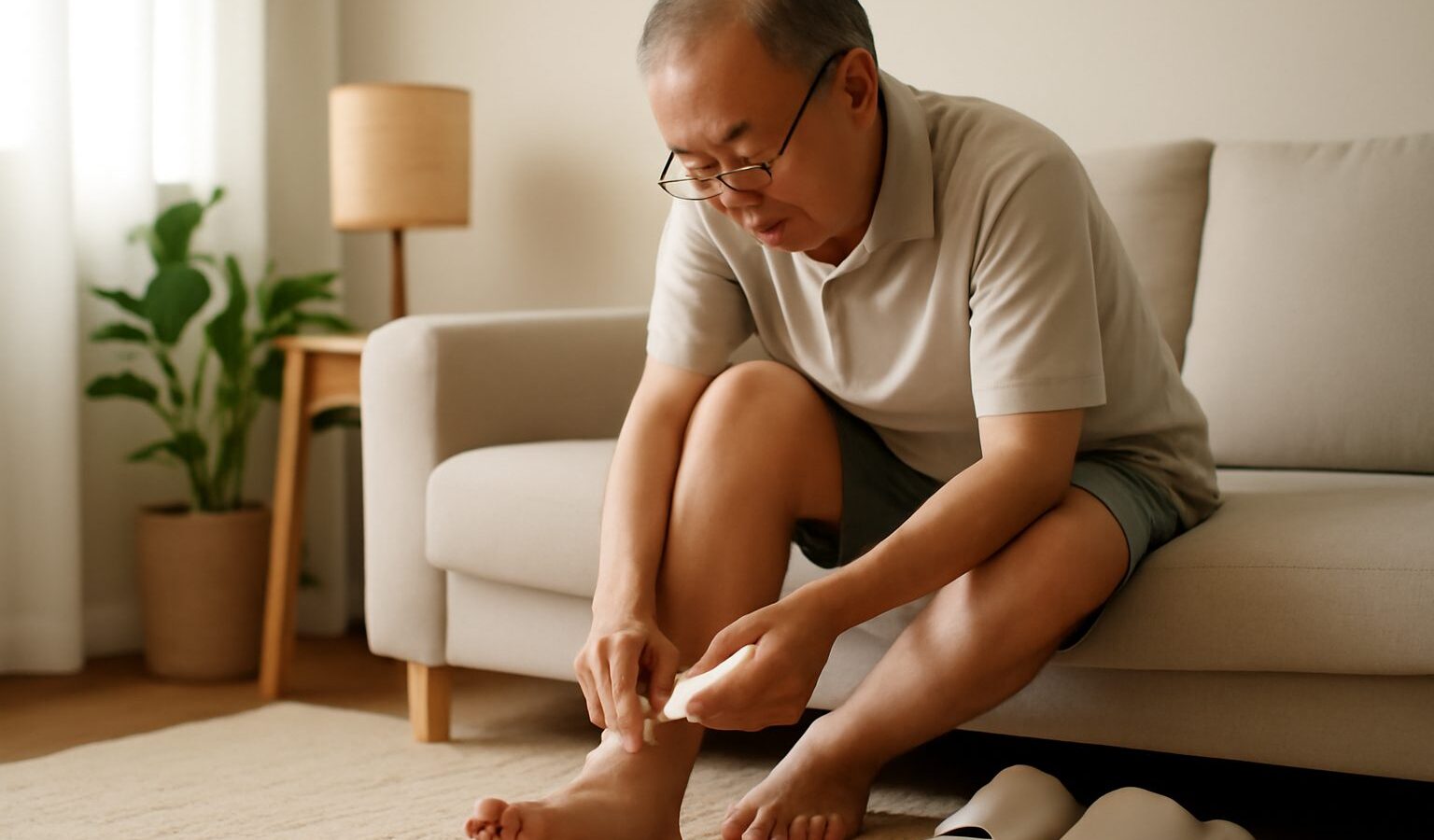
Feet carry us through life, yet they are often the last part of the body we think about. For older adults, that oversight can be costly. Good foot care for seniors is not a beauty routine, it is a genuine health matter that protects mobility, balance, and independence. Painful or neglected feet make people walk less, lose strength, and become more likely to fall. This guide offers practical, general information for older Singaporeans and their families on keeping feet healthy, and on knowing when a problem needs a doctor or podiatrist. It is not medical advice.
Why Feet Deserve More Attention With Age
As we age, the feet change in ways that make daily care more important. Skin becomes thinner and drier, the natural fat padding under the heel and ball of the foot thins out, circulation may slow, and sensation can dull, especially for people with diabetes. Nails grow thicker and harder to trim, and bending down to reach the feet becomes difficult for those with stiff joints or poor eyesight.
The result is that small issues, a corn, a crack in dry skin, an ingrown nail, a blister from an ill-fitting shoe, can go unnoticed and grow into painful problems. Sore feet change how a person walks, throw off balance, and discourage the daily walking that keeps muscles and joints strong. Looking after the feet is therefore one of the simplest ways to protect a senior’s overall wellbeing and reduce the risk of falls.
A Simple Daily Foot Care Routine
A short, consistent routine catches problems early and keeps feet comfortable. Most of it can be done at home, and a family member can help when reaching or seeing the feet is hard.
- Look every day. Check the tops, soles, heels, and between the toes for cuts, redness, blisters, swelling, or colour changes. Use a mirror or ask someone to help if bending is difficult.
- Wash and dry gently. Clean with mild soap and lukewarm water, then dry carefully, especially between the toes, where dampness invites fungal infection.
- Moisturise dry skin. Apply a suitable cream to the tops and soles to prevent cracking, but avoid heavy moisturiser between the toes.
- Trim nails carefully. Cut straight across, not too short, and smooth the edges. Anyone with thick nails, poor eyesight, or diabetes may be safer letting a podiatrist do this.
- Change socks daily. Choose soft, breathable, seam-free socks that do not dig in at the top.
- Keep moving. Gentle walking and simple ankle and toe exercises support circulation and strength.
Choosing Footwear That Protects
The right shoes prevent a surprising number of foot problems. In Singapore’s warm, humid climate, breathable materials matter, but so does proper support and a secure fit. Ill-fitting or worn-out shoes are a common, avoidable cause of blisters, corns, and falls.
| Feature | What to look for | Why it helps |
|---|---|---|
| Fit | Snug at the heel, room to wiggle toes | Prevents rubbing, blisters, and slipping |
| Sole | Firm, non-slip grip | Reduces slips on wet or smooth floors |
| Fastening | Velcro or laces, adjustable | Holds the foot securely, easy to put on |
| Support | Cushioned, supportive insole | Eases pressure on thinning foot pads |
| Material | Breathable, soft upper | Keeps feet cool and reduces pressure spots |
A few habits help too: shop for shoes later in the day when feet are slightly swollen, always try both shoes on, and replace footwear once the grip or support wears down. Avoid walking barefoot on hard or slippery floors at home, and keep slippers with a proper back and grip rather than loose, flat slides.
Diabetic Foot Care Needs Extra Vigilance
For anyone living with diabetes, foot care moves from helpful to essential. Diabetes can reduce sensation in the feet, meaning a cut, blister, or ulcer may not be felt, and can slow healing and circulation, so small wounds can worsen quickly. Diabetic foot care is important, and it deserves daily attention and prompt medical follow-up.
People with diabetes should check their feet every single day, keep skin moisturised but dry between the toes, never treat corns or hard skin with blades or over-the-counter acid removers themselves, and always wear protective footwear. Any wound, blister, ulcer, or area of redness, warmth, or discolouration should be seen by a doctor promptly, not left to heal on its own. Regular foot screening is part of good diabetes care, so raise it at diabetes reviews at the polyclinic or clinic.
When to See a Doctor or Podiatrist
Home care handles the basics, but some problems need a professional. See a doctor, polyclinic, or podiatrist if there is:
- A cut, blister, sore, or ulcer that is not healing, or any wound on a diabetic foot.
- Pain, swelling, redness, warmth, or pus, which may signal infection.
- Numbness, tingling, or a loss of feeling in the feet.
- Ingrown, very thick, or fungal nails that are hard to manage at home.
- Painful corns, calluses, or bunions affecting walking.
- Any change in the colour or temperature of a foot.
A podiatrist can safely manage nails and hard skin, assess footwear and walking, and treat many conditions before they worsen. Polyclinics and hospitals in Singapore offer podiatry services, and a doctor can advise on referrals. For older adults with reduced mobility, the Agency for Integrated Care (AIC) can help families find community and home-based support.
This article is general information for education, not medical advice, and each person’s needs differ. For any foot concern, especially a diabetic foot, please see your own doctor or a podiatrist, and defer to guidance from MOH and HealthHub on foot and diabetes care in Singapore.
Explore More
Healthy feet are a foundation for staying active and independent as we age. To keep moving with confidence, our guide to active ageing centres shows where seniors can exercise and socialise nearby. Families managing several aspects of a senior’s daily care may also find our guide to managing incontinence in older age a helpful, dignity-first companion read.