
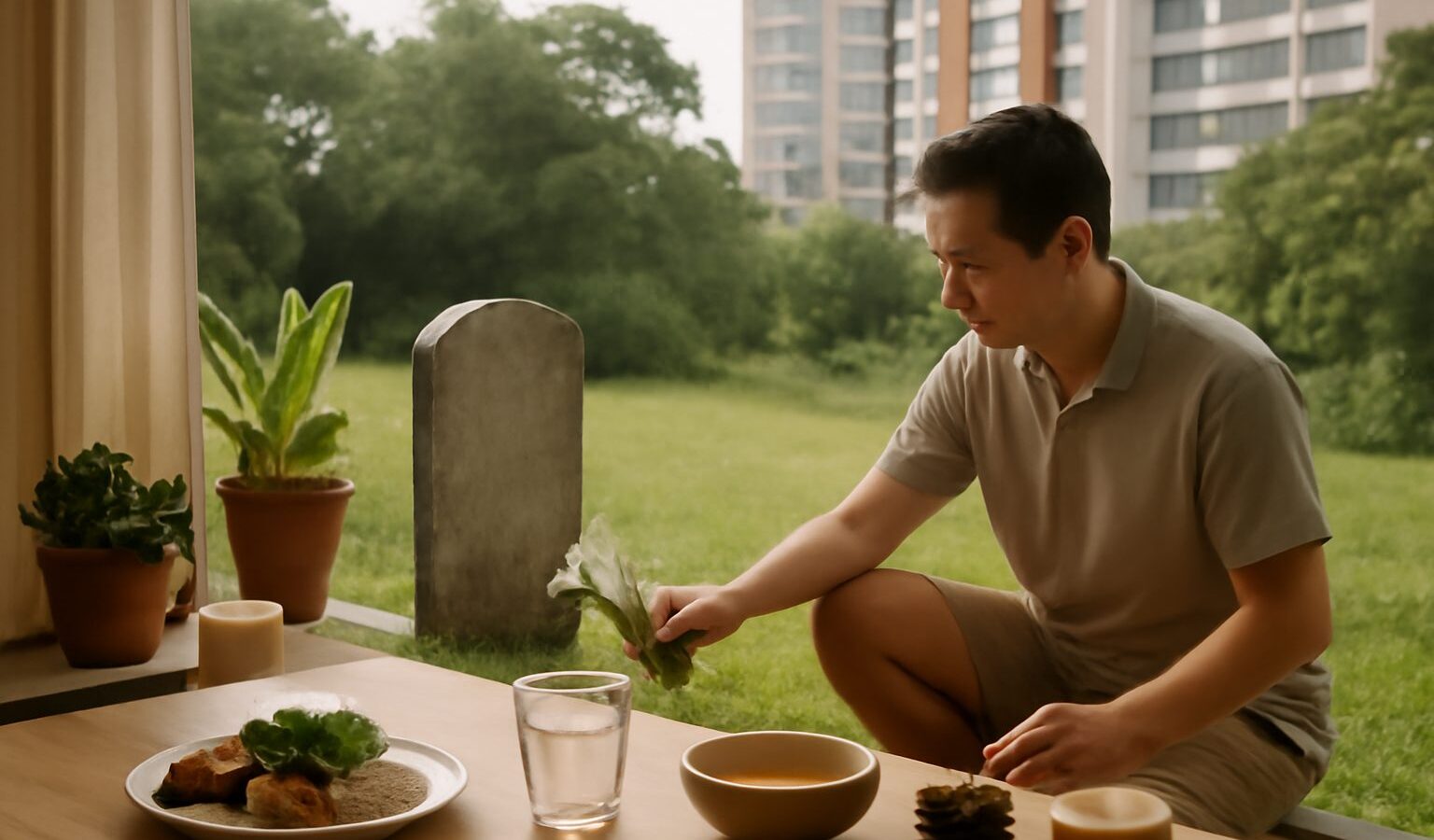
Walk through a new housing estate, a busy shopping street or a quiet city park in Singapore and there is a fair chance you are standing on what was once a burial ground. As a small island with a growing population, Singapore has cleared many of its old cemeteries over the past century to make room for homes, roads, schools and green spaces. Learning about the former cemeteries of Singapore is a way of reading the city in layers, and of understanding why land here carries so much history.
This guide looks at how burial grounds were redeveloped, a few well-known examples, and the small clues that still reveal the past if you know where to look.
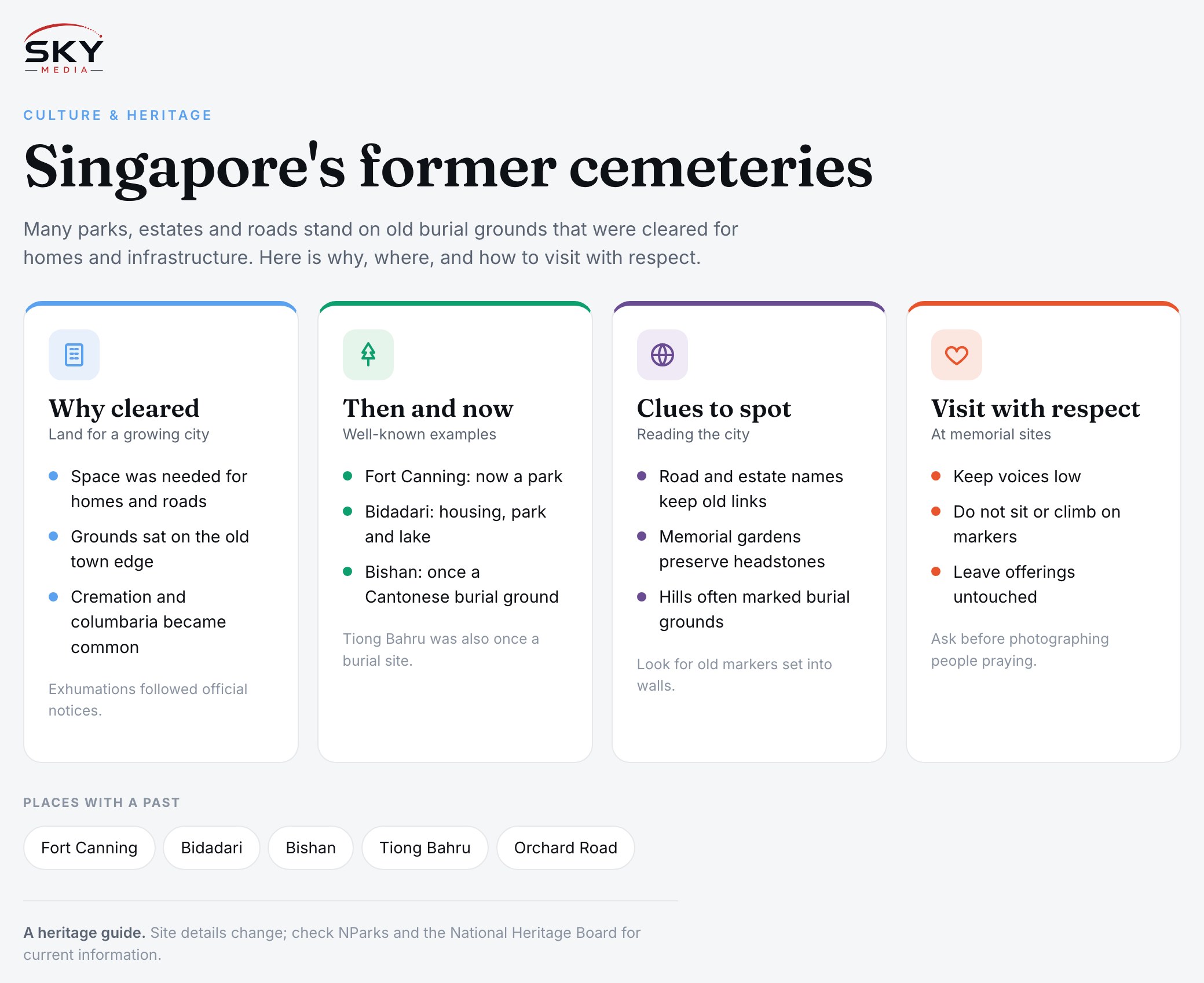
Why So Many Cemeteries Were Cleared
In the 19th and early 20th centuries, communities in Singapore buried their dead in many separate grounds. Clan associations, temples, churches, mosques and community groups often managed their own cemeteries, which were scattered across what were then the edges of town.
As the city grew, those edges became the centre. From the mid 20th century, and especially after independence, the government needed land for public housing, infrastructure and industry. Large, low-density burial grounds were an obvious candidate for redevelopment. Over time, policy also shifted toward cremation, columbarium niches and limited-tenure burial plots, so that land could be reused rather than set aside forever.
The process of clearing a cemetery is called exhumation. Families are usually given notice and the chance to claim remains, which may then be cremated and placed in a columbarium, or reburied according to religious requirements. Unclaimed remains are typically handled by the authorities with appropriate rites. The exact procedures are set by the relevant government agencies and differ between faiths, so anyone affected should follow the official notices.
Well-Known Former Burial Grounds
Some of Singapore’s most familiar places sit on former cemetery land. These examples are among the better documented.
Fort Canning Hill. The hill held one of Singapore’s earliest Christian cemeteries in the colonial era. Burials there stopped long ago, and the area is now part of Fort Canning Park. Many of the old gravestones were set into the surrounding walls, and the Gothic-style gateways still stand, so this is one of the easiest places to see physical traces.
Bidadari. Bidadari was once a large cemetery with Christian, Muslim, Hindu and other sections. It was exhumed in the early 2000s, and the area has since been redeveloped into the Bidadari housing estate, with a park and lake at its heart. A small memorial garden preserves a selection of headstones.
Bishan. Before Bishan became a new town, much of the area was part of a large Cantonese burial ground associated with Peck San Theng, a long-standing community organisation. The cemetery was cleared in the 1980s to build the HDB estate. The name “Bishan” itself is linked to Peck San Theng.
Orchard Road area. Parts of today’s Orchard Road were once Teochew burial ground managed by the Ngee Ann Kongsi, a Teochew clan foundation. The land was later redeveloped, and the area around Ngee Ann City reflects that link in name.
Tiong Bahru. Tiong Bahru’s hilly land was once used for burials before the estate was built in the colonial period. The name is often explained as combining a Hokkien word for cemetery or “end” with the Malay word for “new”.
Bukit Brown. Bukit Brown is still a cemetery, but part of it was affected by road construction, and it remains at the centre of conversations about heritage and land use. Our guide to Bukit Brown and heritage cemeteries covers what you can still visit there.
Accounts of when and how each site was cleared vary in detail between sources. For accurate dates, the National Heritage Board, the National Archives of Singapore and the National Library’s resources are the best places to check.
Then and Now at a Glance
| Former site | Community or use | What stands there now | Trace to look for |
|---|---|---|---|
| Fort Canning Hill | Early Christian cemetery | Fort Canning Park | Gravestones set into walls, old gateways |
| Bidadari | Multi-faith cemetery | Housing estate, park and lake | Memorial garden with preserved headstones |
| Bishan | Cantonese burial ground linked to Peck San Theng | HDB new town | The estate’s name |
| Orchard Road area | Teochew burial ground linked to Ngee Ann Kongsi | Shopping and commercial district | Ngee Ann City’s name |
| Tiong Bahru | Hillside burial land | Heritage housing estate | The name and hilly terrain |
How to Read Traces of the Past in Today’s City
You will rarely see an obvious sign saying “this was a cemetery”. The clues are more subtle, and spotting them can turn an ordinary walk into a small history lesson.
- Place names. Names of estates, roads and buildings often preserve old associations. Hokkien, Cantonese and Malay words can point to land use that is no longer visible.
- Memorial gardens and plaques. Some redeveloped sites include a small garden, plaque or preserved headstones. These are usually tucked into parks rather than in busy streets.
- Odd patches of green. A park or open space whose shape seems out of step with surrounding roads may follow the outline of an older site.
- Terrain. Many burial grounds were on hills, which were considered auspicious in Chinese tradition. Hilly pockets in otherwise flat areas can hint at this.
- Clan and temple connections. Clan associations and religious bodies that once managed cemeteries often still exist and sometimes keep records or small memorials.
- Old maps. Historical maps held by the National Archives and the National Library let you compare old and new layouts side by side.
If you want to visit cemeteries that remain, read our guide on how to explore Singapore’s cemeteries respectfully before you go.
Visiting With Respect
Even where no graves remain, these places matter to families whose ancestors were buried there. Some people still offer prayers at memorial sites during festivals such as Qing Ming, the tomb-sweeping festival observed by many Chinese families.
A few simple habits help:
- Keep voices low and behaviour calm at memorials and preserved gravestones.
- Do not sit or climb on headstones, walls or markers.
- Ask before photographing anyone who is praying or making offerings.
- Leave offerings, joss sticks and personal items untouched.
- Follow any signs or guidance set by the park or site managers, such as NParks.
Why This History Still Matters
Former cemeteries tell a bigger story about Singapore: a city that has repeatedly reshaped its land to house its people, while trying, not always easily, to honour those who came before. The debates around exhumation, especially in recent decades, show how strongly many Singaporeans feel about memory, ancestry and place.
For newcomers, knowing this history also explains some local customs and sensitivities, such as why certain sites carry quiet memorials or why some older residents speak of an estate by what it used to be. Next time you walk through Bishan, Bidadari or Fort Canning, look a little closer. The past is still there, written into names, slopes and stones.
Frequently Asked Questions
Where in Singapore can I still see old gravestones from cleared cemeteries? Fort Canning Park is one of the easiest places, as many old gravestones were set into its walls and the Gothic-style gateways still stand. Bidadari also has a small memorial garden that preserves a selection of headstones, set within the redeveloped estate.
Why were so many Chinese graves built on hills? Hills were considered auspicious in Chinese tradition, so burial grounds were often placed on higher land. That is why hilly pockets in otherwise flat areas can hint that a site was once a cemetery, though terrain alone is never proof.
How can I find out if my ancestors were buried in a cleared cemetery? Start with the National Archives of Singapore, the National Library and the National Heritage Board, which hold historical records and maps. Clan associations and religious bodies that once managed cemeteries may also keep records, so ask them if you know your family’s community.
Is Bukit Brown open to visitors? It is still a cemetery rather than a cleared site, so visits are possible, but they should be respectful and quiet. Rules, access and guided options can change, so check the latest information from official heritage sources before you go.
Is it bad luck to live in an estate built on a former cemetery? There is no evidence that it affects residents, and many familiar areas sit on former burial land. Some people hold personal or religious beliefs about it, which deserve respect. Most residents simply see it as part of the area’s history.