
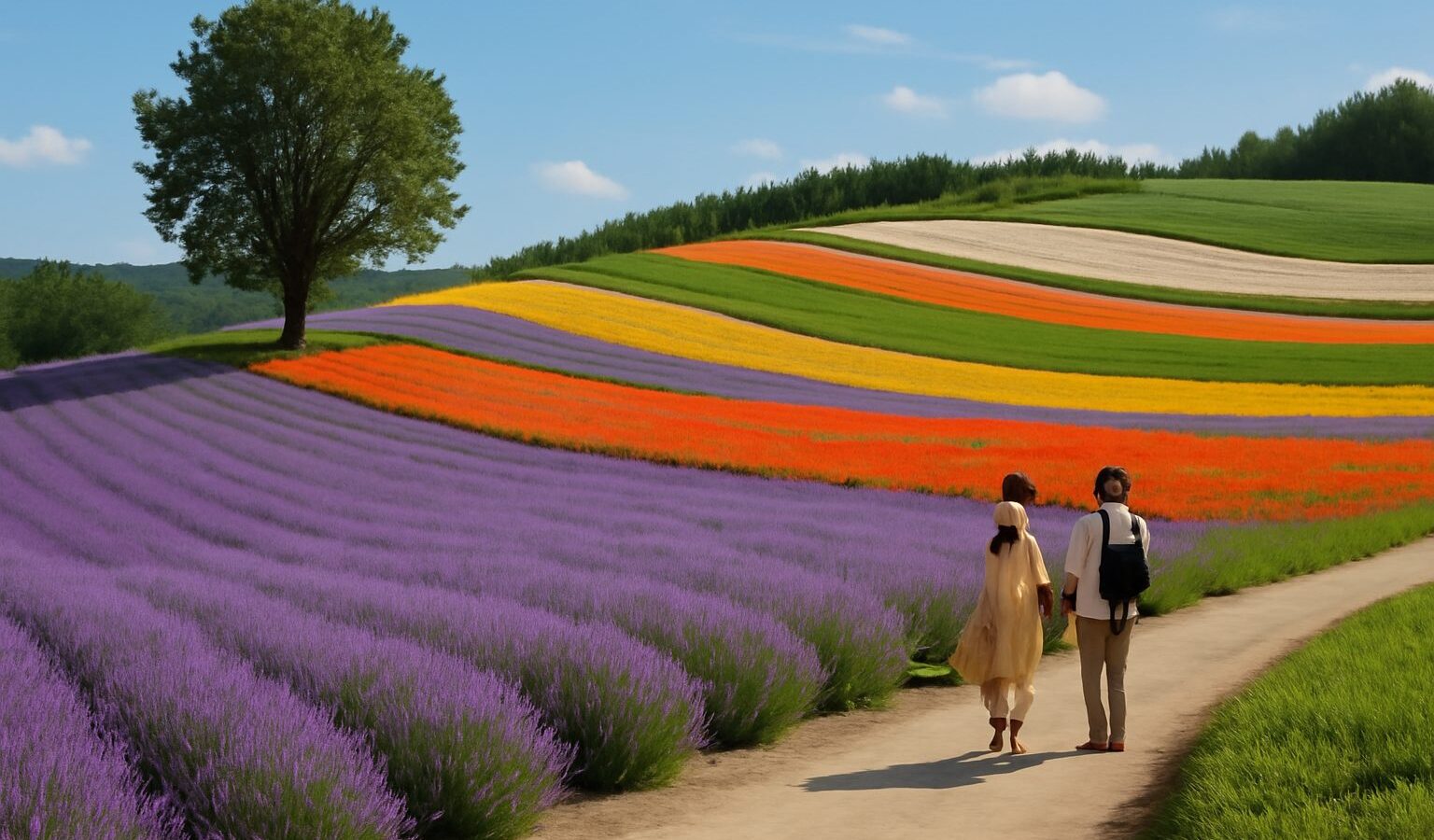
Picture rolling hills striped purple, red, white and yellow, a cool breeze, and mountains still holding patches of snow on the horizon. That is central Hokkaido in summer, and it is one of the most rewarding trips you can plan from Singapore when you want a complete change of scenery.
If you are planning Furano and Biei from Singapore, this guide covers the part a general Hokkaido itinerary often rushes: when the flowers actually bloom, how to get from Sapporo by train or car, and how to enjoy Biei’s famous patchwork hills without spending the whole day stuck in traffic. For a broader overview of the island, see our Hokkaido from Singapore travel guide.
When to Go: Timing the Lavender and Flower Season
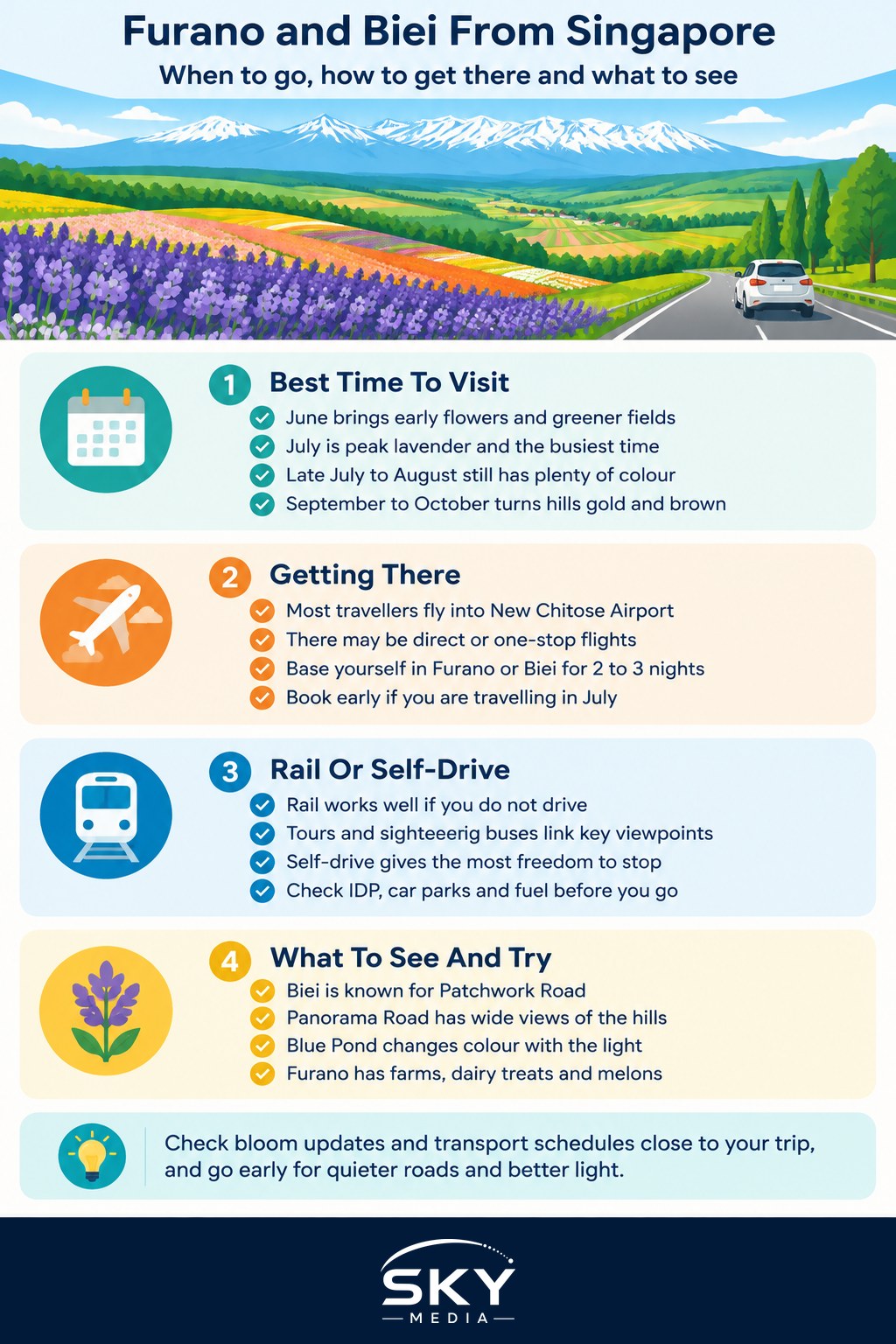
The flower fields around Furano and Biei follow a fairly predictable rhythm, though exact timing shifts each year with the weather.
- June: Early flowers start to appear. Fields are greener and quieter, and some lavender varieties begin to bloom late in the month.
- July: The headline month. Lavender usually peaks around mid-July, and the area is at its busiest. Book transport and accommodation early.
- Late July to August: Lavender fades, but many farms plant other flowers, such as poppies, sunflowers and salvia, so colour continues. Biei’s hills look lush.
- September to October: Harvest season turns the patchwork hills gold and brown, and autumn leaves arrive at higher elevations. Fewer flowers, but beautiful light and smaller crowds.
Coming from Singapore, the contrast in temperature is the first thing you notice. Summer days in central Hokkaido can be warm in the afternoon but cool in the early morning and evening, so pack a light jacket. Local tourism websites often post bloom updates through the season, which are worth checking a week or two before you fly.
Getting There From Singapore
Most travellers fly into New Chitose Airport, which serves Sapporo. Depending on the season, there may be direct flights from Singapore or convenient one-stop options via other Asian hubs. Compare airlines and check schedules early for July, which is peak season in Hokkaido.
From New Chitose, you can head straight to Furano by car, or spend a night or two in Sapporo first. Many visitors base themselves in Furano or Biei for two to three nights, which gives you time to catch the fields in early morning light before tour buses arrive.
Rail or Self-Drive From Sapporo
You have two realistic ways to explore the area. The right choice depends on your group, your confidence driving abroad and how much flexibility you want.
| Option | Getting from Sapporo | Getting around Furano and Biei | Best for |
|---|---|---|---|
| Rail only | JR trains via Asahikawa or Takikawa; in summer a seasonal direct service sometimes runs | Seasonal sightseeing trains, local buses, bike hire and tours | Travellers who do not drive, couples, solo visitors |
| Rail plus tours | Train to Furano or Biei | Day tours or sightseeing buses that link the main viewpoints | First-timers who want to see a lot without driving |
| Self-drive | Expressway and scenic roads, roughly a couple of hours depending on route and stops | Complete freedom to stop at viewpoints and quiet farms | Families, photographers, groups with luggage |
By rail. JR Hokkaido runs trains from Sapporo towards Furano, usually with a change. In the summer flower season, special seasonal services have run in past years, including sightseeing trains between Furano and Biei that stop at a temporary station near the lavender fields. Schedules change yearly, so check JR Hokkaido’s official site before you build your plan. Rail passes may be good value if you are combining Furano with other parts of Hokkaido; compare pass prices with point-to-point tickets.
By car. Self-drive is the most flexible way to see Biei, where many of the best views are along small farm roads. Singapore licence holders generally need an International Driving Permit (IDP) to drive in Japan, which you can apply for in Singapore before you leave. Check Japan’s current requirements with the Japan National Tourism Organization or the Japanese embassy, and with your rental company. Japan drives on the left, as Singapore does, which makes the switch easier.
Driving tips for the area:
- Expect traffic and full car parks at popular farms in mid-July, especially on weekends. Go early.
- Use designated car parks. Never stop on farm roads or verges to take photos.
- Watch for cyclists, slow farm vehicles and wildlife such as deer, especially at dusk.
- Petrol stations can be sparse in rural areas, so top up when you can.
Biei’s Patchwork Hills and Viewpoints
Biei is less about single attractions and more about landscape. Its rolling farmland is planted with different crops in neighbouring plots, creating the famous patchwork effect. Two scenic areas draw most visitors:
- Patchwork Road, to the west of Biei town, with a string of photogenic hills and solitary trees.
- Panorama Road, to the south and east, with sweeping views of the hills against the Tokachi mountain range.
Nearby, the Blue Pond at Shirogane is famous for its unreal turquoise water and standing dead trees. Colour varies with light and weather, so do not be disappointed if it looks different from photos.
Please respect the farmland. These are working farms, not parks. Local authorities have repeatedly asked visitors not to walk into fields. Doing so can damage crops and spread plant disease. A few simple rules go a long way:
- Stay on roads and paths, and never walk into a field, even for a photo.
- Do not climb fences or step around a “keep out” sign.
- Take your rubbish with you.
- Keep drones grounded unless you have checked local rules and permissions.
Furano’s Flower Farms and Food
Furano is the heart of lavender country. The best-known farms are big, well-organised and busy, with walkways, cafes and gift shops. Smaller farms and hillside fields can be calmer and just as pretty. Many open seasonally, so check opening details before you go.
Beyond flowers, the area is known for:
- Dairy. Soft-serve ice cream (including lavender flavour), cheese and fresh milk.
- Melons. Furano melons are a summer treat and a popular gift.
- Produce stalls. Corn, potatoes and vegetables fresh from the farms.
If you love flowers at home too, our guide on how to photograph flowers and plants will help you get better shots of the fields, and pressing and drying flowers is a nice way to keep a memory, using flowers you buy rather than picking from the fields.
A Simple Three-Day Plan
- Day 1: Fly into New Chitose, drive or take the train towards Furano, and check in. Catch the evening light at a quieter farm.
- Day 2: Early morning at the main lavender fields, then lunch in Furano and an afternoon drive to Biei’s Panorama Road.
- Day 3: Blue Pond in the morning, Patchwork Road, then return towards Sapporo or continue to Asahikawa.
Adjust for weather. If it rains, enjoy the farm cafes and come back for the fields when the sun returns.
Frequently Asked Questions
Do I need an International Driving Permit to self-drive around Furano and Biei? Singapore licence holders generally need an International Driving Permit to drive in Japan, which can be applied for in Singapore before you leave. Confirm the current requirements with the Japan National Tourism Organization or the Japanese embassy, and check your rental company’s conditions too.
Is Furano and Biei doable as a day trip from Sapporo? It is possible by car or train, but a day trip leaves little time for the fields, especially in July when roads and car parks are busy. Staying two to three nights in Furano or Biei lets you see the fields in soft early light before the tour buses arrive.
Can I visit Furano and Biei in winter instead of summer? Yes, but you will not see the flower fields, as the colour is a summer feature. The area looks very different in cold weather, with snow on the hills. Winter driving needs experience and proper preparation, so check road and weather conditions with local sources.
What should I wear and pack for summer in central Hokkaido? Pack for a Singapore-to-Hokkaido contrast: afternoons can be warm, but mornings and evenings are cool. A light jacket, layers, a hat and sun protection, and comfortable walking shoes work well. A small umbrella or rain jacket helps if you need to change plans around weather.
Is it okay to walk into the fields for a photo? No. These are working farms, and walking into fields can damage crops and spread plant disease. Stay on roads and paths, respect keep-out signs, use car parks rather than stopping on farm roads, and check local rules before flying a drone.