
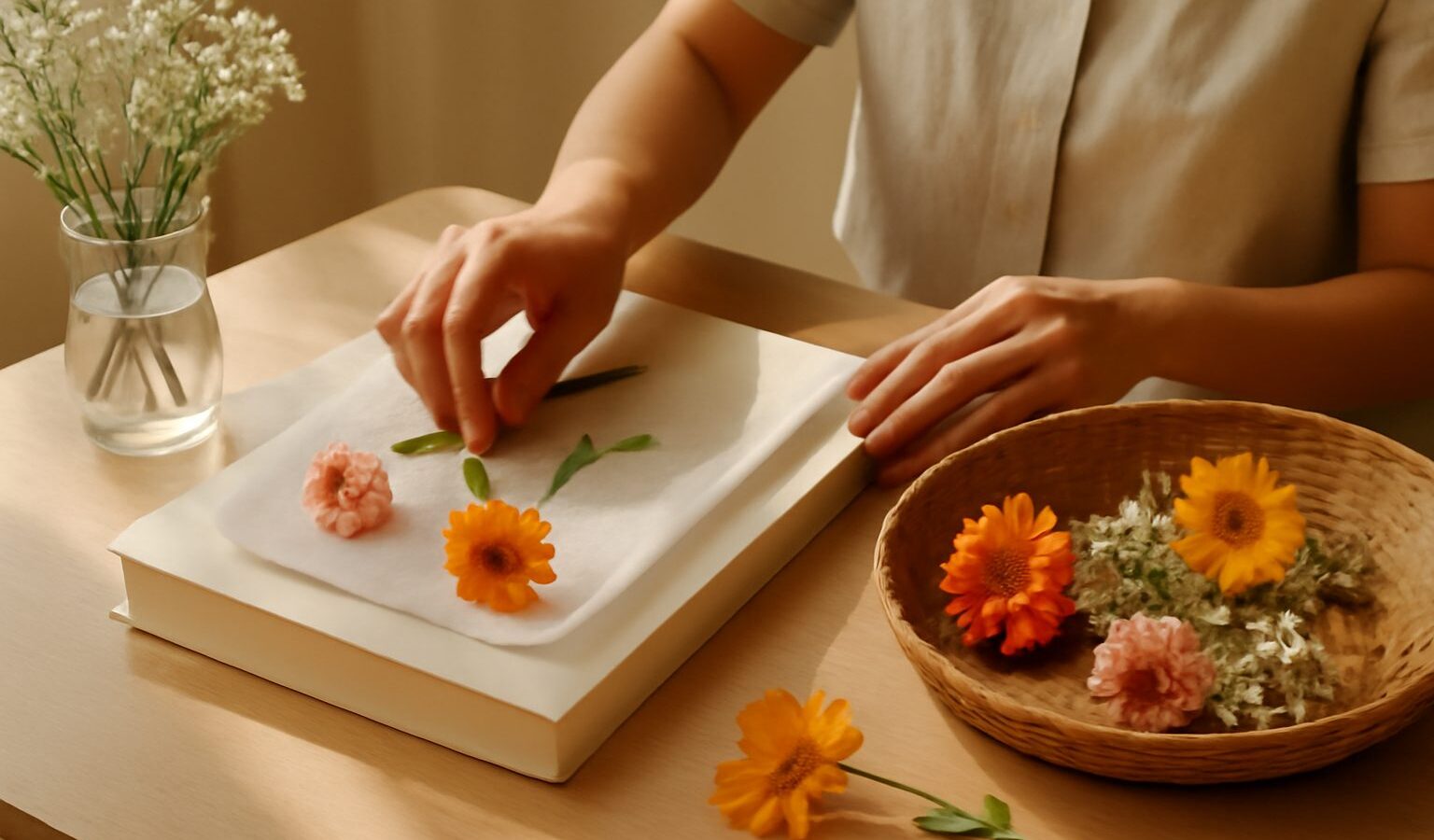
Pressing flowers in Singapore is a charming way to hold on to a bloom long after the plant has finished flowering, and it turns a simple hobby into keepsakes, cards, framed art and bookmarks. The one thing that trips people up here is our humidity. Damp air is the enemy of preserved petals, so the whole craft is really about getting moisture out of a flower quickly and keeping it out. Get that right and you can capture the orchids, bougainvillea and frangipani of a tropical garden in flat, papery perfection or as pretty dried bunches.
This guide sticks to ornamental flowers you have grown or bought. Never press or handle plants you cannot positively identify, and if you have sensitive skin, wear gloves, because some sap can irritate.
Pressing flowers flat
Pressing is best for flatter, thinner blooms and leaves. The classic method needs almost nothing you do not already own.
- Pick flowers when they are fresh and dry, ideally in the morning after any dew has gone but before the day’s heat and rain.
- Lay each bloom between two sheets of absorbent paper, such as plain printer paper, blotting paper or newspaper.
- Place the paper inside a heavy book, or between flat boards, and weigh it down with more books.
- In our humidity, change the paper every couple of days so it does not stay damp and grow mould.
- Leave for two to three weeks, checking that the flowers feel completely dry and papery before you use them.
Thin, single-layer flowers like pansies, cosmos, small daisies and ferny foliage press beautifully. Bulky blooms like roses are harder because their thick centres hold moisture, so either take them apart petal by petal or choose the drying method below instead.
If you enjoy the idea of preserving what you grow, you might also like our guide to preserving and drying your herbs, which uses very similar principles for the kitchen.
Air drying and other methods
For flowers you want to keep three-dimensional, such as roses, statice or everlastings, air drying works well. Strip most of the leaves, tie small bunches loosely with string, and hang them upside down in a dry, airy, shaded spot. Good airflow is essential in Singapore, so a spot with a breeze or near a fan beats a stuffy cupboard, and out of direct sun keeps the colours from bleaching. Depending on the flower and the weather, this takes one to three weeks.
A faster, more reliable method in our climate is drying with silica gel. Bury the blooms gently in the fine crystals inside a sealed container and the desiccant pulls moisture out in a matter of days while holding the flower’s shape. It costs a little more, but the results are excellent and it sidesteps the mould risk that plagues slower methods here. Keep silica gel sealed and out of reach of children and pets.
Whichever route you take, the recurring enemy is damp. If you ever see fuzzy growth appear, that flower is a loss, so throw it out and improve airflow for the rest. Our broader advice on dealing with mould and fungus on plants is worth a look, because the same warm, wet conditions that trouble living plants also spoil drying ones.
Using and keeping your flowers
Once your flowers are fully dry, store them somewhere sealed and dry until you use them, because they will happily reabsorb moisture from the air on a humid day and go limp or spotty. An airtight box with a small sachet of silica gel keeps them crisp.
Pressed flowers make gorgeous greeting cards, framed pictures, bookmarks laminated for protection, and decorations for candles or resin. Dried bunches look lovely in a vase without water and last for months. Handle everything gently, as dried petals are brittle, and glue pressed flowers down with a thin, careful touch.
Growing your own cutting flowers makes this hobby even more satisfying, since you can snip blooms at their peak. If that appeals, our guide to how to get your plants to flower will help you keep a steady supply. With a little attention to our humidity, pressing and drying flowers becomes a simple, meditative craft that lets a Singapore garden bloom on your walls all year round.