
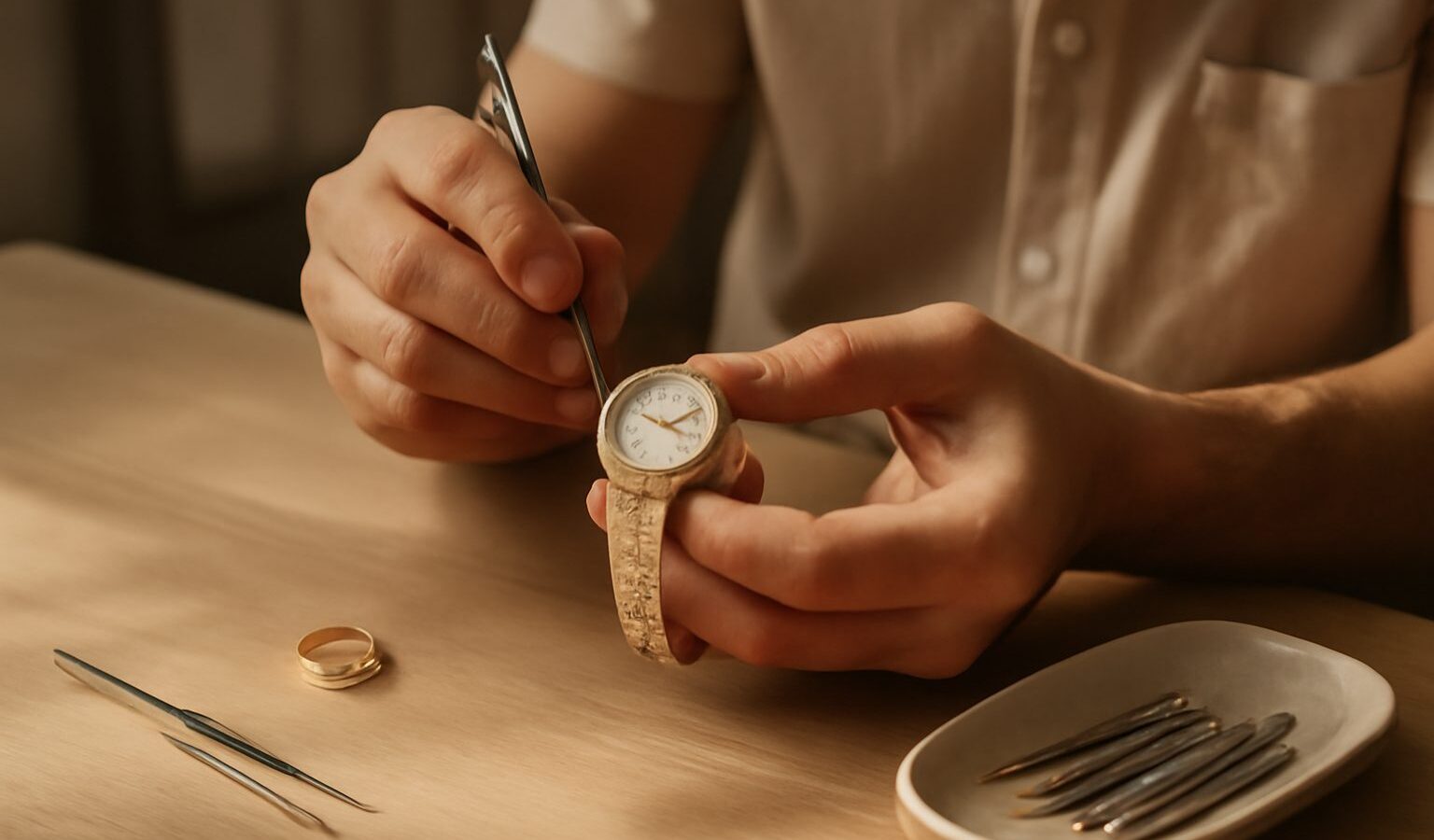
A stopped watch or a loose stone does not mean the piece is finished. Good watch repair Singapore workshops, along with skilled jewellers, can revive most items for far less than replacing them. This guide walks you through what can be fixed, how to get a fair quote, and how to protect yourself along the way.
Common repairs and what they involve
Most jobs fall into a handful of familiar categories. Knowing the terms helps you describe the problem and understand the quote.
Watches:
- Battery replacement for quartz watches, often a quick over-the-counter job.
- Full servicing for mechanical or automatic watches, where the movement is cleaned, oiled and regulated.
- Crystal and glass replacement for scratches or cracks.
- Crown, stem and gasket work for winding faults and water resistance.
- Strap and bracelet sizing, pin replacement or a new band.
Jewellery:
- Ring resizing up or down a few sizes.
- Claw or setting repair to secure a loose gemstone.
- Chain and clasp soldering after a snap.
- Rhodium plating to refresh white gold that has yellowed.
- Cleaning and polishing to remove scratches and restore shine.
Where to take your piece
You generally have three routes. Each has a place depending on the item’s value and sentiment.
| Route | Best for | Typical strength | Watch-outs |
|---|---|---|---|
| Brand boutique or authorised centre | Luxury or in-warranty pieces | Genuine parts, brand records | Longer waits, higher cost |
| Independent watchmaker or jeweller | Everyday repairs, resizing | Faster, often cheaper | Confirm experience with your brand |
| Mall kiosk or key-shop counter | Batteries, straps, quick jobs | Walk-in convenience | Not for complex movements |
For a sentimental heirloom or a high-value timepiece, lean towards an authorised centre or a well-reviewed specialist. For a battery swap or a strap hole, a reputable kiosk is perfectly fine.
Getting a quote you can trust
Never hand over a piece without agreeing on the terms first. A trustworthy repairer will happily explain the following before starting:
- A written quote listing parts, labour and turnaround time.
- Whether the quote is fixed or an estimate. Some servicing jobs reveal further issues once the case is opened, so ask how they will contact you before doing extra work.
- What happens to old parts. For watches, ask to keep the replaced components.
- A receipt describing the item. For jewellery, note the metal, carat, stone type and any distinguishing marks.
- The warranty on the repair itself.
If a quote feels vague or the shop resists putting it in writing, treat that as a warning sign and try elsewhere.
Protecting valuable pieces
When you drop off something precious, a little paperwork prevents disputes later.
- Photograph the item from several angles before you leave it.
- Get a detailed receipt that identifies the piece, not just “one ring”.
- For gemstones, ask the jeweller to note the stone’s presence and rough size on the receipt so nothing can be quietly swapped.
- Ask whether the shop insures items in its care while being repaired.
- Keep any grading certificate at home rather than handing over the original.
These steps are not about distrust. They simply give both sides a clear record if memories differ.
Warranty and authenticity considerations
If your watch is still under the manufacturer’s warranty, using an unauthorised repairer can void it. Check the warranty card first. For luxury watches, non-genuine parts can also affect resale value and future servicing, so confirm what parts a workshop intends to use.
For jewellery, ask whether resizing or replating will affect any existing certification or hallmark. Reputable jewellers will tell you upfront when a repair might alter the piece in a way that matters.
Managing cost and expectations
Repair pricing depends on the work, the parts and the brand, so treat any figure a friend quotes as a rough guide rather than a promise. To keep costs sensible:
- Bundle small jobs. Getting a battery, a strap adjustment and a polish done together can save trips.
- Ask about grades of parts. Some repairs offer genuine or compatible parts at different prices.
- Weigh the piece’s value. A full mechanical service can cost a meaningful share of a modest watch’s value, so decide whether sentiment justifies it.
- Request a timeline in writing, especially if the movement is sent overseas for brand servicing.
When a repair goes wrong
Most repairs end happily, but occasionally a piece comes back worse, a stone is damaged, or the work does not match the quote. Handle it methodically:
- Raise it with the shop first, calmly and in writing, referring to your receipt and photos.
- Give them a fair chance to correct the fault under the repair warranty.
- If they refuse and the sum is significant, keep every document and message.
Understanding your consumer rights on returns and refunds helps you frame the conversation. If the repairer will not make good on a genuine fault, the Small Claims Tribunal offers a low-cost path for eligible claims. Written records, again, are what carry the day.
A quick pre-drop-off checklist
Before you head to any workshop, run through this:
- Photos taken and warranty card checked.
- Problem described clearly, ideally in writing.
- Quote agreed, with turnaround time.
- Detailed receipt collected on drop-off.
- A follow-up date noted in your calendar.
The bottom line
A tired watch or a wobbly setting is usually a simple fix in the right hands. Choose the route that matches the item’s value, insist on a written quote and a proper receipt, and keep photos of anything precious. With those habits, getting a repair done in Singapore is straightforward, and your favourite pieces stay in service for years to come.
Explore more: Consumer rights, returns and refunds · Small Claims Tribunal for newcomers · Using parcel lockers and collection points