
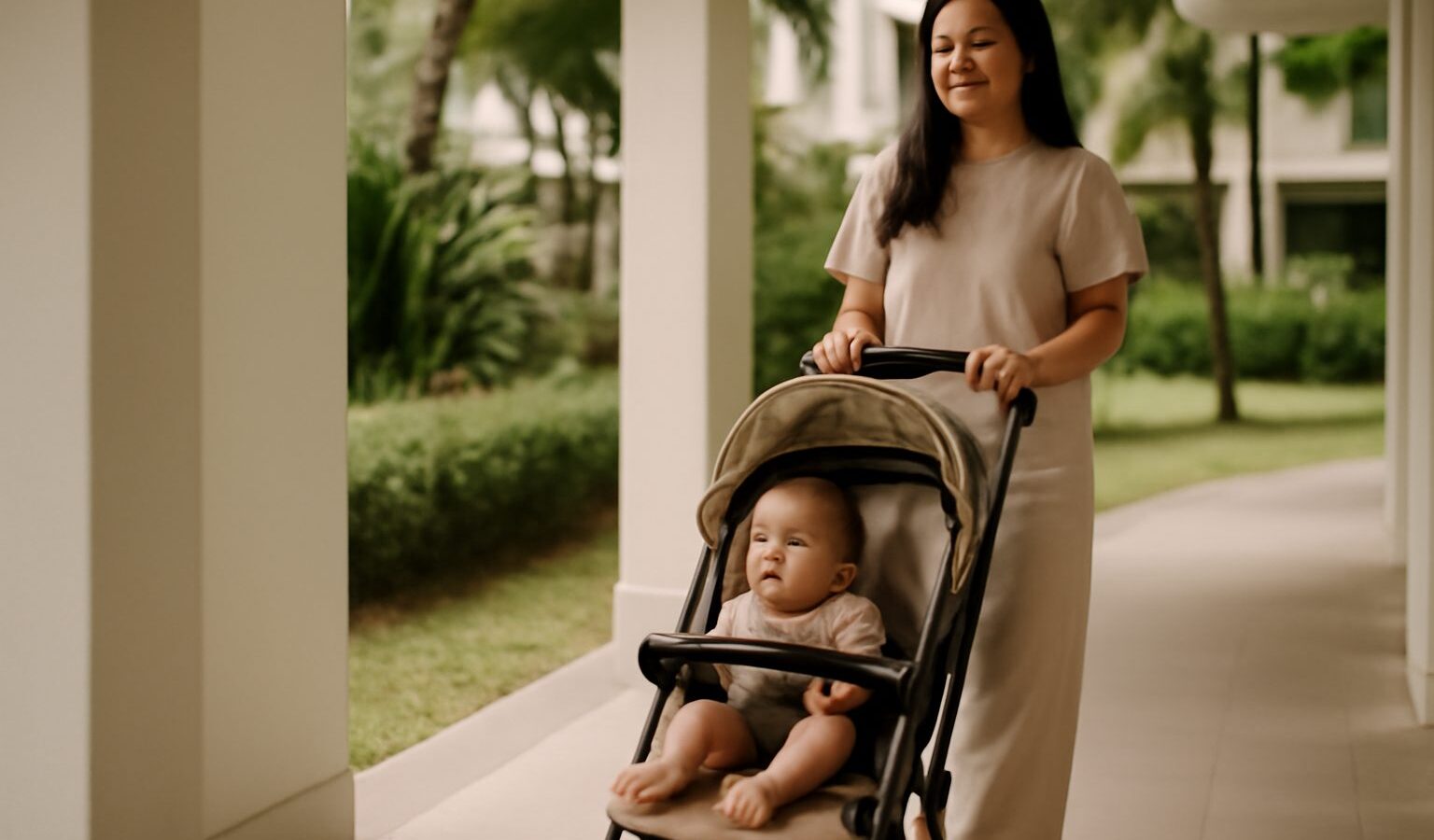
Heading out with a little one can feel daunting the first few times, but Singapore is one of the more manageable cities for parents on the move. Getting around with a stroller Singapore families rely on is largely a matter of knowing where the lifts are, how public transport handles prams, and which places make life easy with nursing rooms and step-free access. Once you have the routine, a trip to the shops or the park with a baby in tow becomes second nature. This guide walks through the practical points so your outings feel smooth rather than stressful.
The good news is that most of the city is designed with wheels in mind. Kerb ramps, lifts at MRT stations, and buses that can lower for boarding all help. A little planning before you leave, and a few habits once you are out, make all the difference.
Lifts, Ramps and Step-Free Routes
Before you set off, it helps to think in terms of a step-free route rather than the shortest one. Almost every MRT station has at least one lift connecting the street, concourse and platform, though it is not always next to the main entrance. Look for lift signs as you approach, and give yourself a couple of extra minutes to reach them. Overhead bridges increasingly have lifts too, but where they do not, look for a nearby signalised crossing with kerb ramps instead of carrying the stroller up steps.
Kerb ramps are common at junctions and pedestrian crossings, so you can usually keep rolling without lifting the pram. In older estates the ramps can be steeper or slightly uneven, so take corners slowly and keep one hand firmly on the handle. Void decks and covered linkways between HDB blocks are generally flat and sheltered, which makes them handy routes on rainy or very hot days.
MRT and Buses With a Stroller
Public transport is stroller-friendly, and you do not need to fold your pram on the MRT. Trains have dedicated spaces, often marked for wheelchairs and prams, usually near the ends of each carriage. Position the stroller in that space, apply the brake, and keep a hand on it as the train moves. During peak hours the trains get crowded, so if your schedule is flexible, travelling outside the busiest morning and evening periods is far more comfortable.
Buses in Singapore are largely wheelchair-accessible, which means they can also take an open stroller. These buses can kneel and deploy a ramp at the front door for easier boarding. Board through the front, move to the designated space in the middle, apply the brake, and hold on. Some parents prefer to fold the stroller and carry the baby on shorter or busier bus rides, and either approach is fine. If the bus is very full, it is sometimes easier to wait for the next one.
A few small habits help everywhere. Keep your travel card easy to reach so you are not fishing for it with one hand. Pack a compact changing kit rather than an overstuffed bag. And be ready to accept a helping hand, as fellow commuters often offer to hold a door or steady the pram.
Priority Spaces, Nursing Rooms and Facilities
Singapore has a strong culture of priority seating and spaces, and expectant mothers and adults with young children are among those they are meant for. Do not feel shy about using a priority seat or asking politely if someone can make room. Most people are happy to help once they notice you.
Nursing rooms and baby care rooms are widely available, which takes a lot of the worry out of a day trip. Shopping malls, larger MRT stations, community hubs and many attractions provide rooms with a nursing area, a changing station and sometimes a bottle-warming point. It is worth doing a quick mental note of where the nearest one is when you arrive somewhere new, so you are not searching in a hurry later.
Here is a quick reference to what you will commonly find and how to make the most of it.
| Facility | Where you will usually find it | Tip |
|---|---|---|
| Lifts | MRT stations, malls, overhead bridges | Follow lift signage early, they are not always central |
| Priority spaces on trains | Ends of MRT carriages | Apply the brake and keep a hand on the pram |
| Wheelchair-accessible buses | Most routes | Board at the front, use the middle space |
| Nursing and baby care rooms | Malls, hubs, attractions | Note the nearest one on arrival |
| Kerb ramps | Junctions and crossings | Take uneven ramps slowly |
Stroller-Friendly Places to Enjoy
Once you are confident on the move, plenty of places welcome a pram. Larger shopping malls are a reliable choice in any weather, with lifts, flat floors, feeding rooms and plenty of spots to pause. Many parks and park connectors have wide, paved paths that suit a stroll with the pram, and shaded stretches make them pleasant in the mornings or late afternoons when the sun is gentler. Waterfront promenades and garden attractions tend to be step-free and relaxed, giving you room to move without crowds pressing in.
When choosing where to go, think about shade, seating and the nearest facilities rather than distance alone. A shorter outing that goes smoothly builds your confidence far more than an ambitious day that leaves everyone tired. As your baby grows and your routine settles, you will find yourself reaching further afield without a second thought, pram and all.
It also helps to travel light and pick a stroller that suits your usual routes. A compact, easily folded pram is a real advantage when you need to slip through a busy carriage or lift a wheel over an awkward kerb, while a larger, sturdier model can be more comfortable for long strolls in the park. Whatever you use, keep the wheels and brakes in good order, as smooth wheels and a reliable brake make every outing safer and less tiring. A rain cover and a clip-on fan are small extras that earn their place in our climate, keeping your baby dry in a sudden shower and cool on a warm afternoon.
Do not underestimate the value of simply going out often. The first few trips are always the most nerve-wracking, but each one teaches you which lifts to use, which times are quietest, and where the nearest nursing room sits. Within a few weeks the mental map builds itself, and what once felt like an expedition becomes an easy part of daily life for you and your little one.
Explore more
Singapore Public Transport Guide
Having a Baby in Singapore
Registering a Birth in Singapore
Setting Up Your HDB Home