
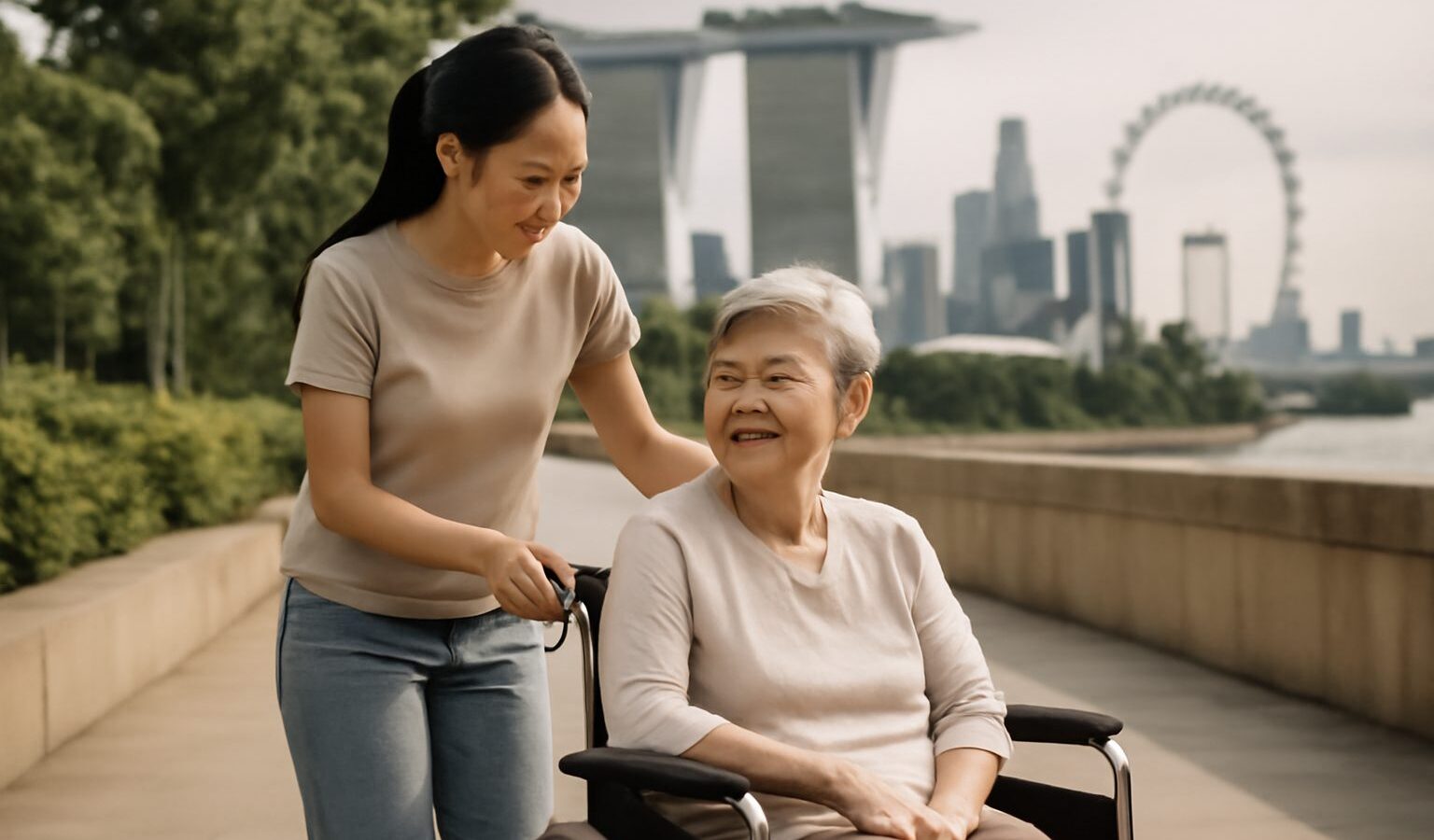
Bringing your parents to live with you, or hosting them for a long stay, changes how you look at the city. Suddenly you notice stairs, gaps and long walks that you never thought about before. The good news is that accessible transport for the elderly in Singapore is genuinely well developed, and with a little planning your parents can move around safely and keep their independence. This guide covers the wheelchair-friendly network, priority services, and how to make everyday journeys calmer for older travellers.
How Barrier-Free Singapore Really Is
Singapore has spent years building what the Land Transport Authority (LTA) calls a barrier-free network, so most public transport is designed with wheelchairs, walking frames and prams in mind. In broad terms you can expect lifts and ramps at MRT stations, wheelchair-accessible buses, tactile paths for the visually impaired, and priority seats on trains and buses. Because facilities are upgraded and stations change over time, always check the current position for a specific station or route on the official LTA or public transport operator channels before relying on it.
For a newcomer used to older, stair-heavy stations in parts of China, the difference can be reassuring. Still, a busy interchange at peak hour is a lot for an older person, so knowing the quieter routes and the lift locations in advance makes a real difference.
The MRT and Buses for Older Travellers
The MRT is usually the smoothest way to cover distance, because it avoids road traffic and the carriages are level with the platform at most points. Every station is designed to be step-free somewhere, though the accessible lift entrance is sometimes at one end rather than the nearest exit. It helps to look up the barrier-free exit before you travel, so your parent does not face an unexpected staircase.
Buses have come a long way too. Many services use wheelchair-accessible vehicles with a low floor and a ramp the driver can deploy, plus a dedicated space inside. If your parent uses a wheelchair, board through the designated door and let the driver know. For those who simply tire easily, the priority seats near the front are meant for them, and most commuters give them up readily.
Here is a simple comparison to help you choose the right mode for a given outing.
| Mode | Best for | Comfort notes |
|---|---|---|
| MRT | Longer distances across town | Step-free via lifts; use the barrier-free exit; can be crowded at peak |
| Public bus | Short, scenic trips near home | Low-floor ramps on many services; priority seats; slower in traffic |
| Taxi or ride-hailing | Door-to-door and hot afternoons | No walking to a station; drivers help with boarding; costs more |
| Walking with rests | Very short neighbourhood errands | Covered walkways and benches; plan shade and toilets |
Whatever the mode, avoid the morning and evening rush when you can. Mid-morning and early afternoon journeys are far gentler for someone who needs time to board and find a seat.
Priority Services and Cards Worth Knowing
Singapore builds in several small helps for older commuters, and it is worth setting them up early:
- Senior citizen concession cards give reduced fares on trains and buses. Eligibility and how to apply are set by the transport authorities, so check the current rules and apply through the official channel rather than assuming.
- Priority seats and priority queue zones appear on trains, buses and at some service counters. They are there to be used without guilt.
- Many buses and stations have staff or help buttons if your parent needs assistance or feels unwell.
- Some junctions have a scheme that gives more crossing time when a concession card is tapped at the traffic-light reader, which suits slower walkers.
If your parent has a mobility aid or a health condition, carry any relevant documents and their identity or pass details. For an elderly visitor still on a short-term pass, remember that concession eligibility may differ from that of residents, so confirm what applies to their status before buying a card.
Planning Gentle Journeys and Comfort
Good planning matters as much as good infrastructure. A route that looks quick on a map can involve long underground walks between lines, which is tiring on older legs. Build in time and rests rather than racing a schedule.
A few habits that make outings easier:
- Map the lift-to-lift route in advance, not just the fastest one, so there are no surprise stairs.
- Pack water, a hat or umbrella for sun and rain, tissues, and a small snack.
- Note the nearest accessible toilets along the way, as these are widely available in malls and stations.
- Carry a card with your address and phone number in English and Chinese, in case your parent gets separated or confused.
- Keep the day short, with one main destination and time to sit in the cool.
Heat and humidity tire older visitors quickly, so favour covered walkways, air-conditioned malls and shaded park connectors. If a journey feels like too much on the day, a taxi door to door is money well spent for peace of mind.
When Extra Help Is Needed
For parents with greater mobility or health needs, there are further options beyond regular public transport. Some community and voluntary organisations run assisted transport for medical appointments, and the Agency for Integrated Care (AIC) is a useful starting point to understand eldercare services and support in the community. Availability, eligibility and any fees vary and change, so check current details directly with AIC or the specific provider rather than relying on general descriptions.
It also helps to teach your parents a little independence so they do not feel trapped at home. Walk a familiar route together a few times, show them how to tap a card and read the coloured lines, and save your address in their phone. Many older people gain real confidence once they realise the network is designed to help them.
With the wheelchair-friendly MRT, low-floor buses, priority services and a calm plan, accessible transport for the elderly in Singapore lets your parents share your life here rather than watch it from the sofa. Check the current facilities with LTA and the operators, pace each outing kindly, and the city opens up.
Explore more
To set up fares and senior discounts, see our guide to SimplyGo and concession cards. If relatives are flying in for a visit, read hosting visitors from China, and for settling parents into a home you are updating, our guide to renovating your HDB flat may help.