

Animation is not a genre for children, it is an entire art form, and one of the most inventive in all of cinema. If you have only ever thought of cartoons as something you grew out of, there is a whole world waiting for you. Animated films Singapore audiences can access today range from gentle family stories to bold, emotional works made squarely for adults. This guide will help you understand what animation offers, why so many people fall in love with it, and how to begin watching with fresh eyes.
Animation Is a Medium, Not a Genre
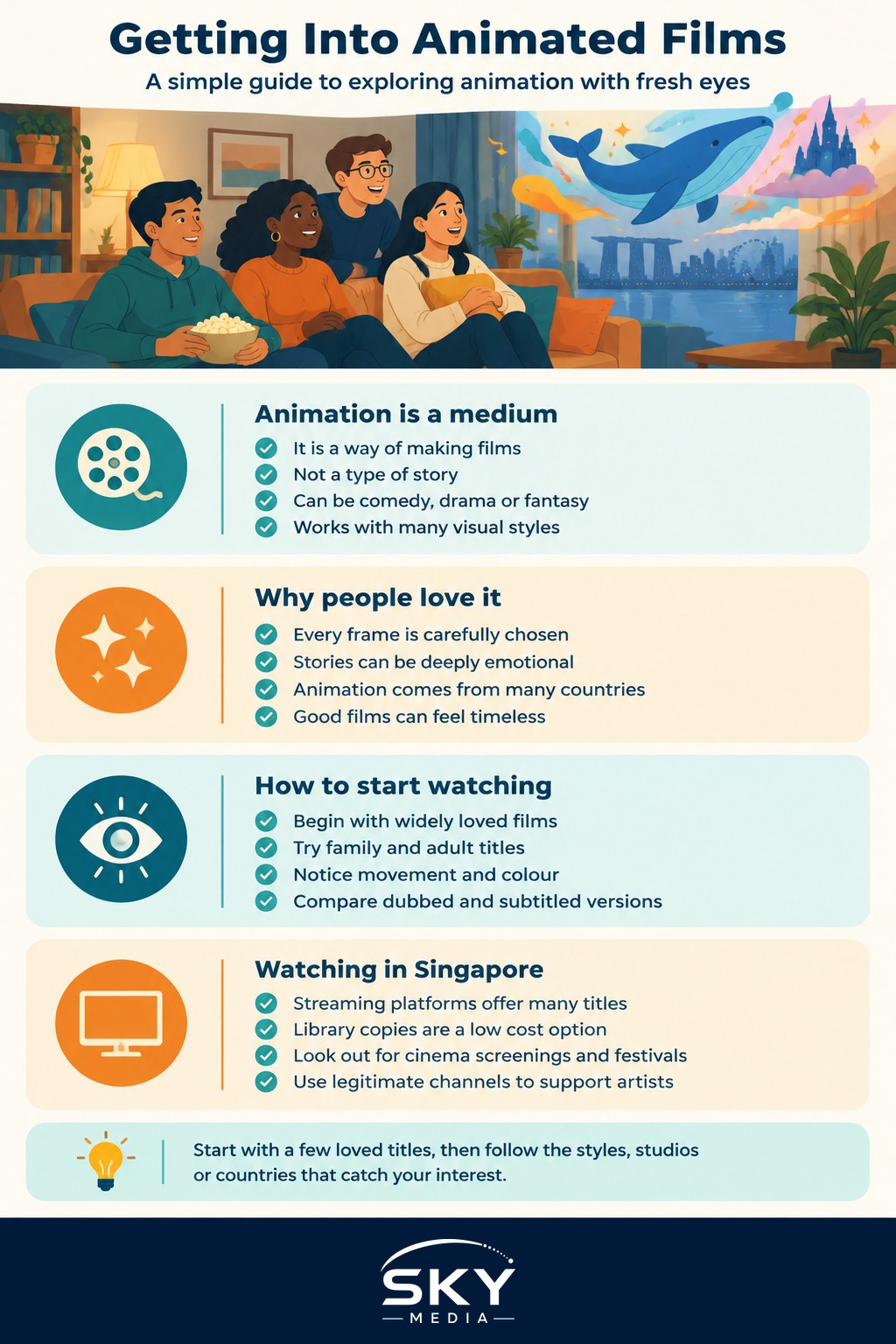
The single most useful idea for a newcomer is this. Animation is a way of making films, not a type of story. Anything live action can do, animation can do too, and often more, because it is limited only by imagination rather than by physical sets, gravity or budget for real locations. A single animated film might be a comedy, a coming of age drama, a fantasy epic or a quiet meditation on grief.
Because it is a medium, animation contains many distinct styles. Hand drawn animation has a warm, flowing quality. Computer generated films can feel polished and dimensional. Stop motion, made by photographing physical models one frame at a time, has a handmade charm you can almost touch. Cut out, painted and experimental techniques each bring their own texture. Part of the fun is learning to see these differences, then noticing which ones move you most.
Why People Love Animated Films
Animation gives artists total control over every frame, so the storytelling can be incredibly precise. A colour, a movement or a facial expression is a deliberate choice, not an accident of the camera. That control lets animated films reach emotional heights that surprise first time viewers. Many people find themselves moved to tears by a film they assumed would be light entertainment.
There is also a strong tradition of animation from around the world, each culture bringing its own sensibility. Japanese animation, often called anime, is famous for its emotional depth and visual ambition. European studios have produced strikingly artistic work. Studios in different countries have their own house styles and preferred themes. If you enjoy discovering how national cinemas differ, you might like reading how to get into world cinema alongside your animation journey.
Animation also ages beautifully. Because it does not depend on real actors or dated locations, a well made animated film can feel timeless decades later. That makes it a wonderful area to explore slowly, without rushing.
How to Start Watching
You do not need any special knowledge to begin. Start with a few widely loved films, then follow whatever sparks your interest, whether that is a particular studio, country or visual style. Give yourself permission to watch films made for adults as well as family favourites, since both can be equally rich.
A few habits make the experience deeper.
- Watch how movement carries emotion, since animators design every gesture.
- Notice the colour choices and how they shift with the mood of a scene.
- Try both dubbed and subtitled versions of foreign films to see which you prefer.
- Learn a little about the technique used, as it changes how you read the images.
If you enjoy structuring your viewing, the approach in building a film watchlist works just as well for animation, letting you balance classics with new discoveries.
Watching Animated Films in Singapore
Getting hold of animated films here is easy. The major streaming services each carry a good selection, though the exact titles change often, so it helps to check what is currently available and weigh up your options. Physical media, including special editions with behind the scenes extras, can deepen your appreciation of the craft, and public libraries are a friendly, low cost place to browse.
For something special, watch for cinema screenings of new animated releases and for festivals or seasons that spotlight animation, sometimes including restored classics on the big screen. Seeing detailed, hand crafted imagery projected large is a real pleasure. If you would rather stay in, you could gather friends for a cosy screening at home. Whatever you choose, support the artists by watching through legitimate channels, which helps fund the painstaking work that animation demands.
If you find yourself drawn especially to Japanese work, a natural next step is getting into anime, a beginner’s guide, which goes deeper into that tradition. Above all, come with an open mind. Animation rewards curiosity generously, and once one film reveals what the medium can do, you may never look at a cartoon the same way again. Enjoy the discovery.
Frequently Asked Questions
Are animated films only for children? No. Animation is a medium, not a genre, so it can tell comedies, coming-of-age dramas, fantasy epics or quiet stories about grief. Many are made squarely for adults. Check the rating and content notes on the platform before watching with younger family members.
What are the main animation styles I should know about? Hand-drawn animation feels warm and flowing, computer-generated films look polished and dimensional, and stop motion photographs physical models frame by frame for a handmade charm. There are also cut-out, painted and experimental techniques. Noticing which style moves you most is part of the fun.
Should I watch foreign animated films dubbed or with subtitles? Try both and see which you prefer. Subtitles keep the original voice performances, while dubbing lets you focus on the visuals. Many viewers settle into subtitles within a few minutes. If a film is visually dense, a dub can make the first viewing easier.
Why do animated films make adults cry so easily? Animators control every frame, so colour, movement and facial expression are all deliberate choices. That precision can reach surprising emotional heights, even in a film you expected to be light. Many people are moved to tears by stories they assumed were simple entertainment.
How can I watch animated films affordably in Singapore? Major streaming services each carry a good selection that changes often, so check what is currently available. Public libraries are a friendly, low-cost place to browse, and cinemas or festivals sometimes spotlight animation. Use legitimate channels so the artists are supported.
Further reading: How to Do Stop Motion Animation