
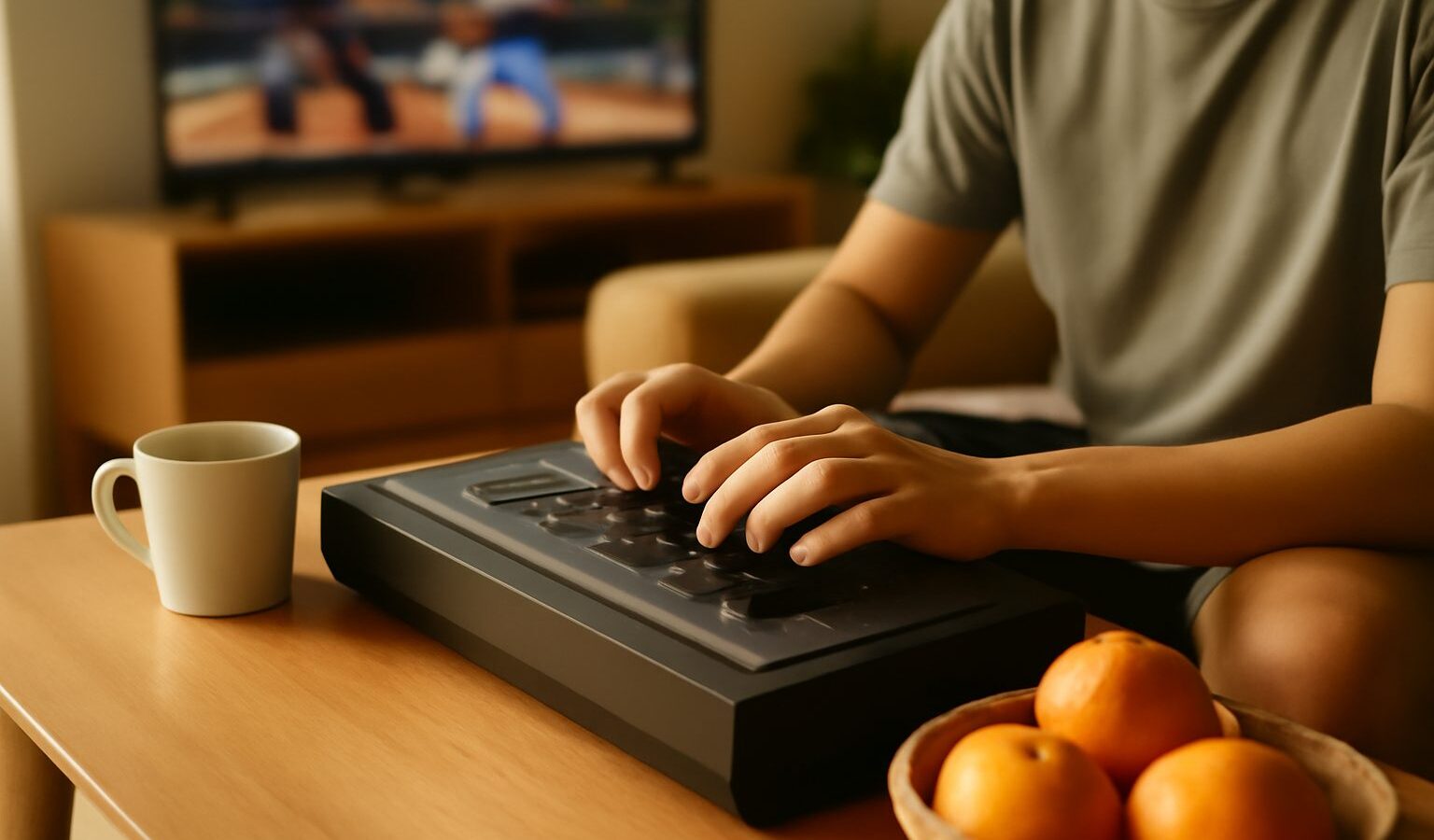
Few corners of gaming look as intimidating from the outside as fighting games. You see two characters trading lightning-fast punches, a screen full of numbers, and players pulling off dazzling combos, and it is easy to assume you need years of practice just to press start. The truth is far friendlier. Fighting games are one-on-one contests you can enjoy at any level, and getting into them is mostly about patience, a little practice and letting go of the fear of losing. This guide walks a complete beginner through what these games are, how to start in Singapore, and how to improve without the frustration that makes people quit early.
What Fighting Games Are
A fighting game is a one-on-one match where you control a character and try to reduce your opponent’s health to zero, usually across a couple of short rounds. Think of the arcade cabinets many Singaporeans grew up with at the old shopping-centre arcades; that same spirit lives on today across consoles, PCs and even phones.
A few terms come up constantly, so here they are in plain English:
- Combo: a string of attacks that connect one after another before your opponent can react. Flashy, but not something you need on day one.
- Special move: a stronger attack done with a specific button and direction input, like a fireball or an uppercut.
- Neutral: the careful spacing and positioning before anyone commits to an attack. This is where matches are really won.
- Frame data: precise timing information about moves. Advanced players study it, but beginners can safely ignore it for months.
- Footsies: the back-and-forth of moving in and out of range, baiting your opponent into a mistake.
You do not need any of this jargon to have fun. Two friends mashing buttons on the sofa is a perfectly valid way to start, and plenty of lifelong players began exactly there.
Why Fighting Games Are More Welcoming Than They Look
The reputation for being hard is only half true. Yes, the very top level is demanding, but the first steps are gentle, and there are good reasons to give the genre a go.
Matches are short, often a minute or two, so a single game fits neatly into a break. You control only one character, so there is far less to manage than in a strategy game or a team shooter. Most titles have a training mode where you can practise freely against a dummy with no pressure and no clock. And because it is one on one, wins and losses are entirely down to you, which makes improvement feel personal and rewarding.
There is a strong social side too. Fighting games are the heart of many local gaming meet-ups, and Singapore has an active community that gathers at LAN shops, gaming cafes and conventions like the GameStart-style events. Learning beside other people, in person, is one of the fastest and most enjoyable ways to improve.
Choosing Your First Fighting Game
Do not agonise over picking the “best” game. The best fighting game for you is the one your friends play, or the one whose characters you find appealing, because you will practise far more when you are enjoying yourself. That said, some styles suit newcomers better than others.
| If you want | Look for | What to expect |
|---|---|---|
| The gentlest start | A game with simplified or “modern” controls | Special moves on a single button, so you focus on the fight |
| A specific character or theme | A title built around characters you like | Motivation to keep practising because you enjoy the cast |
| To play with friends locally | Whatever your circle already owns | Instant sofa matches and people to learn from |
| A slower, more deliberate pace | A game known for footsies over long combos | Fewer memorised strings, more thoughtful spacing |
| Solo content to learn alone | A game with a proper story or arcade mode | Plenty to do offline before you face real opponents |
Many modern fighting games include beginner-friendly control schemes that let you throw special moves with a single button, which removes the biggest early hurdle. Check current game availability and prices before buying, as line-ups and sales change often, and watch a little gameplay first to see whether the speed suits you.
Getting Set Up in Singapore
Fighting games are not demanding on hardware. Most run comfortably on a modest console or a mid-range PC, so you almost certainly do not need an expensive machine. You can start with whatever controller comes with your console or a basic gamepad on PC.
A few things worth knowing as you set up:
- Controllers are a personal choice. Many players use a standard gamepad forever and do fine. Arcade sticks and newer button-only controllers exist and some people love them, but they are an optional upgrade, not a requirement. Try before you spend, perhaps at a gaming cafe or a friend’s place.
- Connection matters for online play. Fighting games are very sensitive to lag because timing is everything. “Latency” or “ping” is the delay between you and your opponent; a wired connection to your router over home fibre broadband gives the steadiest online matches. Many modern games use “rollback netcode”, a technology that keeps online play smooth, so look for that if you plan to play online a lot.
- Local play sidesteps lag entirely. Playing on one screen with a friend beside you, or at a LAN shop, means no connection worries at all, and it is more sociable.
- A comfortable seat helps. Sessions can run long once you are hooked, so mind your posture and rest your eyes with the 20-20-20 habit: every 20 minutes, look at something about 20 feet away for 20 seconds.
Spend on a good connection and a comfortable setup before any fancy controller. The gear rarely makes the player.
Learning to Play Without Rage-Quitting
The single biggest barrier in fighting games is emotional, not technical. Early on you will lose a lot, sometimes badly, and that stings in a one-on-one game where there is no team to blame. The players who improve are simply the ones who make peace with losing and treat each defeat as a lesson.
- Learn one character well. Resist swapping every match. Sticking with one fighter until it feels natural teaches you far more than dabbling in ten.
- Master the basics before combos. Learn to block, to move in and out of range, and to land a couple of reliable attacks. Fancy combos matter far less than knowing when to attack and when to wait.
- Use training mode. Spend a few quiet minutes practising a special move or a short combo until your hands remember it.
- Lose on purpose, in a sense. Play people better than you and expect to lose. You learn more from one strong opponent than from ten easy wins.
- Ask why you lost, not who cheated. Almost every defeat has a clear cause: you attacked when you should have blocked, or pressed a button out of range. Fix one thing at a time.
- Take breaks when tilted. “Tilt” is the frustration that makes you play worse. When you feel it rising, step away, breathe, and come back later.
Improvement in fighting games is deeply satisfying precisely because it is so personal. The first time you beat someone who used to crush you, you will know exactly how you earned it.
Keeping It Fun and Healthy
Because matches are quick and the “one more game” pull is strong, fighting games can swallow an evening before you notice. Keep an eye on the time on work and school nights, take regular breaks, and do not let gaming push out sleep, meals, exercise or the people around you. The community is best enjoyed with a light heart; a bit of trash talk is part of the fun, but keep it kind and never toxic. If gaming ever starts to feel compulsive or is affecting your daily life, reaching out helps, and in Singapore you can contact mindline at 1771 or visit mindline.sg.
Fighting games reward anyone willing to lose gracefully and learn slowly. Pick a game with characters you like, learn one of them properly, practise the basics, and find a few people to play with. The barrier to entry is far lower than it looks, and the payoff, that feeling of your own skill visibly growing, is one of the best in all of gaming.
Explore more
- /getting-into-strategy-games/
- /getting-into-fps-games/
- /getting-into-racing-and-sports-games/
- /how-to-improve-at-competitive-games/
- /co-op-and-couch-multiplayer-games/