
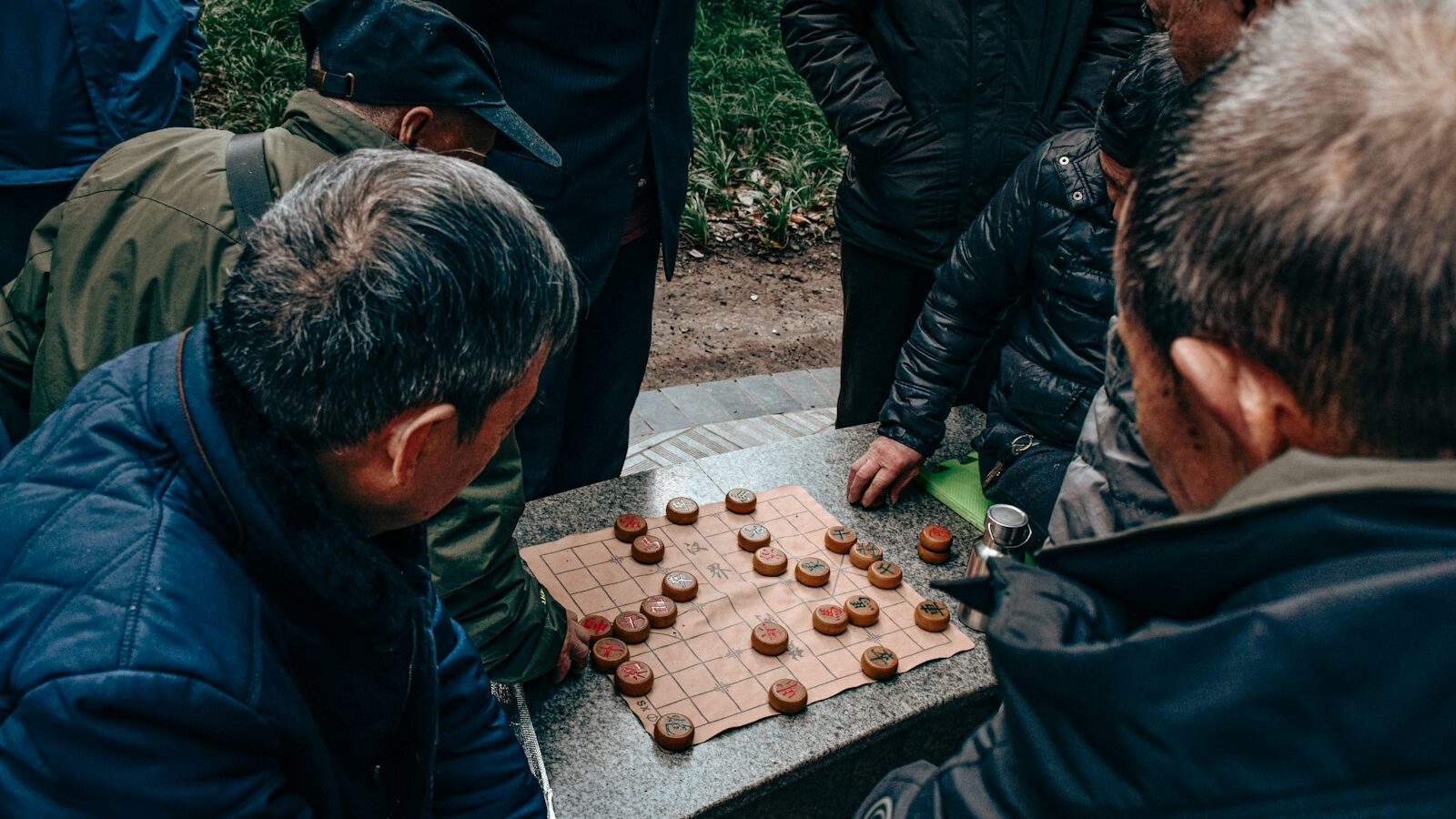
Walk past a void deck or a hawker centre on a lazy afternoon and you may spot a small crowd gathered around a board, elbows on knees, watching two players think. That board is xiangqi, or Chinese chess, and it has been a part of everyday life here for generations. Getting into xiangqi in Singapore is one of the friendliest ways to pick up a strategy hobby, because the game is cheap to start, easy to find company for, and deep enough to keep you learning for years. If you have ever wanted a thinking game that connects you to a bit of local street culture, this is a lovely place to begin.
What Xiangqi Actually Is
Xiangqi is a two player strategy game played on a board of nine vertical lines and ten horizontal lines. Unlike Western chess, the pieces sit on the intersections rather than inside the squares. Down the middle runs a blank strip called the river, and near each player is a marked box called the palace where the most important piece is confined.
Each side has sixteen pieces, usually flat round discs marked with Chinese characters. The two colours are traditionally red and black or green. Here is the cast in plain terms:
- The General (or King) stays inside the palace and must be protected at all costs.
- Two Advisors guard the General and can only move diagonally within the palace.
- Two Elephants defend their own half and cannot cross the river.
- Two Horses move in an L shape, a little like the knight in Western chess, but they can be blocked.
- Two Chariots move in straight lines and are the strongest attacking pieces.
- Two Cannons move like chariots but must jump over exactly one piece to capture.
- Five Soldiers move forward one step, and gain the ability to move sideways once they cross the river.
The aim is to checkmate the opponent’s General. One charming quirk is the flying general rule: the two Generals may never face each other directly along an open file, which creates surprising tactics.
If the characters look intimidating, do not worry. Many beginners learn the pieces by their shapes and positions within a game or two, and plenty of boards and apps let you switch to symbols or pictures while you find your feet.
What You Need To Start
Very little, which is part of the charm. A basic xiangqi set with a folding paper or vinyl board and plastic discs is inexpensive and packs flat, which suits an HDB flat with limited storage. Hobby shops, bookshops, and online marketplaces all carry sets in a range of prices, from a pocket travel version to a nicer wooden one if you fall in love with the game.
You do not even need a physical set to begin. Free apps and websites let you play against the computer at gentle levels or against people around the world, and they quietly teach you the rules by only allowing legal moves. Starting on a screen and then buying a board once you are hooked is a perfectly sensible order.
How To Start Playing
The best way to learn is to play, lose cheerfully, and play again. Begin against an easy computer opponent so you can make mistakes without holding anyone up. Focus first on how each piece moves, then on a simple idea: develop your Chariots and Horses early, keep your General safe, and do not throw pieces away for nothing.
Once you know the basics, seek out people. Xiangqi is a social game at heart. Community centres and senior activity corners often have regulars who are happy to guide a newcomer, and the pace of a friendly game leaves room for a chat. If you prefer starting quietly, online play lets you practise anytime, which is handy on a rainy evening or a long commute.
If you enjoy the strategy side, you may also like related thinking games. Readers who take to xiangqi often branch out into getting into go (weiqi) or the more familiar chess as a hobby, and the mental muscles carry over nicely.
How To Get Better
Improvement in xiangqi comes from patterns, not memorising everything. A few gentle habits go a long way:
- Learn a couple of solid opening ideas rather than many. The central Cannon opening is a common, sturdy start.
- Study simple checkmate patterns so you can finish games you are winning.
- Review your losses. Ask what move let your opponent in, and try to spot it earlier next time.
- Watch stronger players. Observing games at a void deck or online commentary teaches you what good moves feel like.
Give yourself time. Everyone hangs their General or leaves a Chariot loose in the early days. That is simply how the game is learned.
Where To Play In Singapore
Xiangqi is wonderfully accessible here. Look out for casual games at void decks, coffee shops, and community centres, especially in the mornings and evenings when regulars gather. Some community clubs and interest groups run friendly sessions, and clan associations have long kept the game alive. Online communities and apps fill in the gaps whenever you cannot get to a board.
If you enjoy games night with friends, xiangqi slots neatly alongside other favourites. You might pair it with a wider beginners guide to board games to build a small home collection everyone can enjoy.
The beauty of xiangqi is how little it asks and how much it gives back. A modest board, a curious mind, and a willing opponent are all you need. Set up the pieces, make your first clumsy moves, and let the game teach you. Before long you will be the one at the void deck, quietly enjoying a good position on a warm Singapore afternoon.