
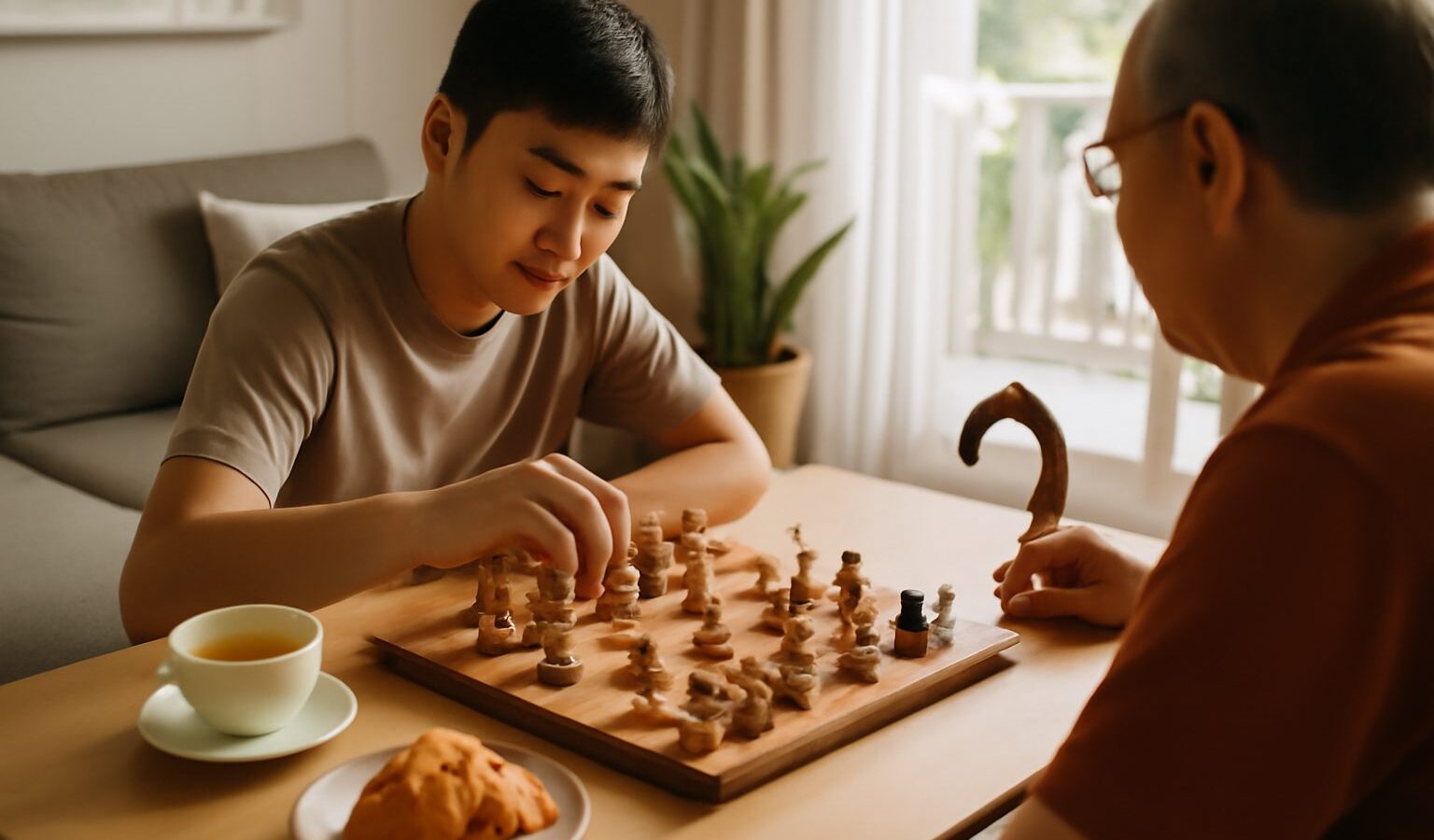
Chess is one of the most rewarding hobbies you can pick up, and one of the cheapest to start. All you need is a board, a partner, and a little curiosity. It is portable, works in the smallest HDB flat, suits any age, and rewards you for life. If you have been meaning to learn chess Singapore has a friendly and growing scene to welcome you, from community centre clubs to busy online play. This guide will get you from complete beginner to confidently playing your first games.
Do not worry if the game once felt intimidating. You do not need to memorise anything to start, and you do not need to be “smart” in any special way. Chess is a skill, and like any skill it grows with gentle, enjoyable practice. Losing is simply part of learning, and every strong player was once a beginner losing cheerfully.
Why Chess Makes a Great Hobby
Chess asks nothing of you beyond a board and an opponent, yet it gives back a great deal. It sharpens focus, patience, and planning, and a single game can last five minutes or an hour depending on how you play. Because it is turn-based and quiet, it fits into small spaces and busy lives: a game before dinner, a puzzle on your commute, or an evening at a club.
It is also wonderfully social and completely ageless. Children and grandparents can share the same board, and the online world means you always have an opponent at your level, at any hour. Once you learn the rules, they never change, so the time you invest keeps paying off for the rest of your life.
Learning the Rules and First Moves
The basics are simpler than they look. Each piece moves in its own way, the aim is to checkmate the opponent’s king, and everything else is built on those foundations. You can learn how every piece moves in an afternoon.
A sensible order for beginners looks like this:
- Learn how each piece moves and how they capture.
- Understand check, checkmate, and stalemate, the ways a game ends.
- Learn the special moves: castling, en passant, and pawn promotion.
- Grasp a few opening principles: control the centre, develop your pieces, and keep your king safe.
- Practise spotting simple tactics like forks and pins through puzzles.
Free apps and websites teach all of this interactively, with built-in lessons and puzzles that adjust to your level. You do not need to buy a course to begin. Play plenty of slow games, take your time, and try to understand why a move was good or bad rather than rushing to the next one.
What You Need to Start Playing
The equipment is refreshingly minimal, and you can start with almost nothing.
- A chess set: a basic plastic set is perfectly good, or you can play entirely free on an app or website.
- A partner or an app: a family member, a friend, or an online opponent.
- Optional: a chess clock if you enjoy timed games, though a phone timer works fine.
- Optional: a beginner book or a free online course once you want to improve.
- Optional: a roll-up vinyl board for tournament-style play and easy storage.
You can begin today with just a free account on a chess website. Buy a physical set when you want the pleasure of playing across a real board, which many people find more enjoyable and social than a screen.
Where to Play and Learn in Singapore
You have plenty of options, whether you prefer people or pixels. The table below compares the main ways to play so you can pick what suits you.
| Way to play | Best for | Cost | Good to know |
|---|---|---|---|
| Online apps and sites | Playing anytime, quick games | Free tiers available | Instant opponents at your level |
| Community centre clubs | Meeting local players | Low, varies by venue | Friendly, all ages welcome |
| Chess academies and coaches | Structured improvement | Varies, check provider | Good for serious progress |
| Casual play at cafes or parks | Relaxed social games | Just your own set | Bring a board and a friend |
Locally, the Singapore Chess Federation is the national body and a useful starting point for finding clubs, events, and tournaments. Many community centres and schools run chess clubs, and libraries sometimes host casual sessions. For a set or a book, general bookshops, department stores, and toy shops carry basic sets, while online marketplaces offer everything from travel sets to weighted tournament pieces. Fees for clubs, coaching, and academies vary, so check with the specific provider for current rates rather than assuming a price.
If you prefer to learn from home, the major chess websites and apps are excellent and largely free to begin with. They pair you with opponents of similar strength, so your early games stay fun rather than one-sided.
Simple Ways to Improve
Improvement in chess is mostly about steady, enjoyable habits rather than talent. A few small practices go a long way.
- Play regularly, even short games, and review the ones you lose to spot the turning point.
- Solve tactics puzzles for a few minutes a day to train pattern recognition.
- Learn one or two openings well rather than dabbling in many.
- Slow down and check whether your move leaves anything undefended before you commit.
- Watch beginner-friendly videos to pick up ideas painlessly.
Progress can feel slow at first and then arrive in sudden jumps. Do not measure yourself against grandmasters; measure yourself against the player you were last month. Keeping a light touch and staying curious will take you further than grinding joylessly.
Keeping the Hobby Fun and Lasting
Chess is a hobby you can enjoy for decades, so there is no rush. Some people love the competitive thrill of clubs and tournaments, while others simply enjoy an unhurried game with a friend or a daily puzzle. Both are completely valid ways to play. Storage is easy in any small home, and a set survives Singapore’s humidity far better than paper-based hobbies, so upkeep is minimal.
Celebrate the small milestones: your first checkmate, your first win against a friend, the first time you spot a tactic before your opponent does. Start with a free app or a cheap set this weekend, play a handful of slow games, and let your enjoyment set the pace.
Explore more
If you enjoy chess, plenty of related tabletop hobbies are worth a look. Browse our beginner’s guide to board games for more strategy at the table, and see solo board games and puzzles if you like playing on your own. For a lively social evening, our guide to hosting a game night at home pairs perfectly with a chess set.