
Open a bag of flour or a tub of rice and find tiny beetles crawling through it, and you have met the pantry weevil. These small insects, along with the other little bugs that infest flour, grains and dried goods, are a common headache in Singapore kitchens. Pantry weevils in Singapore spread quickly because our warm, humid conditions speed up their breeding, and a single infested packet can seed the whole shelf.
The reassuring news is that these pests are not a sign of a dirty home, and you do not need pesticides to beat them. This guide covers how they get in, how to clear an infestation, and how to store dry goods so they do not come back.
What they are and how they get in
Pantry pests cover a few different insects, including weevils that bore into grains and rice, and small beetles and moths that live in flour, cereal, pasta, dried beans, nuts and spices. You might see the adult insects moving about, tiny holes in grains, fine webbing in flour, or clumping and an off smell in the packet.
Here is the surprising part. Most infestations start at the source, not in your kitchen. Eggs are often already present inside packaging when you buy it, laid at the mill or store, and too small to see. In our warmth they hatch and multiply, then spread from one open packet to nearby ones. That is why an unopened bag can suddenly seem full of bugs, and why good storage matters so much.
Humidity makes everything worse. Damp flour and grains are easier for pests to invade and quicker to spoil, so keeping dry goods truly dry is central to control.
Clearing an infestation
When you find pantry pests, act quickly and thoroughly. Half measures let survivors regroup.
Discard infested food. This is the first and most important step. Throw out any packet with visible bugs, webbing, clumping or an odd smell. Do not try to sieve out weevils and keep the flour, as eggs and smaller stages remain. Seal the discarded items in a bag and remove them from the home, ideally straight to an outdoor bin, so the pests cannot crawl back.
Check everything nearby. Pests spread, so inspect every dry good on the same and neighbouring shelves, including rice, flour, cereal, pasta, spices, nuts and pet food. When in doubt, throw it out.
Empty and deep clean the pantry. Take everything off the shelves. Vacuum the corners, cracks, shelf edges and hinges where eggs and insects hide, then wipe surfaces with hot soapy water. Pay attention to seams and crevices. Empty the vacuum contents outside afterwards. Avoid spraying pesticides where you keep food. Cleaning, drying and airtight storage do the real work, and keeping chemicals away from food keeps your family safe.
Dry the space fully. Because humidity feeds these pests, make sure the pantry is completely dry before restocking. Good ventilation and moisture control in the kitchen help a lot, and our guide on protecting your home from humidity has useful pointers.
Freeze to kill eggs. For flour, grains and similar goods you want to keep or newly buy, placing them in the freezer for a few days kills any eggs and larvae hiding inside. This is a simple, chemical free safeguard, especially for items bought in bulk. Let the food return to room temperature and keep it dry before storing.
Prevention and smart storage
Once the pantry is clean, the goal is to stop new infestations from taking hold. A few habits make all the difference.
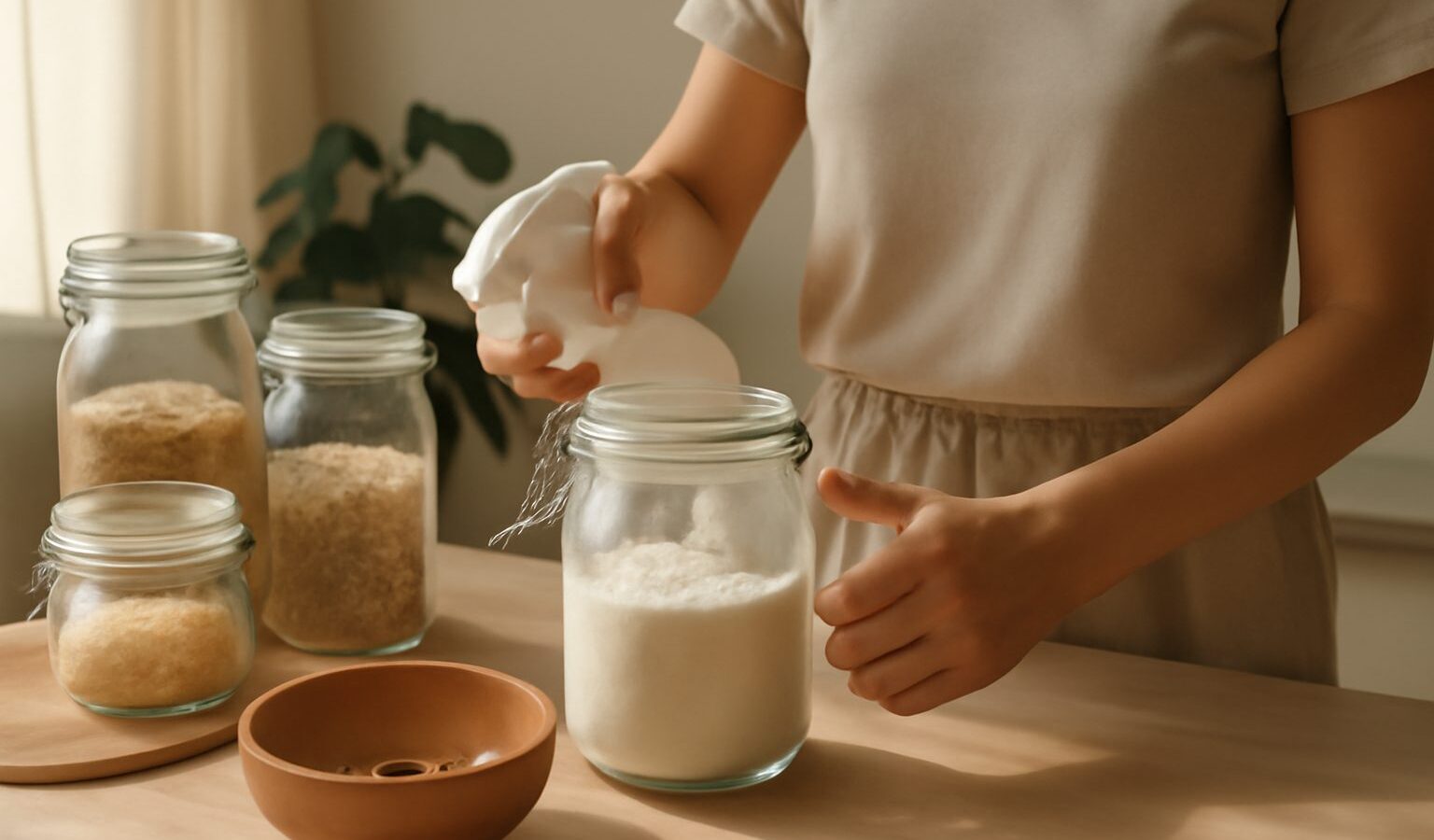
Store in airtight containers. This is the golden rule. Transfer flour, rice, grains, cereal, pasta and other dry goods into sealed glass or sturdy plastic containers as soon as you get home. Airtight storage traps any pests that arrive inside packaging so they cannot spread, and keeps out those already in your kitchen. It also protects against humidity. Our guide on how to organise your pantry shows how to set this up neatly.
Buy sensibly and rotate. Buy dry goods in amounts you will use within a reasonable time rather than stockpiling for months. Use older stock first, and note when items were opened. The longer flour sits, the more chance pests have to develop.
Keep it clean and dry. Wipe up spilled flour and crumbs promptly, since loose food feeds pests. Give the pantry a quick check every few weeks so you catch any problem while it is small.
Deter naturally. Some households tuck bay leaves among their grains, as the scent is said to discourage pests. It is a mild, food safe extra, not a cure, so treat it as a supplement to airtight storage rather than a replacement.
When to seek help
Pantry weevils are almost always a do it yourself fix through discarding, cleaning, drying and sealing. But if bugs keep returning despite a thorough clean out and airtight storage, or if you notice pests spreading beyond the pantry into other rooms, the source may be elsewhere and worth a professional inspection. A pest control operator can identify the species and find hidden breeding spots you might miss.
For the wider picture on household pests, and for tackling the other insects a food filled kitchen attracts, see the guides below.
Related reading: How to Organise Your Pantry, Protecting Your Home From Humidity, Getting Rid of Ants at Home, and Pest Control in Singapore.