
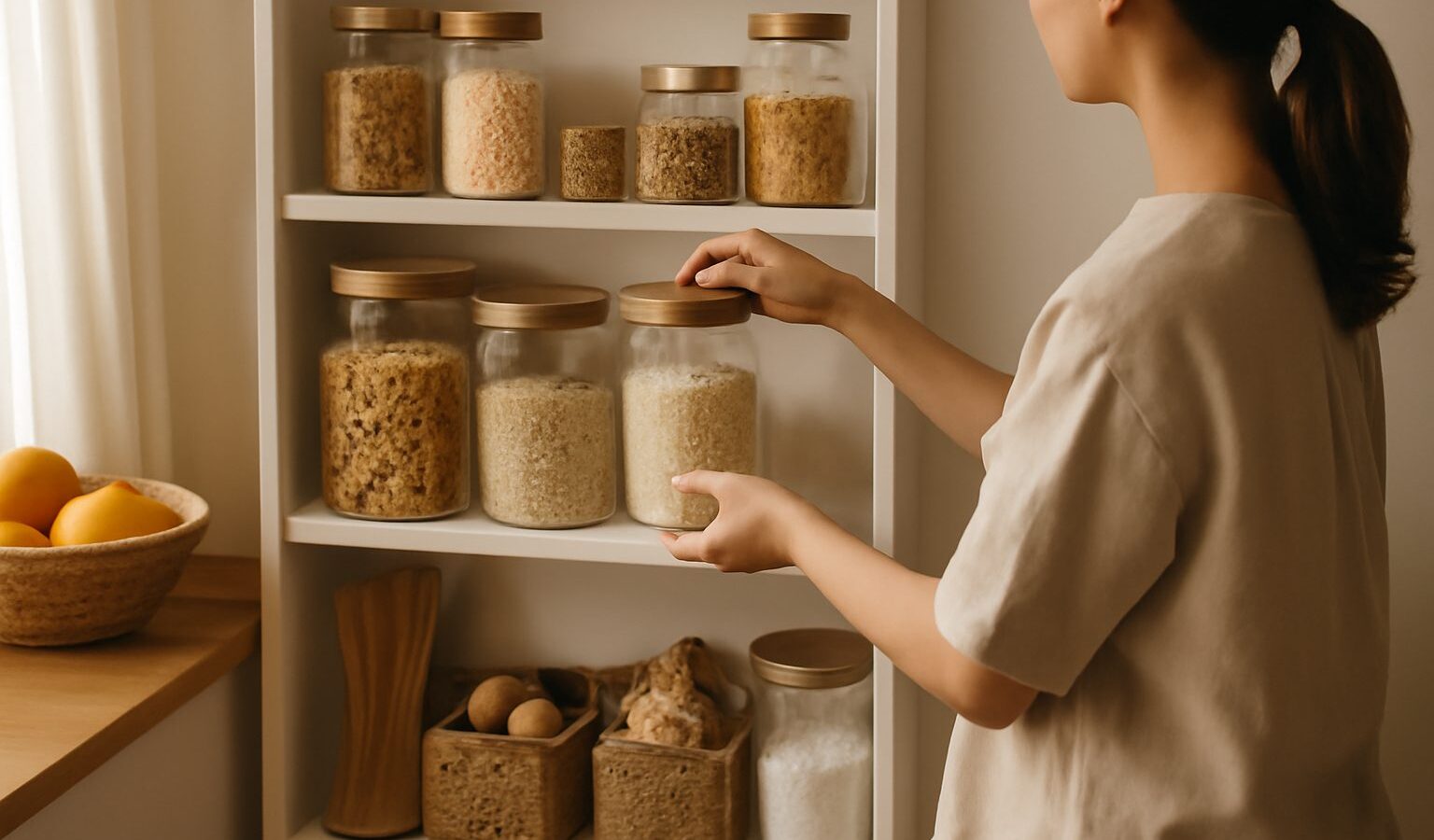
If you want to cook with less stress and waste less food, it pays to organise your pantry properly. In Singapore, a pantry is rarely a whole room. More often it is a couple of cabinets, a corner of the kitchen or a tall unit shared with everything else. The good news is that a small space, well arranged, beats a large one that is a mess. This guide covers zones, containers, labelling, pest proofing and a routine to keep it all running.
Empty, sort and group into zones
Start by taking everything out. It feels drastic, but you cannot organise around clutter you cannot see. Wipe the shelves, check every date, and be honest about the half used packets you will never finish. Then group what remains into clear categories before anything goes back.
- Baking and dry staples: flour, sugar, rice, salt and dried noodles.
- Cooking bases: oils, sauces, stocks and spices.
- Snacks and breakfast: biscuits, cereal, oats and spreads.
- Tins and jars: canned beans, tomatoes, tuna and pickles.
- Tea, coffee and drinks: everything you reach for in the morning.
Give each group its own shelf or section. Put daily items at eye level, heavy or bulk items low down, and rarely used pieces up high. This is the backbone of a pantry that stays tidy, because every item has an obvious home to return to.
Airtight containers are non negotiable
In our humid climate, opened packets are an open invitation to moisture, stale flavours and pests. The single most useful upgrade you can make is to decant dry goods into airtight containers. Flour, rice, sugar, oats, pasta and biscuits all keep far longer once sealed properly.
Choose square containers over round where you can, since they use shelf space more efficiently. Clear containers let you see levels at a glance, so you know when to top up. Keep the original packet’s cooking instructions and best before date by snipping off that part of the packaging and dropping it inside the container or taping it to the base.
Labelling that actually helps
Once food is out of its original packaging, labelling becomes essential. You want to know what is inside and when it was opened without opening the lid. A label maker is lovely but not necessary. Masking tape and a marker do the job. Write the contents and the date on the front, facing out, and you will never again mistake bread flour for plain flour mid recipe.
Pest proofing for Singapore kitchens
Ants and weevils are the two pests every local pantry battles, and organisation is your first line of defence. Weevils often arrive inside flour, rice and grains from the shop, then spread. Airtight containers stop them moving between packets, so one bad bag does not ruin the shelf. Some people keep a few dried bay leaves in with rice and flour, a traditional trick many swear by.
Ants are drawn to anything sweet or sticky. Keep sugar, honey, syrups and opened snacks sealed tight, wipe spills at once, and never leave crumbs on the shelf. Store the bin away from food and take it out regularly. If you buy in bulk, keep only a working amount in the pantry and the rest sealed elsewhere, so a problem stays small.
Containers and layout at a glance
| Item type | Best storage | Placement |
|---|---|---|
| Flour, rice, sugar | Airtight container | Low to mid shelf, easy to lift |
| Pasta and dried noodles | Tall airtight jar | Mid shelf, visible |
| Spices | Small sealed jars | Eye level, grouped together |
| Tins and jars | On their own shelf | Older stock to the front |
| Snacks and biscuits | Sealed clip boxes | Mid to high shelf |
| Oils and sauces | A tray or lazy Susan | Near the stove, contained |
Rotate stock so nothing expires
Adopt the same rule shops use: first in, first out. When you unpack groceries, move older items forward and place new stock behind. Keep an “use soon” spot near the front for anything approaching its date. A quick monthly scan of dates prevents that sinking feeling of tipping out a tin two years past its best.
Keep a small running list of staples that are low. A sticky note on the cabinet door or a note on your phone means you buy what you actually need and avoid ending up with five bags of the same rice and no oil.
Make the most of a small space
Singapore kitchens reward clever vertical thinking. A few inexpensive additions turn dead space into useful storage.
- Shelf risers create a second tier so tins at the back are not hidden.
- Slim baskets corral loose packets by category and pull out like a drawer.
- Over the door racks hold spices, foil and small packets on the inside of a cabinet door.
- A lazy Susan in a deep corner brings the back within reach with a spin.
Group like with like inside these, and resist the urge to cram every gap. A little breathing room is what keeps a pantry usable rather than a wall of stuff you have to dig through.
Keep it going
A pantry stays organised through small, regular habits rather than one heroic clear out. Give it five minutes when you put groceries away: wipe any spills, move older items forward, refill containers, and jot down what is running low. Every couple of months, do a slightly deeper check of dates and pest signs at the back of shelves.
Do this and your pantry becomes a quiet, reliable helper. You will cook faster because you can see what you have, waste less because nothing hides until it expires, and spend less because you stop buying doubles. Start today by pulling everything out of one cabinet and grouping it into zones. That first shelf will show you exactly how much calmer the whole kitchen can feel.
Explore more: Kitchen Organisation and Storage · Getting Rid of Ants at Home · Storage and Organisation Solutions