
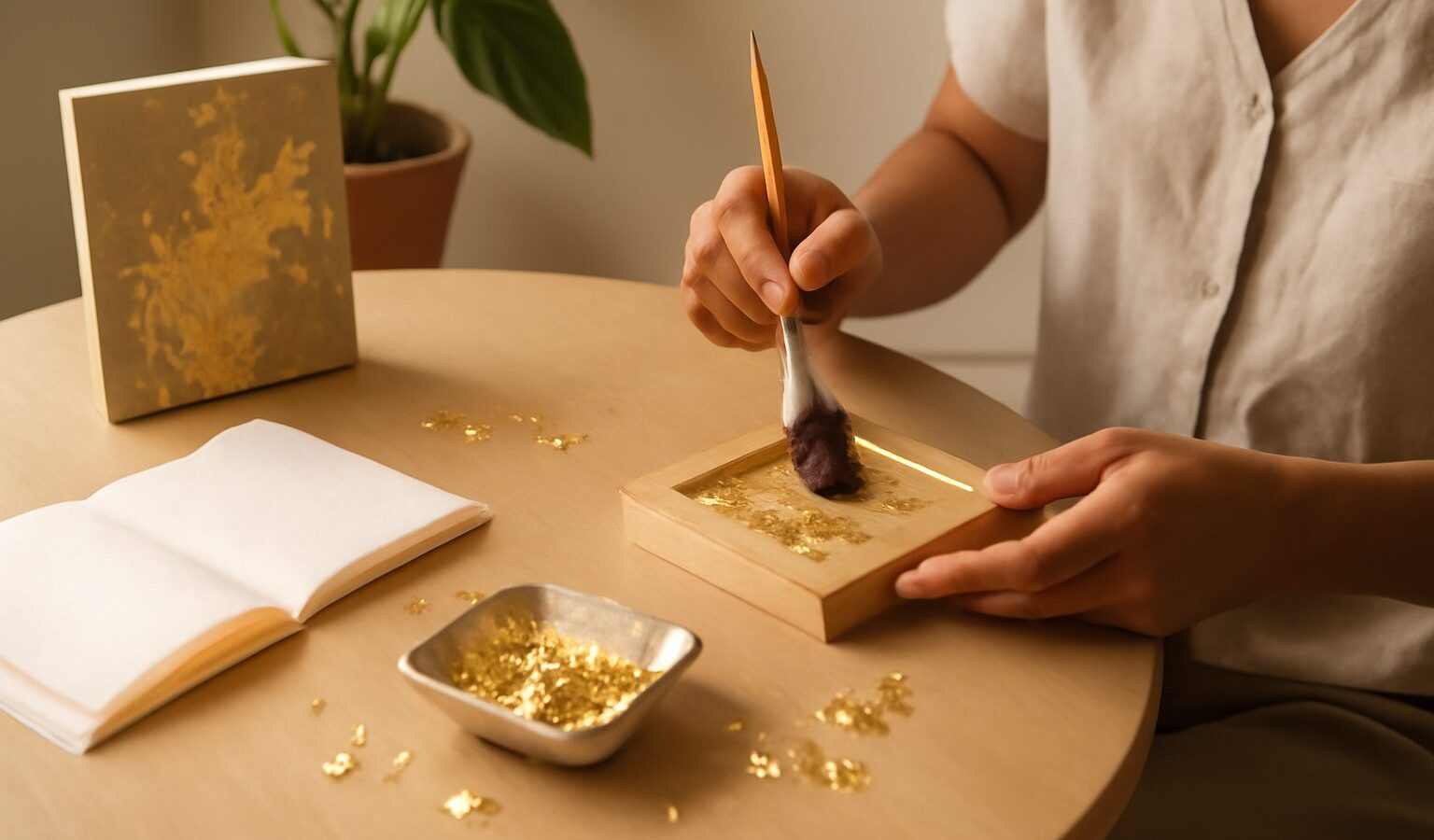
There is something quietly magical about watching a plain surface turn to gleaming gold under your hands, and taking up gilding and gold leaf art singapore style lets you do exactly that at home. Gilding is the craft of applying wafer-thin sheets of metal leaf to a surface so it looks solid gold or silver. You see it on picture frames, temple decorations, lettering, and fine ornaments. As a hobby it is affordable to try, deeply satisfying, and easier than it looks once you understand the one key step: the glue, known as size.
This guide walks through the types of leaf, how the process works, a simple starter kit, the safety basics, and easy first projects to build your confidence.

Real Gold Versus Imitation Leaf
The first thing to understand is that “gold leaf” comes in two broad kinds, and beginners almost always start with the second.
Genuine gold leaf is real gold hammered incredibly thin. It is beautiful and does not tarnish, but it is delicate to handle and costs a good deal more. Silver and other precious leaf exist too.
Imitation leaf, sometimes called composition leaf or Dutch metal, is made from brass, copper, or aluminium coloured to mimic gold and silver. It is far cheaper, a little sturdier, and perfect for learning. The one thing to know is that imitation leaf can tarnish over time, so pieces are usually protected with a clear sealant once finished.
For your first months, imitation leaf is the sensible choice. It lets you practise the technique freely without worrying about wasting expensive material, and the results still look wonderful.
How Gilding Works
The heart of gilding is the adhesive, called size. It is a special glue that you brush onto your surface, then wait until it becomes tacky rather than wet. When the size is at the right stickiness, you lay the fragile leaf onto it, press gently, and the leaf clings to the glued area.
A simple beginner process looks like this:
- Prepare a clean, smooth, sealed surface so the size sits evenly.
- Brush on a thin, even coat of size and let it reach the tacky stage the product specifies.
- Lift the leaf carefully, often with a soft brush or backing paper, and lay it onto the surface.
- Press it down softly with a clean, dry brush, then brush away the loose flakes, called skewings.
- Once dry, seal the piece with a suitable clear varnish to protect it.
Two kinds of size exist, water-based and oil-based, and they differ mainly in how long they stay tacky and how they are cleaned up. Beginners often prefer water-based size because it is simpler to use and clean. Always follow the specific instructions on the size and sealant you buy, because open and working times vary between products.
Safety and Handling Basics
Gilding is a low-risk craft, but a few sensible habits keep it pleasant. Work in a well ventilated room, especially with oil-based size, sealants, or any solvents, and follow the manufacturer’s guidance on the product label. Keep solvents and varnishes capped when not in use and away from children. Very fine leaf and dust can drift, so work in a draught-free spot and avoid breathing in loose flakes. Wash your hands after a session, and store your materials safely out of reach of little ones. None of this is difficult, but treating your materials with respect makes the hobby safer and tidier.
A Starter Kit and What It Costs
You can begin with a modest, affordable set of tools, most of which last for years.
| Tier | What you get | Roughly who it suits |
|---|---|---|
| Budget | Imitation leaf booklet, a small pot of water-based size, a soft brush, a jar of sealant | Beginners testing the craft |
| Mid | Larger leaf supply, both size types, a gilder’s tip brush, quality sealant | Regular hobbyists decorating many pieces |
| Premium | Genuine gold or silver leaf, fine tools, a gilder’s cushion and knife | Enthusiasts wanting the finest finish |
Prices vary and it is always worth checking current retail. A basic imitation leaf kit is an inexpensive way to learn the whole process from start to finish. Only move to genuine gold once your handling feels sure, since real leaf is far less forgiving of a shaky first attempt.
Our humidity is worth a thought here too. Store leaf booklets flat in a dry, sealed box, because damp air can make sheets stick together and sealants take longer to cure. A few silica gel sachets in your storage box help.
Easy First Projects and Finding Community
Start small and flat. A wooden coaster, a plain picture frame, a ceramic dish, or a few gilded letters on a card are ideal first projects because the surfaces are simple and forgiving. Gilding pairs beautifully with other crafts, so you might gild the edges of a handmade card or the rim of a small dish you have decorated.
If you enjoy this kind of decorative handwork, you may also like card making and papercraft singapore, the fine linework of a guide to calligraphy and hand lettering, or jewellery making for beginners singapore for other small, decorative keepsakes. Some community clubs, art studios, and craft shops run occasional workshops where beginners are welcome, and online groups share techniques generously. Because schedules change, search for a current class or group rather than rely on any fixed listing.
Enjoy the Shine
The delight of gilding and gold leaf art singapore makers describe is the moment a dull surface suddenly gleams. Begin with imitation leaf and water-based size, practise on small flat objects, work in a ventilated space, and always seal your finished pieces. Be patient with the tacky-glue timing, since that single step is the whole secret. Take it slowly, keep your workspace tidy and dry, and enjoy adding a little gold to the everyday.
Further reading: Henna and Mehndi Art as a Hobby in Singapore