
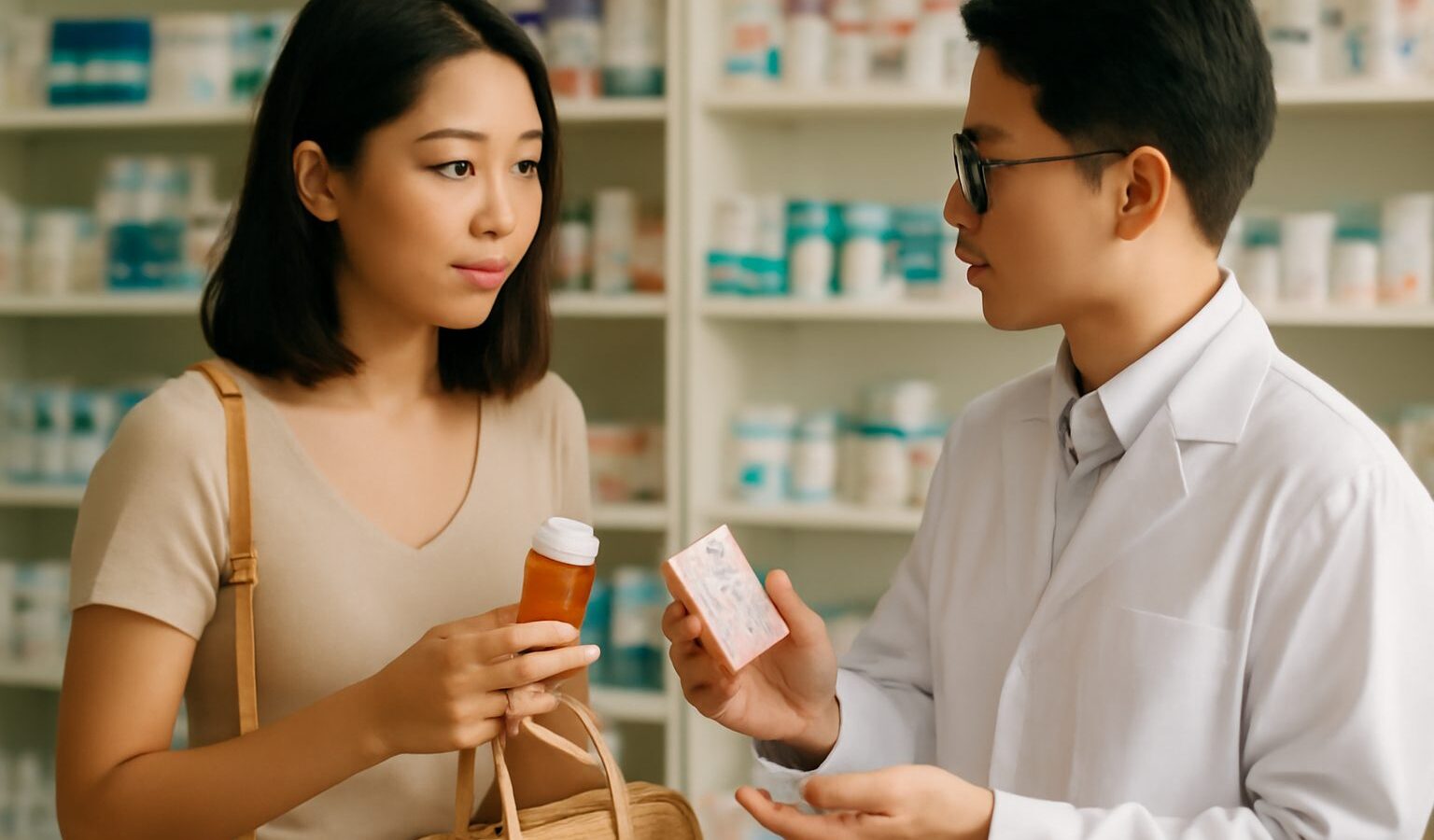
Sooner or later you will need a headache tablet, a plaster, some throat lozenges or a refill of regular medication, and knowing your way around a pharmacy in Singapore makes that simple. The landscape here is easy to use once you understand the two main types of pharmacy and the difference between medicines you can pick off the shelf and those that need a doctor’s prescription. For a newcomer from mainland China, some of it will feel familiar and some will work differently, especially the rules on what you can buy freely. This is general information to help you navigate; for advice on your health or any specific medicine, always ask a pharmacist or see a doctor.
A quick note on who oversees all this: medicines in Singapore are regulated by the Health Sciences Authority (HSA), which decides how each product may be sold. That system is what shapes where you can buy a given medicine, so it is worth a moment to understand.
The Two Kinds of Pharmacy
Broadly, you will meet two kinds of pharmacy. The first is the retail health-and-beauty pharmacy, the familiar high-street chains you will spot in almost every mall and MRT station. The best known are Guardian, Watsons and Unity (the NTUC chain), alongside some independents. These stores sell everyday medicines, vitamins, personal care and beauty products, and most have a registered pharmacist on duty during set hours who can advise you and dispense pharmacy-controlled medicines.
The second kind is the clinical pharmacy attached to a hospital, polyclinic or GP clinic. This is where you collect medication your doctor has prescribed after a consultation. Hospital and polyclinic pharmacies handle a much wider range of prescription medicines, including specialised drugs, and their pharmacists are used to counselling patients on dosage and side effects. If your GP prescribes something, you will often receive it at the clinic itself or collect it from the attached pharmacy.
Coming from China, the retail chains will remind you a little of a 药店, but with a stronger health-and-beauty range and clearer rules on what needs a pharmacist. One key difference: you generally cannot buy antibiotics or many stronger medicines over the counter here the way you might expect elsewhere, because Singapore controls them tightly.
Over-the-Counter, Pharmacy-Only and Prescription Medicines
The HSA sorts medicines into three groups, and knowing them tells you exactly where to go. General Sale List (GSL) medicines are for common, easily recognised complaints and are reasonably safe to use without supervision, so you can buy them from ordinary shops and supermarket shelves. Pharmacy-only (P) medicines can be bought without a prescription but only from a retail pharmacy where a pharmacist is present to advise you on proper use. Prescription-only medicines (POM) can be obtained only with a valid prescription from a doctor, or from a pharmacist acting on that prescription, because they need medical diagnosis and monitoring.
In everyday terms:
- Over-the-counter (GSL): basic painkillers, plasters, antiseptic, throat lozenges and the like, available widely.
- Pharmacy-only (P): certain stronger remedies you buy after a quick word with the pharmacist, only when one is on duty.
- Prescription-only (POM): antibiotics, blood pressure and diabetes medication, and most chronic-disease drugs, which need a doctor first.
This is why, if a shelf medicine is not helping or you are unsure, the right move is to speak to the pharmacist or see a GP rather than seeking something stronger off the shelf.
Getting Advice and Buying Regular Medication
One of the most useful and free resources in any retail pharmacy is the pharmacist. They are trained health professionals who can recommend an over-the-counter remedy for a minor complaint, check that a medicine will not clash with something else you take, explain how and when to take it, and tell you when your symptoms really warrant seeing a doctor. Do not hesitate to ask; that is what they are there for, and consulting them costs nothing.
If you take regular medication for a long-term condition, plan ahead. Prescription medicines are dispensed against a doctor’s prescription, so you will usually need an appointment with a GP or specialist to start or continue them, and repeat supplies are tied to reviews. If you have brought medication from China, it is wise to see a local doctor early to arrange an equivalent here, since brand names, formulations and availability differ, and self-importing medicines is subject to HSA rules. Never assume a familiar drug is sold the same way here.
The table below shows the common medicine types and where you would typically get them.
| Medicine type | Where to get it | Prescription needed |
|---|---|---|
| Everyday items (plasters, basic painkillers, lozenges) | Supermarkets, convenience stores, any pharmacy | No |
| Pharmacy-only remedies | Retail pharmacy, with a pharmacist on duty | No, but pharmacist advises |
| Antibiotics and chronic-disease medicine | GP, polyclinic or hospital, then clinic or pharmacy | Yes |
| Repeat long-term medication | Your doctor, tied to regular reviews | Yes |
| Vitamins, supplements, health and beauty | Retail chains and supermarkets | No |
Health, Beauty and Everyday Essentials
Retail pharmacies here are as much about wellness and personal care as about medicine, which surprises some newcomers. Alongside the dispensary you will find vitamins and supplements, skincare and cosmetics, baby and maternity products, oral and feminine care, first-aid supplies and health devices such as thermometers and blood-pressure monitors. Chains run frequent member promotions and loyalty points, so it can pay to sign up if you shop at one regularly. For everyday non-medicinal items, supermarkets and convenience stores often carry the basics too.
A few practical habits will serve you well. Keep a small home first-aid kit with plasters, antiseptic and a basic painkiller so minor mishaps do not send you out at midnight. Check expiry dates and store medicines as the label says, away from heat and humidity, which matters in Singapore’s climate. And keep a note of the names of any regular medicines you take, ideally the generic name, so a local pharmacist or doctor can match them quickly.
When to See a Doctor Instead
A pharmacy is perfect for minor, self-limiting complaints, but it is not a substitute for a diagnosis. See a doctor rather than relying on the shelf if symptoms are severe, persistent or getting worse, if you have a high fever, if you are pregnant, very young or elderly, if you take other regular medication, or if you simply are not sure what is wrong. The pharmacist will often tell you the same and point you to a GP. Used sensibly, the pharmacy is your first line for small things and a reliable source of trustworthy advice, while the doctor remains the right call for anything more.
Explore More
The pharmacy and the clinic work hand in hand, so pair this with our guide to seeing a GP in Singapore to understand when to get a prescription and how consultations work. And for another common settling-in task around the home, see our guide to dealing with household pests in Singapore.