
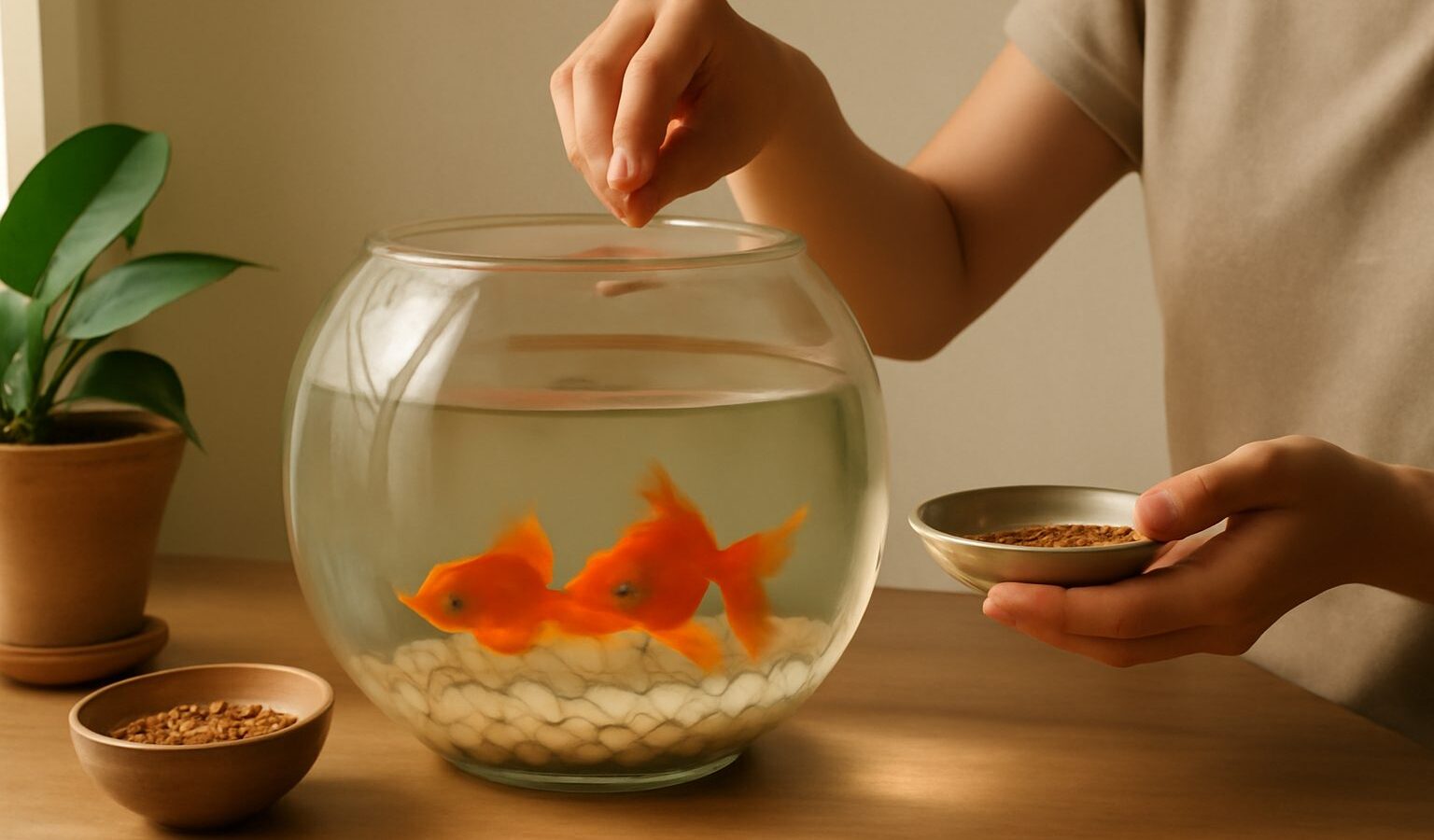
Few pets are as misunderstood as the goldfish. Won at a funfair or scooped into a plastic bag, it is often set up to fail before it reaches home. Good goldfish care starts by unlearning almost everything the classic goldfish-in-a-bowl image taught us. Done properly, these are hardy, intelligent, surprisingly long-lived animals that can share your Singapore home for well over a decade. This guide busts the biggest myths and lays out what a goldfish genuinely needs. It is general fishkeeping information, not veterinary advice, so consult an aquatic-experienced vet for a sick fish.
The Tiny-Bowl Myth, and the Truth About Space
The single most damaging myth is that a goldfish belongs in a small bowl. It does not. A bowl is far too small, holds too little water to dilute waste, has a tiny surface area for oxygen exchange, and usually has no filter at all. A goldfish kept this way lives a short, stressed, stunted life, and the cheerful image of a fish circling a bowl is really a picture of slow harm.
Goldfish are big-bodied, messy fish that grow much larger than most people expect. A common goldfish can reach the length of an adult hand, and fancy varieties are stout and round. They also produce a heavy load of waste for their size. All of this means they need a large, filtered tank, not a bowl or vase.
As a rough starting point, think in terms of a sizeable aquarium for the first fish and generous extra volume for each additional one, with a filter rated well above the tank’s size to cope with the waste. Because goldfish are social and often kept in groups, the tank grows quickly, so plan the space, and the cost, honestly before you commit. In a compact HDB flat that is a real consideration, and it is far better to face it early than to keep a fish in misery.
What Good Goldfish Care Actually Looks Like
Strip away the myths and the real needs are straightforward. Goldfish are coldwater fish, which in Singapore is a genuine advantage, because they do not want the tropical heat many aquarium fish need and are usually happiest without a heater in a normal room. What they cannot tolerate is dirty water.
The pillars of goldfish care are:
- A large, well-filtered tank with plenty of surface area for oxygen
- A tank that has been cycled before the fish arrives, so beneficial bacteria are already processing waste
- Regular partial water changes with dechlorinated water to keep waste products low
- A varied, quality diet fed in small amounts, not a constant flood of flakes
- Gentle, stable conditions and companions of a similar type
- Routine observation so you catch problems early
Cycling matters just as much here as in any aquarium. Beneficial bacteria convert toxic ammonia from fish waste into nitrite and then far less harmful nitrate, and until that colony is established the water is effectively poisonous. Our companion guide to setting up a planted aquarium explains the fishless cycling process in detail, and the same principle applies to a goldfish tank. Never add a goldfish to a brand-new, uncycled setup.
Feeding is where kind owners often go wrong out of affection. Goldfish will beg endlessly and appear hungry all the time, but overfeeding fouls the water and causes digestive trouble, especially in round fancy varieties. Feed a small amount once or twice a day, only what they finish in a couple of minutes, and skip a day now and then without worry.
Myths Versus Reality
It helps to see the common beliefs lined up against the facts. The table below sorts the folklore from what goldfish actually need.
| Common myth | The reality |
|---|---|
| A goldfish is happy in a small bowl | It needs a large, filtered tank to live well |
| Goldfish only live a year or two | With good care they commonly live well over ten years |
| Goldfish have a three-second memory | They learn, recognise feeding times and can be trained |
| A goldfish only grows to fit its bowl | Stunting from cramped water is harm, not natural sizing |
| Goldfish do not need a filter or water changes | Clean, filtered, regularly changed water is essential |
That third row is worth dwelling on. Goldfish are among the more intelligent aquarium fish, capable of learning routines and even simple tricks. Treating them as disposable ornaments sells them short as animals.
Mistakes That Quietly Shorten a Goldfish’s Life
Most goldfish do not die of old age; they die of avoidable errors. Watching for these makes the biggest difference:
- Keeping them in a bowl or an undersized, unfiltered tank
- Skipping the cycling step and adding fish to fresh water
- Overfeeding, which pollutes the water and causes swim and gut problems
- Adding tap water straight from the tap without a dechlorinator
- Housing goldfish with tropical fish that need heat, or with fin-nipping tankmates
- Overcrowding, so waste overwhelms the filter and oxygen runs short
- Ignoring early warning signs until a fish is seriously ill
Learn your fish’s normal behaviour so changes stand out. Clamped fins, gasping at the surface, loss of appetite, unusual spots or a fish that cannot hold itself upright all signal that something is wrong, often the water first. When a fish looks unwell, test the water quality before anything else, since poor water is behind a large share of goldfish illness. For persistent or serious problems, seek an aquatic-experienced vet rather than reaching for shop remedies at random, and never dose medications blindly.
Bringing a Goldfish Home Responsibly
If all of this still appeals, and it should, because a well-kept goldfish is a delight, start the right way. Set up and fully cycle the tank before you buy a single fish. Source your goldfish and equipment from licensed local aquarium shops, and choose healthy, alert fish from clean tanks. Acclimatise a new fish slowly to your water rather than tipping it straight in, and if you keep more than one tank, quarantine newcomers first.
Be realistic about the commitment. A goldfish is not a short-term novelty or a starter pet to be replaced when it dies; it is an animal that may outlast a decade of your life and needs stable care throughout, including a plan for who minds it when you travel. Never release an unwanted goldfish into a pond, reservoir, canal or drain. It is illegal, it rarely survives, and released fish damage local ecosystems and native wildlife. If you can no longer keep a fish, rehome it responsibly to another keeper or a licensed outlet.
Give a goldfish the space, clean water and patience it truly needs, and you will be rewarded with a bright, curious companion that recognises you, greets you at feeding time and shares your home for many years. That is a far happier story than the little bowl ever promised.