
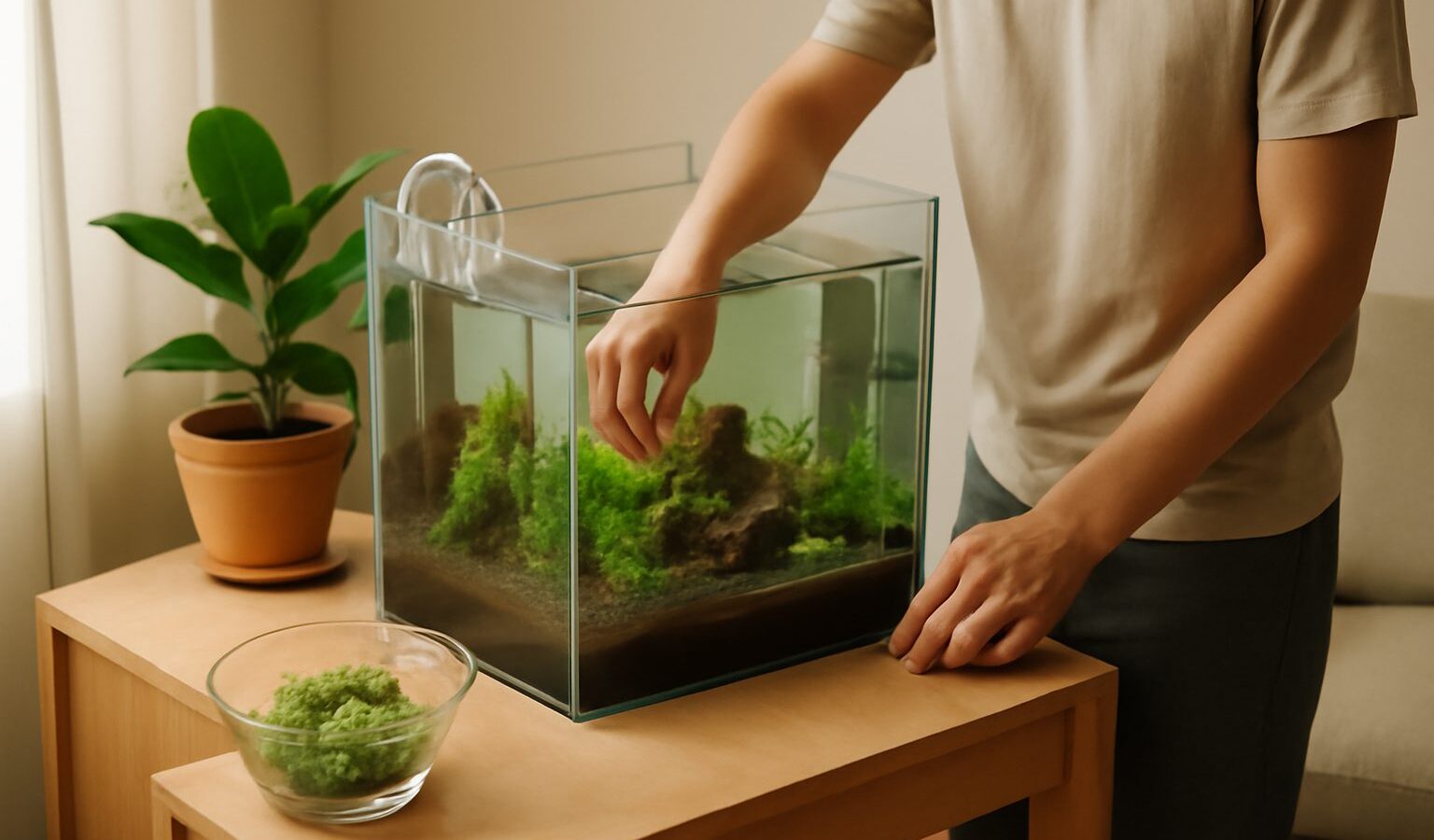
A planted aquarium is one of the calmest, most rewarding pieces of living décor you can keep in a Singapore flat. A glass box of green stems, gentle current and darting fish softens a hard-edged HDB living room and asks for far less daily fuss than most people fear. The trick is to build it in the right order and, above all, to be patient at the start. This guide walks a first-timer through substrate, lighting, plant choices and the basics of carbon dioxide, then explains the one step nobody should skip: cycling the tank before any fish move in. It is general fishkeeping information, not veterinary advice.
Start With the Tank, Not the Fish
The most common beginner mistake is buying fish on day one. A healthy planted aquarium is really a small ecosystem, and that system needs a few weeks to switch on before it can support animals. So think of your early shopping list as tank, stand, filter, heater is optional in our climate, lighting, substrate and plants. Livestock comes last.
Bigger is genuinely easier than smaller. A larger volume of water dilutes waste and swings in temperature or chemistry far more slowly, which forgives beginner errors. If your space allows, a tank somewhere between 40 and 100 litres is much kinder to a newcomer than a tiny nano bowl. Place it on furniture rated for the weight, since water is heavy, and keep it out of direct sunlight from a window, which in Singapore drives runaway algae and cooks the tank on a hot afternoon.
A gentle filter is essential. It is not only about clearing debris; the sponge and media inside become home to the helpful bacteria that make the whole system safe. Pick a filter rated for your tank size with an adjustable, soft flow so it does not blast delicate plants or exhaust small fish.
Substrate, Lighting and Getting Plants to Grow
Substrate is the material on the tank floor, and for a planted aquarium it does double duty as the plants’ root bed. You have two broad routes. An active aquasoil is enriched to feed roots and is the easiest path to lush growth, though it can nudge water chemistry and needs replacing after a year or two. Inert gravel or sand is cheaper and lasts forever but gives plants little to feed on, so you add root tabs and a liquid fertiliser instead. Either works; a beginner leaning on easy plants often does well with a good aquasoil capped nowhere and simply planted into.
Lighting is the engine of plant growth, and here more is not always better. Plants need enough light of the right spectrum to photosynthesise, but too much light over too many hours, especially without matching nutrients and carbon dioxide, simply feeds algae. A sensible starting point is a modest planted-tank LED on a timer for around six to eight hours a day. If algae creeps in, shorten the photoperiod before you do anything drastic.
Choose forgiving plants first. The following do well for beginners in local conditions and tolerate lower light:
- Java fern and Anubias, which attach to rock or wood rather than rooting in substrate
- Cryptocoryne species, slow but tough once settled
- Vallisneria and other easy stem plants for background height
- Floating plants such as frogbit, which shade the tank and mop up excess nutrients
- Moss on driftwood for a soft, natural look
Buy plants from licensed local aquarium shops and rinse and inspect them for pest snails or hitchhikers before planting. Avoid taking plants or animals from ponds, reservoirs and drains, which is both risky and, for wild collection, against the rules.
To CO2 or Not to CO2
Carbon dioxide is the fuel plants use to build tissue, and injecting extra can transform growth in a demanding, brightly lit aquascape. For a first tank, though, you do not need it. Plenty of gorgeous low-tech tanks run on nothing but easy plants, modest light and the trace carbon dioxide already dissolved in the water and produced by the fish.
If you later want faster, denser growth, a pressurised CO2 system is the reliable option, always paired with a drop checker so you can see the level and a timer so it switches off at night. Handle it carefully, because too much dissolved carbon dioxide will suffocate fish. The table below compares the two beginner paths so you can choose with clear eyes.
| Factor | Low-tech, no added CO2 | High-tech with CO2 injection |
|---|---|---|
| Upfront cost and gear | Low, no cylinder needed | Higher, cylinder and regulator |
| Difficulty for a beginner | Easy and forgiving | More to monitor and balance |
| Plant choice | Easy, slower growers | Wider range, demanding species |
| Growth speed | Slow and steady | Fast and lush |
| Risk if unbalanced | Mostly algae | Algae plus risk to fish if overdosed |
There is no shame in the left-hand column. Many experienced hobbyists keep low-tech tanks by choice for their calm, low-maintenance rhythm.
Cycling the Tank Before Any Fish
This is the step that protects your future fish, so please do not rush it. Cycling means growing a colony of beneficial bacteria that convert the ammonia in fish waste, which is highly toxic, first into nitrite, which is also toxic, and finally into far less harmful nitrate that you export with water changes. Until that colony is established, fish sit in effectively poisoned water.
A fishless cycle is the humane way. You set up the tank fully planted, then add a small ammonia source and wait, testing the water every few days with a liquid test kit. Over roughly two to six weeks you will watch ammonia rise then fall, nitrite rise then fall, and nitrate begin to appear. When the tank can clear a dose of ammonia to zero, and nitrite reads zero too, within about a day, it is cycled and ready. Live plants and a little filter media borrowed from an established, healthy tank both speed this along.
Once cycled, introduce fish slowly and in small numbers, choosing species suited to your tank size and water. Acclimatise them gently to temperature and chemistry rather than tipping the bag straight in. Quarantining new fish in a separate container before they join the display is best practice for anyone keeping more than a single tank. If you also fancy goldfish, read our companion guide to goldfish care and common myths first, because their needs are very different from small tropical community fish and they rarely suit a delicate planted setup.
Keeping It Healthy Week to Week
A settled planted aquarium is refreshingly low effort. A steady routine keeps water clean and plants thriving:
- Change roughly a quarter to a third of the water each week, using dechlorinated tap water at a matching temperature.
- Test the water regularly at first, watching that ammonia and nitrite stay at zero.
- Trim and replant stems as they grow, and remove dying leaves before they rot.
- Feed fish sparingly, only what they finish in a couple of minutes, since leftover food fuels algae and pollutes the water.
- Wipe algae off the glass and top up evaporation with dechlorinated water.
Before you commit, be honest about the time, cost and the years a healthy tank can run, and remember that fish are living animals in your care, not ornaments. Keep only species and numbers your tank can support, source everything from licensed suppliers, and never release unwanted fish or plants into local waterways, which harms native wildlife and is illegal. If a fish falls ill, look for an aquatic-experienced vet rather than guessing at treatments. Build it patiently and a planted aquarium will reward you with a slice of living calm for years.