

The asparagus fern is one of the easiest ways to bring soft, feathery greenery into a Singapore flat, corridor or balcony. It looks delicate, but it is a tough plant that copes well with warmth and humidity once you get the light and watering right. This guide explains what an asparagus fern actually is, the common types you will find at local nurseries, and how to keep one lush rather than yellow and shedding.
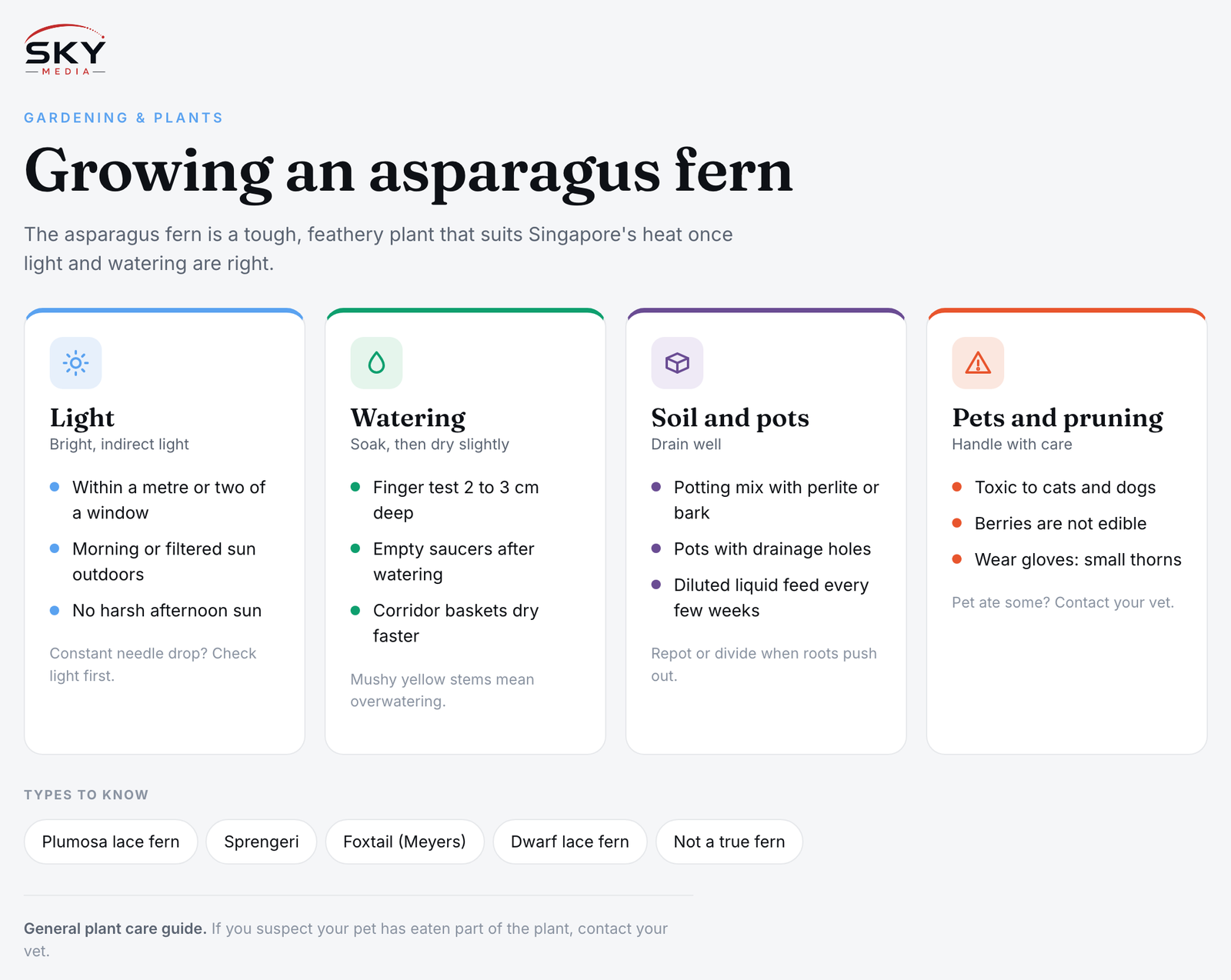
What Is an Asparagus Fern?
Despite the name, the asparagus fern is not a true fern. True ferns reproduce through spores, while asparagus ferns are flowering plants related to the asparagus you eat. What look like leaves are actually tiny flattened stems called cladodes, which give the plant its fluffy texture.
This matters for care. Asparagus ferns store water in thick, tuberous roots, so they handle short dry spells far better than true ferns such as the Boston fern. They also tend to have small thorns along older stems, so wear gloves when pruning.
They can produce small white flowers followed by berries that ripen to red. The berries should not be eaten and are best kept away from children and pets.
Common Types You Will Find in Singapore
Nurseries in Singapore usually stock a few varieties. They share similar care needs but look quite different.
| Type | Appearance | Best spot at home |
|---|---|---|
| Plumosa or setaceus (lace fern) | Flat, very fine, cloud-like sprays, often climbing | Bright indoor spot or shaded balcony, can trail on a trellis |
| Sprengeri (emerald fern) | Loose, arching stems with slightly longer needles | Hanging baskets in corridors and balconies |
| Foxtail (Meyers) | Upright, dense, tail-shaped plumes | Pots on a ledge or table where the form can be seen |
| Dwarf lace fern (setaceus ‘Nanus’) | Compact, tiered sprays, a smaller form of plumosa | Indoor planters near a window |
Labels at nurseries vary, so do not worry if the name on the tag differs. Care is similar across all of them.
Light: The Most Important Factor
Asparagus ferns like bright, indirect light. In Singapore, that usually means:
- Indoors: within a metre or two of a window that gets good daylight but no harsh afternoon sun on the plant.
- Balconies and corridors: a spot with morning sun or filtered light, such as under an overhang.
- Outdoors in the garden: dappled shade under taller plants.
Too much direct sun, especially the strong midday and afternoon sun here, bleaches the fronds and turns them pale yellow or brown at the tips. Too little light leads to sparse, stretched growth and leaf drop. If your plant is shedding needles constantly, light is the first thing to check.
If your flat is dim, a grow light can help. See our guide to using grow lights indoors for setup tips.
Watering and Humidity
Because of their water-storing roots, asparagus ferns prefer a cycle of thorough watering followed by the top layer of soil drying slightly.
- Check before watering. Push a finger about two to three centimetres into the soil. If it feels dry, water until it drains from the bottom of the pot.
- Never leave the pot sitting in water. Empty saucers after watering. Soggy roots rot quickly in Singapore’s heat.
- Adjust for location. A hanging basket in a breezy corridor dries out much faster than a pot in an air-conditioned bedroom. Expect to water outdoor plants more often.
- Humidity is usually fine. Singapore’s natural humidity suits asparagus ferns. In rooms with air-conditioning running all day, an occasional mist or grouping plants together helps.
Brown, crispy fronds usually mean underwatering or dry air. Yellowing with mushy stems near the soil usually means overwatering.
Soil, Pots and Feeding
Use a well-draining potting mix. A general potting mix with added perlite, coarse sand or bark works well. Avoid dense garden soil, which holds too much water.
- Pots: choose one with drainage holes. Terracotta helps soil dry evenly, while plastic is lighter for hanging baskets.
- Feeding: a balanced, diluted liquid fertiliser every few weeks keeps growth lush. Follow the product label and go lighter rather than heavier, as too much fertiliser can burn roots.
- Mulch: a thin layer of bark on top of outdoor pots slows drying in hot weather.
Repotting and Dividing
Asparagus ferns grow vigorous root systems. Signs it is time to repot include roots pushing out of the drainage holes, soil drying out within a day, or a pot that bulges or cracks.
To repot:
- Water the day before so the root ball slides out more easily.
- Ease the plant out. You will see thick, pale tubers among the roots, which is normal.
- Move to a pot one size larger with fresh mix, or divide the clump.
- To divide, cut the root ball into two or three sections with a clean knife, each with healthy stems and roots.
- Water well and keep the plant out of direct sun for a week or so while it settles.
Dividing is the easiest way to get new plants to share with friends or fill another basket.
Pruning and Common Problems
Trim yellow or bare stems right down at the base to encourage fresh growth. Older stems naturally brown and can be removed at any time. Wear gloves because of the small thorns.
Common issues in Singapore:
- Needle drop: usually low light, a sudden move or underwatering. Find a brighter spot and keep watering consistent.
- Yellowing all over: often overwatering or poor drainage. Let the soil dry more between waterings and check the pot drains well.
- Spider mites and mealybugs: look for fine webbing or white cottony clumps, especially indoors. Rinse the plant with water, wipe affected stems, and use an insecticidal soap if needed, following the label.
- Scorched tips: too much direct sun. Move the plant to filtered light.
Is the Asparagus Fern Safe for Pets?
Asparagus ferns are commonly listed as toxic to cats and dogs. The berries can cause stomach upset if eaten, and contact with the sap may irritate skin. If you have pets, hang the plant out of reach or choose a pet-friendly alternative. If you suspect your pet has eaten part of the plant, contact your vet.
In some warm regions, such as parts of Australia, Florida and Hawaii, certain asparagus fern varieties are considered invasive because birds spread the seeds from the berries. If you garden on landed property, trimming off berries before they ripen is a sensible habit, and you should avoid dumping plant cuttings in parks or nature areas.
Frequently Asked Questions
Is the asparagus fern easy to grow in Singapore?
Yes. It tolerates heat and humidity well. The main things to get right are bright, indirect light and not overwatering.
Can I grow an asparagus fern indoors?
Yes, near a bright window. Rooms with little natural light usually lead to sparse growth unless you add a grow light.
Why is my asparagus fern turning yellow?
The most common causes are overwatering, poor drainage or too much direct sun. Check the soil and position before anything else.
How often should I water an asparagus fern in Singapore? There is no fixed schedule; water when the top two to three centimetres of soil feel dry, then soak until it drains. A hanging basket in a breezy corridor may need water far more often than a pot in an air-conditioned room, so check by touch rather than by calendar.
Can I propagate an asparagus fern from cuttings? Cuttings are not the usual method. The easiest way to get new plants is to divide the root ball into two or three sections, each with healthy stems and tuberous roots, when you repot. Keep the divisions out of direct sun for about a week while they settle.
Why is my asparagus fern dropping needles indoors? Needle drop is most often caused by low light, a sudden change of position or underwatering. Move the plant closer to a bright window without harsh afternoon sun and keep watering steady. A grow light can help in dim flats.
Does an asparagus fern need a big pot? It grows a vigorous root system, so it will eventually fill its pot, but jump only one size up at each repotting. A pot that is too large holds extra wet soil and raises the risk of root rot. Always choose one with drainage holes.
Is asparagus fern a good plant for an HDB corridor? It can do well, especially the arching sprengeri type in a hanging basket. Pick a spot with morning sun or filtered light, water more often because corridors dry pots quickly, and keep it out of reach of pets. Check your town council’s rules on corridor plants before placing it.
If you enjoy the feathery look, the asparagus fern pairs well with true ferns. Explore more: How to Grow a Boston Fern in Singapore and How to Grow a Bird’s Nest Fern in Singapore.