
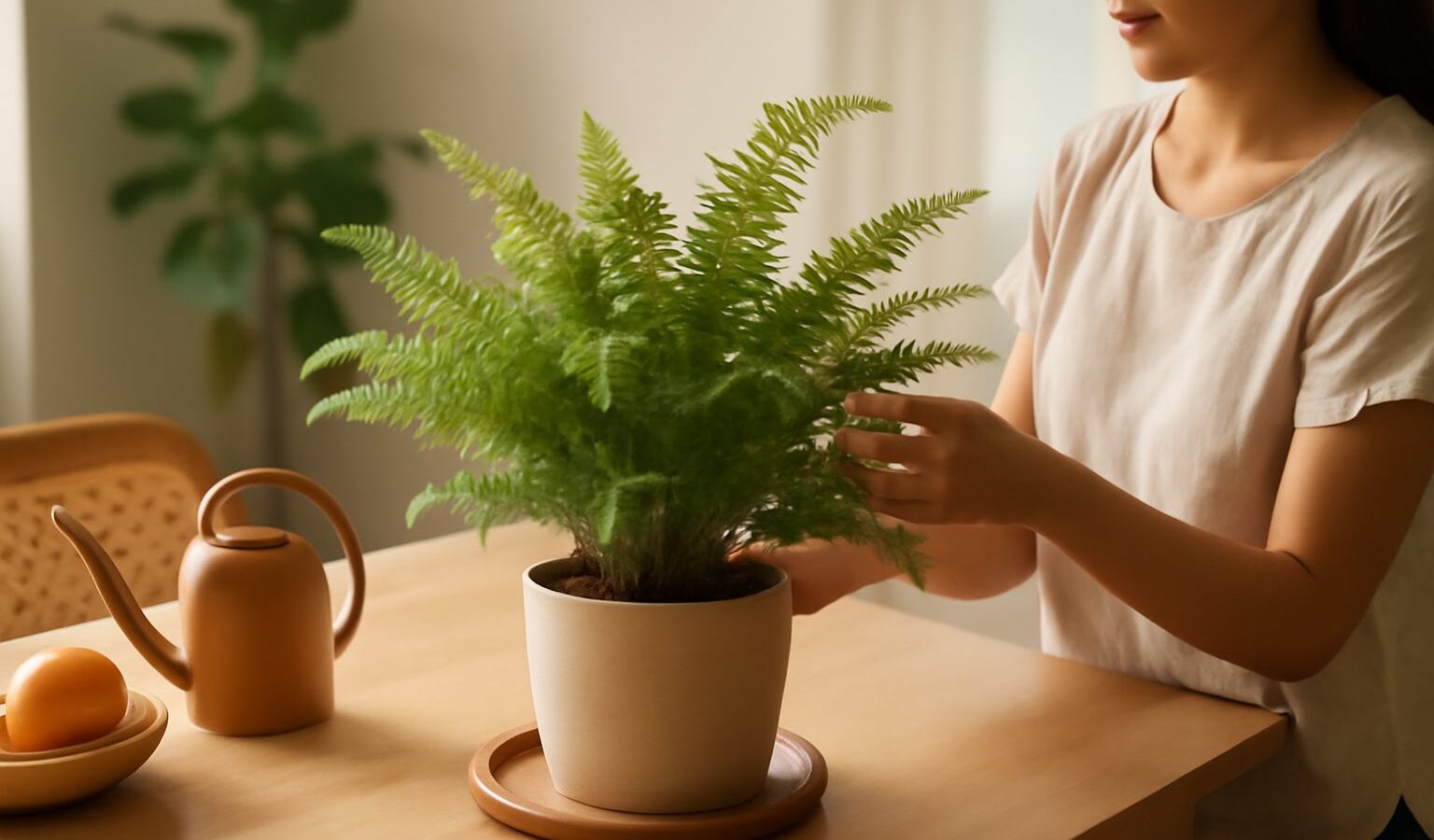
Few plants suit our climate quite like ferns. They evolved in warm, damp, shaded forests, which is almost a description of a covered Singapore balcony after an afternoon shower. If your flat catches soft light rather than blazing sun, ferns can give you that lush, green, feathery look without much fuss. The trick is to stop thinking of them as fragile and start giving them the three things they really want: gentle light, steady moisture and moving air. Get those right and ferns will reward you for years.
This guide covers the ferns most home growers meet at a garden centre, how to keep them happy in a small tropical space, and the common problems that make people give up too soon.
Popular Ferns for Small Singapore Homes
Not every fern behaves the same way, so it helps to pick one that matches your space. Some are tough and forgiving, others sulk the moment the air dries out.
- Bird’s nest fern. Broad, glossy, upright fronds that form a rosette. One of the easiest for indoors and shaded corridors, and it tolerates less humidity than most.
- Boston fern. The classic hanging basket fern with arching, frilly fronds. Beautiful, but thirsty and quick to brown if it dries out or sits in aircon.
- Rabbit’s foot fern. Named for the fuzzy rhizomes that creep over the pot rim. Handsome, a little more drought forgiving, and lovely in a raised pot.
- Staghorn fern. Grown mounted on a board or in a basket, it reads more like living sculpture and enjoys a bright, shaded balcony.
- Maidenhair fern. Delicate and gorgeous, with tiny fan-shaped leaves, but genuinely demanding about constant moisture and humidity. Best left until you have some practice.
If you are new to ferns, start with a bird’s nest or rabbit’s foot fern. They shrug off the odd missed watering while you learn to read them.
Light, Water and Humidity Ferns Actually Need
Ferns are understorey plants, so the harsh, direct sun on an unshaded west-facing balcony will scorch and crisp them fast. Aim for bright but indirect light: near a window shaded by a ledge, under the filtered light of a corridor, or on a balcony that gets gentle morning light only. Indoors, a spot a metre or two back from a bright window is ideal.
Water is where most ferns are won or lost. They like their soil consistently moist, never bone dry and never a swamp. In our heat, a potted fern may need watering every day or two, especially in a breezy or air-conditioned spot. Push a finger into the top of the mix; if the surface feels like it is starting to dry, water thoroughly until it runs from the drainage holes, then tip away anything that collects in the saucer.
Humidity is the quiet killer. Ferns love the muggy outdoor air but hate the dry, chilled air near an air-conditioner or a fan. If fronds keep browning at the tips indoors, raise the humidity: group your plants together, sit the pot on a tray of pebbles with a little water below the pot base, or move it to a naturally humid spot like a bright bathroom or a sheltered balcony. Keep any standing water shallow and refresh it often, because stagnant water in trays and saucers breeds Aedes mosquitoes. Empty and change it at least weekly, never let saucers hold water for days, and follow current NParks and NEA guidance to prevent mosquito breeding.
Soil, Feeding and Repotting
Ferns want a mix that holds moisture yet still drains and breathes, because soggy, airless soil rots their fine roots. A good starting point is a quality potting mix loosened with extra material such as coco coir, fine bark or a little perlite. The goal is a mix that stays damp like a wrung-out sponge, not one that turns to mud.
Feed lightly. Ferns are not heavy feeders, and too much fertiliser burns their delicate roots and browns the frond edges. A balanced liquid fertiliser at half the label strength, given every three to four weeks during active growth, is plenty. Ease off if growth slows.
Repot only when the plant is clearly crowded, with roots circling the pot or pushing out of the drainage holes. Move up just one pot size, since a pot that is too large stays wet and invites rot. This is also the moment to divide a large clump into two or three smaller plants, each with roots and fronds attached, which is the simplest way to make more ferns for free. Ferns are grown for their foliage and are not edible, so keep them for looking at, not eating, and wash your hands after handling soil.
Common Fern Problems and Quick Fixes
Ferns are honest communicators. When something is wrong, the fronds tell you quickly, and most issues trace back to light, water or air. Use the table below to match the symptom to the likely cause and the fix.
| Symptom | Likely cause | What to do |
|---|---|---|
| Crispy brown frond tips | Air too dry, often from aircon or a fan | Raise humidity, move away from cold draughts, keep soil evenly moist |
| Whole fronds yellowing and limp | Overwatering or waterlogged, airless mix | Let the surface dry slightly, improve drainage, empty the saucer |
| Fronds pale, scorched or bleached | Too much direct sun | Move to bright indirect light or a shaded spot |
| Dry, shrivelled fronds and light pot | Underwatering | Water more often, soak a very dry pot in a basin for ten minutes |
| Fine webbing or speckled leaves | Spider mites, common in dry air | Rinse the plant, raise humidity, treat with insecticidal soap if needed |
For pests such as scale or spider mites, always try the gentlest approach first: wipe or rinse them off, raise humidity, and use insecticidal soap or neem before anything stronger. If you ever use a shop-bought pesticide, follow the label exactly, keep it away from children and pets, and use it in a ventilated space. On a balcony or corridor, keep pots secured against wind, avoid runoff onto neighbours below, and follow your HDB, town council or MCST rules for shared spaces.
Growing Ferns Well All Year
Our climate barely changes with the seasons, which is a gift for fern growers: no cold snaps, no winter dormancy, just steady warmth and humidity. The main variables are our sudden monsoon downpours and the drying pull of indoor aircon. During heavy rain, make sure balcony pots are not sitting in pooled water, and after long dry, breezy spells, check moisture more often. Turn hanging and potted ferns every couple of weeks so all sides grow evenly toward the light. Snip away any old, browned fronds at the base to keep the plant tidy and to push fresh growth. Do these small things consistently and your ferns will stay full, green and genuinely easy.
Explore more
If you love lush foliage, try pairing your ferns with other shade-friendly greenery. See our guides to growing and caring for calatheas in Singapore and caring for peace lilies for more humidity-loving plants, or branch out with growing air plants (tillandsia) for a low-soil display in a small space.