
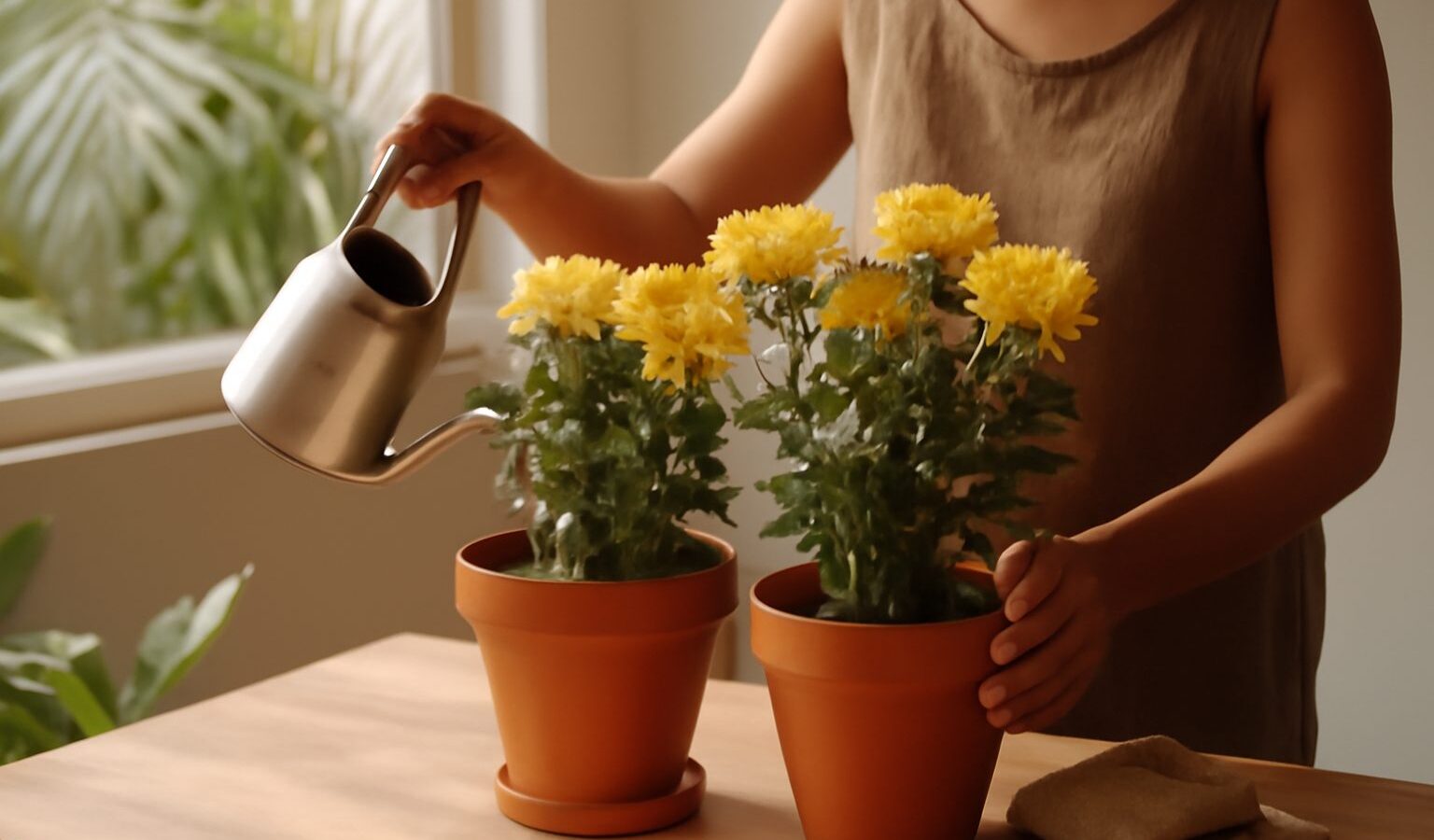
Every Chinese New Year, nurseries and supermarkets fill with pots of golden and white chrysanthemums. They look wonderful for a few weeks, then the blooms brown and many pots end up in the bin. If you want to grow chrysanthemum in Singapore beyond the festive season, it is possible, but it helps to understand why these plants struggle here and which types are more forgiving.
This guide covers the main kinds of chrysanthemum you will meet locally, how to keep a festive pot healthy after flowering, and realistic ways to coax it into blooming again.
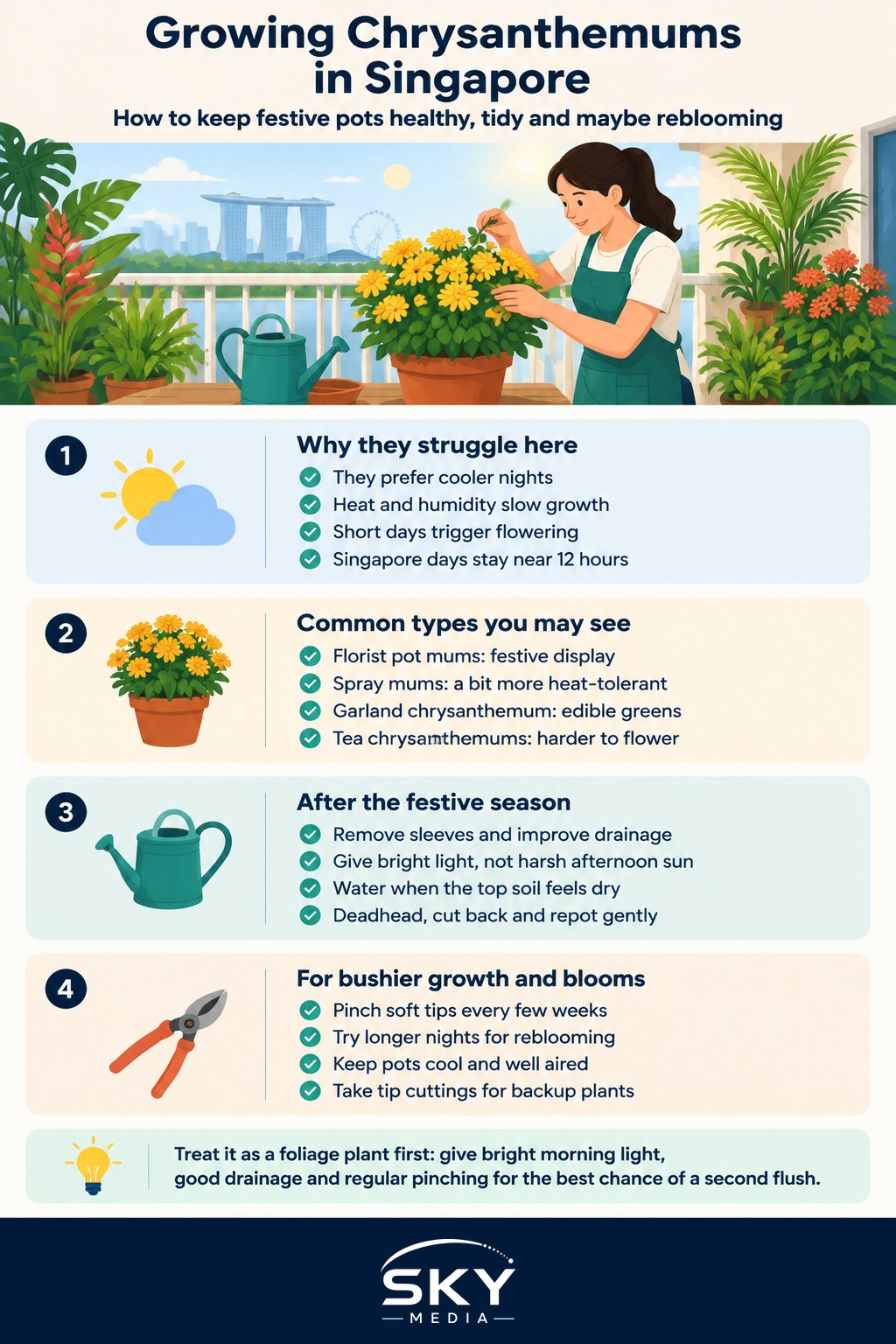
Why Chrysanthemums Find Singapore Tricky
Most decorative chrysanthemums come from temperate or highland growing conditions. Two things make our climate a challenge:
- Heat and humidity. Chrysanthemums prefer cooler nights. Constant warmth and humid air slow them down and encourage fungal problems.
- Day length. Florist chrysanthemums are “short-day” plants. They set flower buds when nights become long, which in temperate countries happens in autumn. Singapore’s day length stays close to 12 hours all year, so the natural trigger is weak. Commercial growers control light and temperature precisely to produce those perfect festive pots.
The upshot: keeping the plant alive is quite achievable. Getting the same dense dome of flowers again is harder, and a lighter second flush is a good result.
Types of Chrysanthemum You Will Find Locally
| Type | Typical look | How it copes in Singapore | Best use |
|---|---|---|---|
| Florist pot mums | Dense, rounded mound of flowers in one colour | Survives with care, rebloom is lighter and less tidy | Festive display, then a foliage plant with occasional flowers |
| Spray or daisy-type mums | Several smaller daisy-like flowers per stem | Often a little more relaxed in heat, can flower again on new growth | Balcony pots and mixed planters |
| Garland chrysanthemum (tong ho) | Leafy edible greens, small yellow and white daisy flowers | Grows quickly from seed in good sun, bolts to flower in heat | Kitchen gardens, harvest young leaves |
| Chrysanthemum grown for tea | Small pale yellow or white flowers | Possible, but flowering is unreliable at lowland temperatures | Gardeners who enjoy a challenge |
If you mainly want reliable colour, consider pairing chrysanthemums with heat-loving flowers. Our guides to growing marigolds and heliconia and other tropical flowers suggest plants that bloom readily here.
Caring for a Festive Pot After the Celebrations
Right after you bring it home
- Check the pot. Many festive pots have no drainage or sit in a decorative sleeve that traps water. Remove the sleeve or poke drainage holes so roots do not rot.
- Give it bright light. Place the pot where it gets morning sun or bright, indirect light. Harsh afternoon sun on a west-facing ledge can scorch flowers and dry the pot quickly.
- Water carefully. Water when the top layer of soil feels dry, then let excess drain away. Florist pots are often packed with roots, so they can dry out faster than you expect, but standing water is just as harmful.
When the flowers fade
- Deadhead. Snip off browning flowers to keep the plant tidy and reduce rot.
- Cut back. Once most blooms are finished, trim the stems back by roughly a half to two thirds, leaving some healthy leaves on each stem. This feels drastic but encourages fresh growth.
- Repot. Move the plant into a slightly larger pot with fresh, free-draining potting mix. Adding perlite or coarse material helps drainage. Gently loosen tightly packed roots.
- Divide if crowded. Some festive pots contain several cuttings planted together. You can separate them into individual pots so each has more room.
- Feed lightly. Once new growth appears, use a balanced fertiliser at the strength shown on the label. Too much fertiliser gives soft, leggy growth.
Encouraging a Bushy Plant and a Second Bloom
Pinch for shape
As new shoots grow, pinch out the soft tips every few weeks. Each pinch makes the stem branch, building a fuller plant with more places for buds to form. Stop pinching some weeks before you hope to see flowers, so buds have time to develop.
Work with day length
Because the natural day length changes so little here, some gardeners try giving their plant longer nights. The idea is to keep it in complete darkness for an extended period overnight, for example under a cardboard box or in a dark cupboard, then return it to light each morning. Results vary and it takes consistency over several weeks, but it is a fun experiment for keen growers. Even brief light from a lamp at night can interrupt the effect.
Help with heat
- Grow in the coolest bright spot you have, such as a breezy, east-facing corridor or balcony.
- Use a light-coloured pot rather than a dark one, which absorbs more heat.
- Avoid placing pots directly on hot tiles or concrete. Raising them on pot feet improves airflow and drainage too.
Take cuttings
Chrysanthemums root fairly easily from soft tip cuttings. Take a short healthy shoot, remove the lower leaves, and place it in moist, free-draining mix in bright shade. Young plants often adapt better to local conditions than the original greenhouse-grown pot, and they give you spares if the parent plant declines.
Pests and Problems to Watch For
Humid weather and crowded growth make chrysanthemums prone to a few common issues:
- Aphids and thrips. Small insects clustering on new shoots or flower buds, often causing distorted growth. Rinse them off with water or use an insecticidal soap, following the product label.
- Spider mites. Fine webbing and speckled, dull leaves, usually in hot, dry spots. Improve humidity around the plant and rinse leaf undersides.
- Powdery mildew and leaf spots. White powder or dark patches on leaves. Water the soil, not the foliage, remove affected leaves and improve airflow.
- Root rot. Yellowing, wilting leaves despite wet soil. This usually means poor drainage. Repot into fresh, well-draining mix and water less often.
- Leggy, floppy stems. A sign of too little light. Move the pot somewhere brighter and keep pinching.
Check with your local nursery if a problem persists, and bring a photo or a sample leaf in a sealed bag.
A Note on Pets and Edible Types
Ornamental chrysanthemums are considered toxic to cats and dogs if chewed, so keep pots out of reach of curious pets. Do not eat ornamental flowers or leaves either, since nursery plants are often treated with chemicals not meant for food crops.
If you want an edible chrysanthemum, grow garland chrysanthemum (tong ho) from seed in a sunny spot and harvest the young leaves regularly. Like many leafy greens grown in heat, it tends to bolt and flower quickly, so sow small batches every few weeks. Our guide on growing herbs at home covers the basics of containers and sun for edible plants.
Is It Worth Keeping Your Festive Pot?
For many home gardeners, the answer is yes, as long as expectations are realistic. Treat a festive chrysanthemum as a foliage plant that may reward you with a looser, smaller flush of flowers later, rather than a plant that will look exactly as it did in the shop. With good drainage, bright morning light, regular pinching and a little patience, plenty of Singapore gardeners keep their chrysanthemums going well past the festive season, and some see them bloom again in time for the next one.
Frequently Asked Questions
How do I pick a chrysanthemum pot that lasts longer? Choose a plant with plenty of tight, unopened buds and a few open flowers, rather than one in full bloom. Check that leaves look green and firm, the soil is not soggy, and there are no tiny insects under the leaves. A pot with unopened buds gives you more weeks of colour.
Can I keep a chrysanthemum indoors in an air-conditioned room? It can survive for a while, but it will struggle. Cold, dry air-conditioning plus low light weakens the plant. Keep it near a bright window for most of the day, move it away from direct vents, and take it outside to brighter light regularly so it does not become leggy.
Can I grow ornamental chrysanthemums from seed? It is not the usual method. Florist chrysanthemums are normally propagated from cuttings so the plants stay true to the parent. Garland chrysanthemum, or tong ho, is the exception, because it grows easily from seed and is the type most suited to home vegetable pots.
Can chrysanthemums grow in an HDB home with little direct sun? They need bright light to stay compact and flower, so a dim corridor or north-facing room is not ideal. A bright east-facing window or balcony works better. If the spot is shaded, expect leggy growth and treat the plant as a short-term decoration.
Why do my chrysanthemum flowers brown so quickly after Chinese New Year? Festive pots are grown under controlled conditions and then moved into Singapore’s heat, low light or air-conditioning, which stresses them. Overwatering and trapped water in decorative sleeves also speed up browning. Deadhead promptly and keep it in bright, airy light to slow the decline.
Further reading: Can You Grow Lavender in Singapore? · Keeping Hydrangeas Alive in Singapore’s Heat · Growing Periwinkle and Pentas for Easy Year-Round Colour