
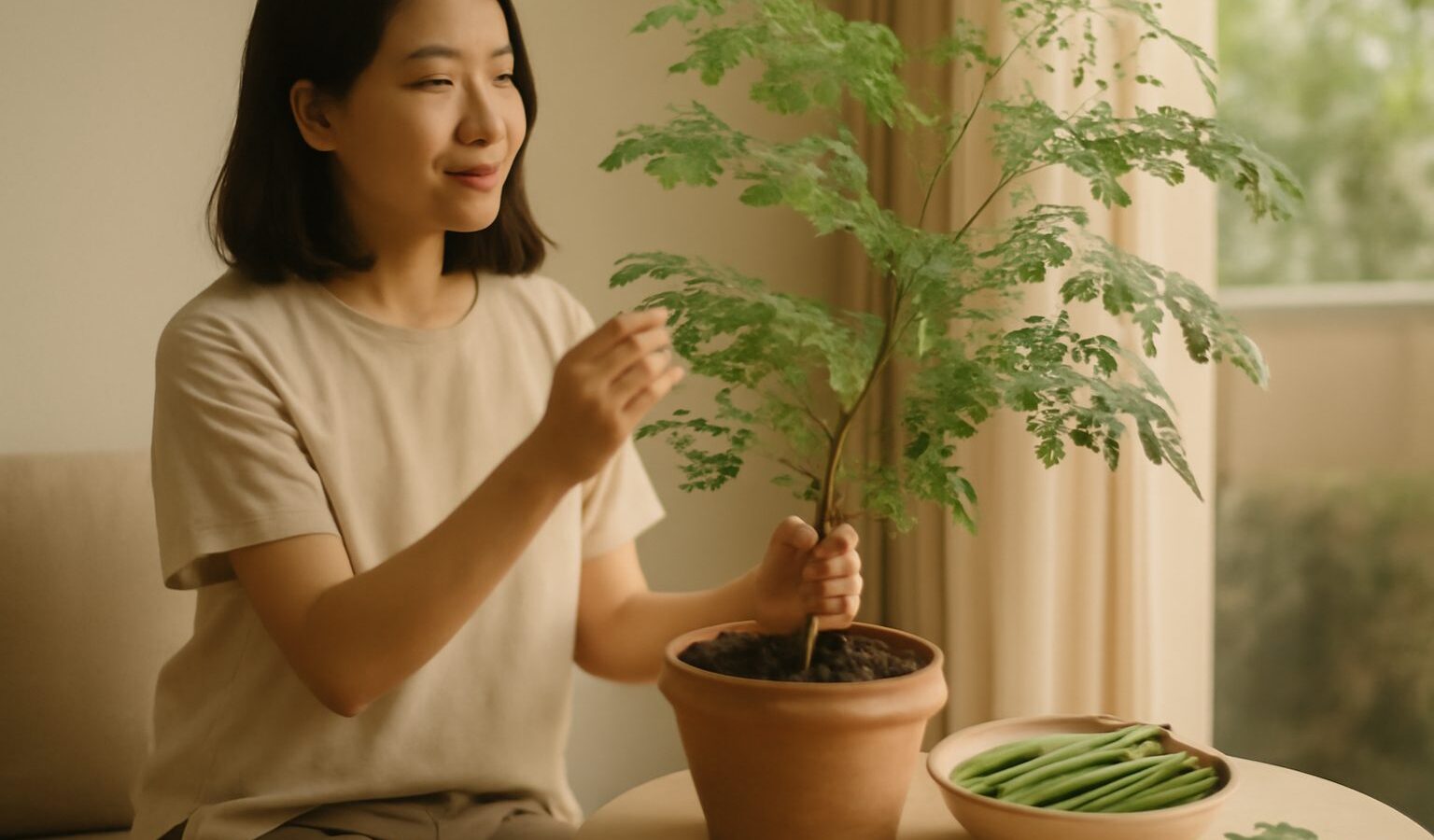
If you have ever eaten a South Indian sambar with long, ridged green pods in it, you have already met the drumstick tree. A moringa plant in Singapore is one of the easiest edible trees you can grow: it loves heat, shrugs off our humidity, grows fast from seed or cutting, and gives you a steady supply of small, tender leaves that go into soups, omelettes, dals and stir-fries. This guide focuses on what most edible garden guides skip: how to keep moringa small and productive in a Singapore home, and how to harvest the leaves without weakening the tree.
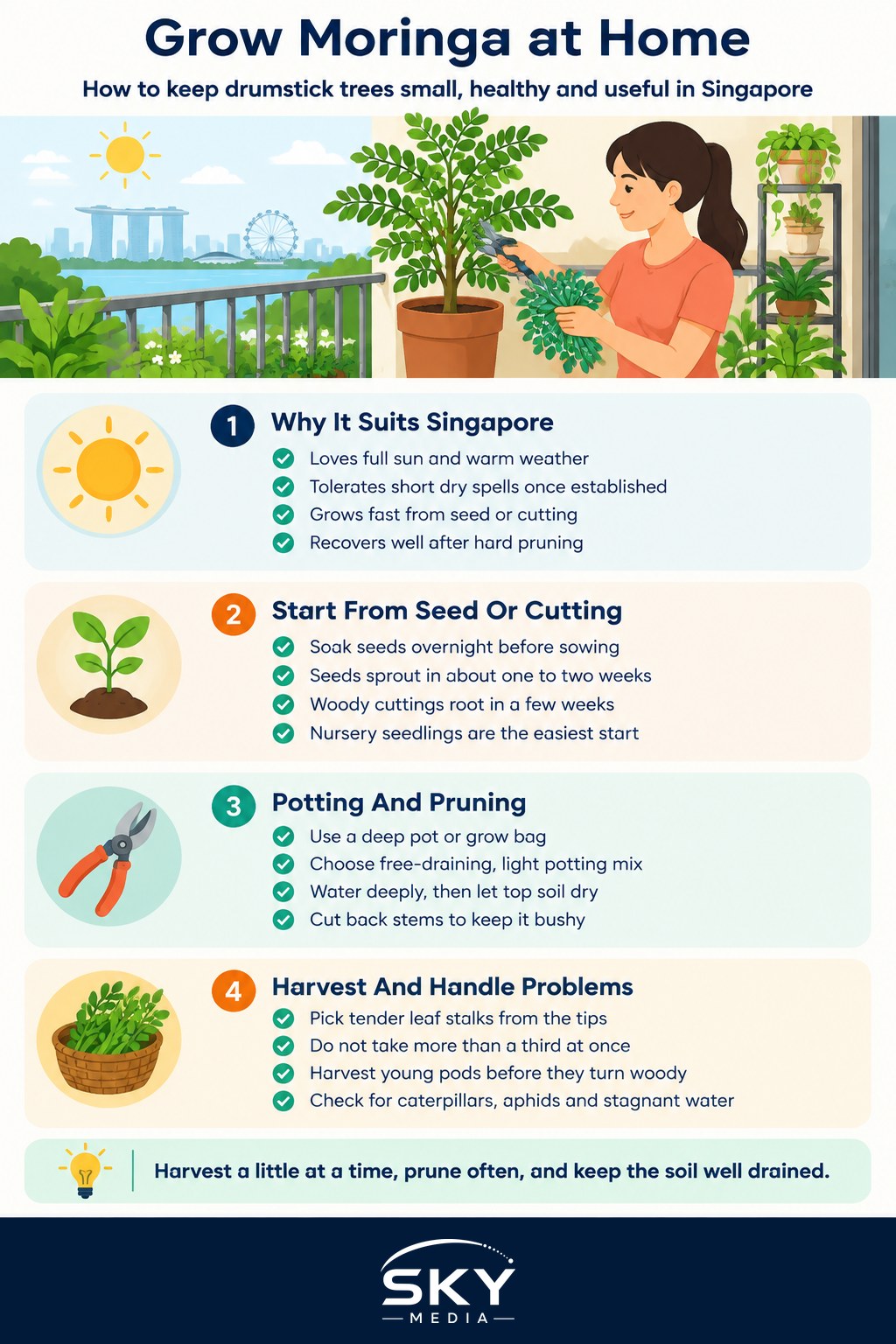
What Moringa Is and Why It Suits Singapore
Moringa (Moringa oleifera) is a fast-growing tropical tree native to South Asia. It is known by many names: drumstick tree after its pods, horseradish tree in older books, and murungai in Tamil kitchens. Left alone, it shoots up into a tall, lanky tree with feathery leaves made up of many small oval leaflets.
It does well here because it:
- Thrives in full sun and warm temperatures all year round
- Tolerates short dry spells once established
- Recovers quickly from hard pruning, which is the secret to keeping it compact
- Produces edible leaves within a few months of planting
The main things it dislikes are waterlogged soil and deep shade. A north-facing corridor with only a few hours of sun will give you a thin, floppy plant. A sunny balcony, rooftop, landed garden or common corridor spot that gets at least half a day of direct sun is ideal. If you plan to keep it in a shared corridor, check your town council or MCST (management corporation strata title, the body that manages a condo) rules on plants and fire safety first.
Seeds or Cuttings: Choosing How to Start
You can start moringa from seed or from a woody cutting. Both work in Singapore, and the right choice depends on what you can get hold of and how quickly you want leaves.
| Starting method | Where to get it | What to expect | Best for |
|---|---|---|---|
| Seeds | Garden shops, online sellers, or dried pods from a friend’s tree | Usually sprouts within one to two weeks; deeper roots and a sturdier plant | Pots and gardens where you want a long-lived tree |
| Woody cuttings | A pruned branch from a neighbour or community garden tree | Roots in a few weeks if kept moist but not soggy; faster first harvest | Gardeners who want leaves quickly |
| Nursery seedlings | Plant nurseries and some gardening markets | Already established; just pot up and grow | Beginners who want the least fuss |
Growing from seed. Soak seeds overnight in water to soften the shell. Sow each about two to three centimetres deep in a free-draining potting mix, keep it lightly moist, and place it in bright light. Once seedlings have a few sets of leaves, move them to full sun gradually over a week so the leaves do not scorch.
Growing from cuttings. Choose a woody branch about as thick as your thumb and roughly arm’s length. Let the cut end dry in the shade for a day or two, then push it a third of the way into a gritty mix. Water lightly and avoid overwatering, as soggy cuttings rot. New shoots at the top are a good sign that roots are forming.
Soil, Pots and Watering
Moringa grows a thick taproot, so give it depth. For balcony growers, a tall pot or a large grow bag works better than a wide, shallow planter. Make sure there are good drainage holes.
- Mix: a general potting mix lightened with perlite, coarse sand or burnt soil drains well. Avoid dense, clay-heavy soil that stays wet.
- Water: water deeply, then let the top few centimetres dry out before watering again. In our rainy months you may barely need to water outdoor plants; during hot spells, check daily.
- Feeding: a light dose of compost or a balanced organic fertiliser every month or so keeps leaf production strong. Too much nitrogen gives lush but weak growth.
- Placement: keep the pot where it gets strong sun but is sheltered from the worst wind on high floors, since young stems snap easily.
If you have a garden bed, plant it where it will not shade your other sun lovers. Moringa pairs well with chillies, which share similar sun and drainage needs; see our guide to growing chilli plants in Singapore.
Pruning to Keep It Small and Bushy
This is the step that turns moringa from a gangly pole into a productive leaf bush. Unpruned, it puts its energy into height, and the leaves end up out of reach.
- First pinch: when the seedling or cutting reaches around waist to chest height, cut the main stem back by a third to a half. It will branch out below the cut.
- Shape the branches: when the new side branches grow long, tip them back too. Each cut encourages more branching and more leaves at a reachable height.
- Regular cut-backs: every few months, or whenever it starts racing upwards again, cut back the tallest stems. Moringa responds to hard pruning with a flush of fresh, tender growth.
- Clean cuts: use sharp, clean secateurs and cut just above a leaf node.
For potted trees, keeping it around head height makes harvesting easy and stops it toppling in storms. The same principle of shaping trees early applies to other fruiting trees; our guides on growing a mango tree at home and grafting fruit trees cover pruning for structure in more depth.
How to Harvest Moringa Leaves and Pods
Once your plant is bushy and growing well, you can start harvesting leaves regularly.
Leaves. Snip whole leaf stalks (the long compound leaves made of many leaflets) from the tips of branches, where growth is youngest and most tender. Harvesting the tips also acts as light pruning, so the plant branches further. A good rule of thumb is to take no more than about a third of the foliage at once, so the tree can keep photosynthesising and recover.
To prepare them, hold the stalk and run your fingers down it to strip the small leaflets off. Rinse well. The leaflets cook in minutes, which is why they are often stirred into soups, dals, egg dishes and curries right at the end. Use them fresh, since they wilt quickly. If you have a glut, some gardeners dry the leaflets in shade and store them in an airtight jar.
Pods. Older trees flower with clusters of small, cream flowers, and then long green pods follow. Harvest the pods when they are young, slim and still snap easily; older pods turn woody and stringy. If you prune heavily for leaves you may get fewer pods, so decide which you value more. Leaving a pod or two to dry on the tree gives you seeds for the next plant.
If you are new to eating moringa, start with modest amounts as part of normal meals. If you are pregnant, on medication or managing a health condition, check with your doctor before eating it regularly or taking it as a supplement.
Pests and Common Problems
Moringa is generally tough, but a few issues are common in Singapore:
- Caterpillars: they can strip leaflets overnight. Check the undersides of leaves and pick them off by hand.
- Aphids and mealybugs: clusters on new shoots can be washed off with a strong spray of water or treated with a mild soapy solution.
- Yellowing leaves: often from overwatering or poor drainage. Let the soil dry out more between waterings.
- Leaf drop: moringa may shed some leaves after a hard prune, a move or a dry spell. It usually regrows quickly once conditions settle.
- Mosquitoes: do not leave water standing in saucers or grow bags. NEA asks all households to check for stagnant water regularly to prevent dengue.
Moringa is a rewarding addition to a tropical edible garden, especially alongside fruiting trees. For more ideas on what grows well in our climate, read about growing guava and tropical fruit trees.
Frequently Asked Questions
Can I grow a moringa tree indoors in Singapore? It is not ideal, because moringa wants strong direct sun for at least half the day, and indoor light usually makes it thin and floppy. A sunny window or balcony edge can work for seedlings, but move it outdoors when you can.
How soon can I harvest leaves from a new moringa plant? Leaves are usually ready within a few months of planting, and cuttings tend to give a first harvest sooner than seeds. Wait until the plant is bushy and well established, then take only the tender tips so it keeps growing.
Will a potted moringa produce drumstick pods? Older trees can flower and then set pods, but heavy pruning for leaves means you may get fewer of them. Decide whether you value leaves or pods more. A pot may also limit how large and productive the tree becomes.
Is it safe to eat moringa leaves every day? Small amounts as part of normal meals are how most people eat them, and that is a sensible way to start. If you are pregnant, take regular medication or manage a health condition, check with your doctor before eating it often or using supplements.