
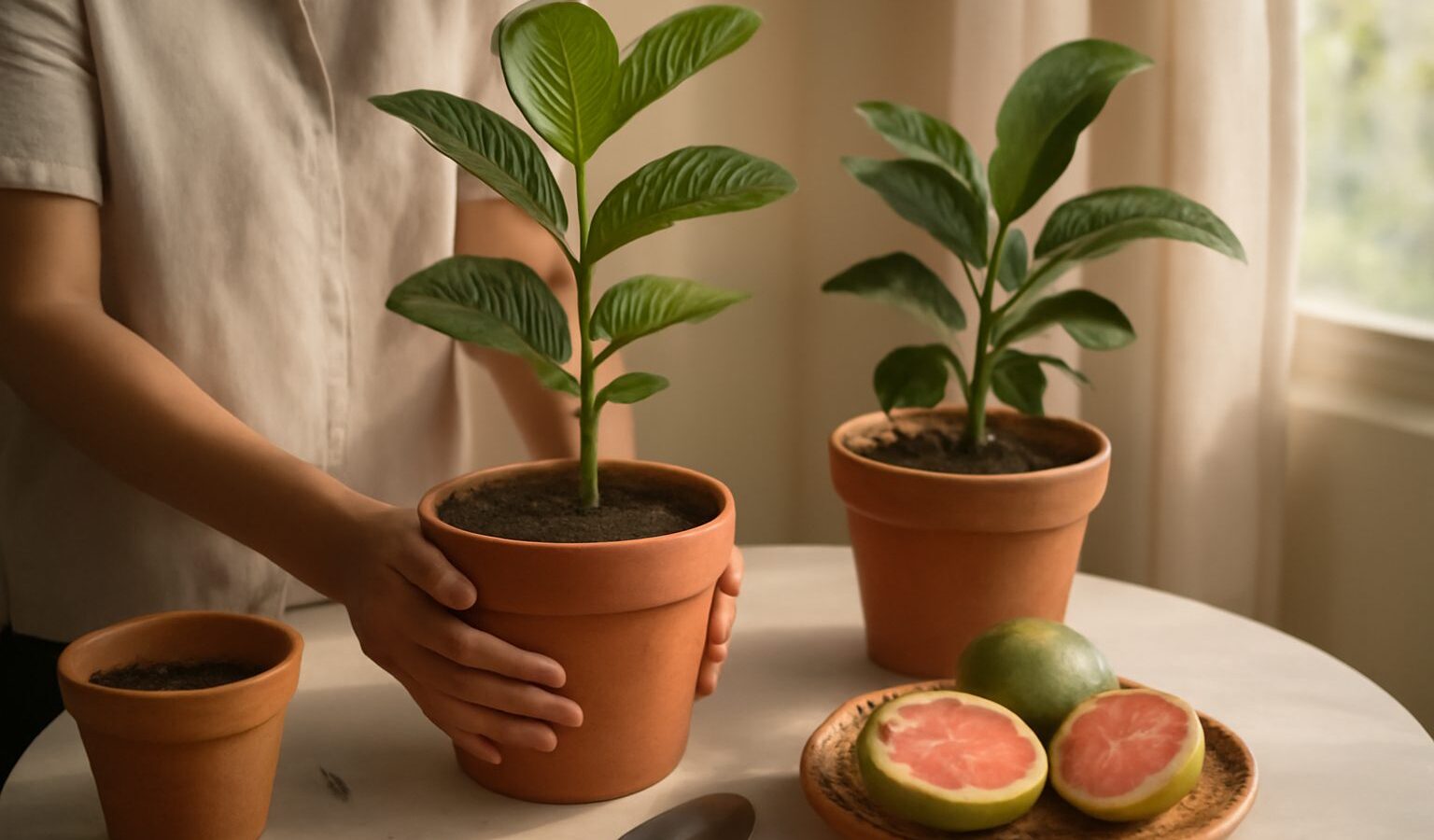
There is something deeply satisfying about picking a warm, fragrant guava straight from your own tree. Guava is one of the most forgiving tropical fruit trees you can grow, and it fruits generously in our climate. This guide to growing guava singapore gardeners will find practical covers pot size, sunlight, pruning and pollination, and it also looks at other fruit trees worth trying in a small garden or on a balcony.
Why Guava Suits Our Climate
Guava loves heat, humidity and strong sun, all of which we have in abundance. It grows quickly, tolerates our heavy rain, and shrugs off conditions that would defeat more delicate fruit. In the ground it can become a sizeable tree, but it also takes very well to containers, which makes it one of the few tropical fruit trees genuinely suited to balcony growing.
The plant produces glossy leaves, white flowers and rounded fruit that can be eaten firm and crunchy or soft and sweet, depending on the variety and how long you leave it. Pink-fleshed and white-fleshed types are both widely grown, and there are compact varieties bred specifically for pots.
Before you begin, though, be realistic about space. Even a potted guava wants sun and room. This is a tree, not a windowsill herb, and giving it too little light is the most common reason home-grown guava disappoints.
Space, Sun and Container Size
Guava needs at least six hours of direct sun a day to fruit well. A bright, open balcony that catches the morning or afternoon sun is ideal. In deep shade the plant will grow leaves but set little fruit.
For a container, bigger is better. Start a young tree in a pot of around 40 to 60 litres, and be prepared to move it up as it matures. The pot must drain freely, because although guava tolerates rain, it dislikes waterlogged roots. A good potting mix with added grit or perlite keeps the roots healthy.
On an HDB balcony, weight and space are real constraints. A large potted tree is heavy once watered, so make sure your balcony can take the load and that the pot sits where strong wind will not topple it. Keeping the tree pruned small, as described below, makes container growing far more manageable.
Planting, Watering and Feeding
Buy a young grafted plant if you can, as grafted trees fruit sooner and stay truer to type than seed-grown ones. Plant it at the same depth it sat in its nursery pot, firm the soil gently and water it in well.
Water regularly while the tree is establishing, keeping the soil moist but never soggy. Once established, guava is fairly drought tolerant, though container plants dry out faster and need more frequent attention than those in the ground. During dry spells, check the pot daily.
Feed every few weeks during active growth with a balanced fertiliser, shifting to one higher in potassium as flowering begins to encourage fruiting rather than leafy growth. A layer of mulch on the soil surface helps hold moisture and steadies the roots.
Pruning, Pollination and Harvest
Pruning is the secret to a productive potted guava. Regular trimming keeps the tree compact, encourages branching and puts fruiting wood within easy reach. Prune after each harvest, removing crowded or crossing branches and shortening the main stems to keep the tree at a size you can manage.
Guava flowers are usually pollinated by bees and other insects. In an open garden this happens naturally, but on a high or enclosed balcony pollinators may be scarce, and fruit set can suffer. If you notice flowers dropping without fruiting, gentle hand-pollination with a soft brush, moving pollen between open flowers, can help.
Harvest when the fruit softens slightly and its scent becomes noticeably sweet. You can pick guava firm for a crisp texture or leave it to soften on the tree for a sweeter, more aromatic fruit. Always wash home-grown fruit before eating.
Other Tropical Fruit Trees to Try
Guava is a fine starting point, but several other fruit trees do well in pots or small gardens here. The table below compares a few popular choices for the home grower.
| Fruit tree | Pot friendly? | Sun needed | Notes |
|---|---|---|---|
| Guava | Yes | Full sun | Fast growing, prune to keep small |
| Calamansi lime | Yes | Full sun | Compact, ideal for balconies |
| Papaya | Partly | Full sun | Fast but tall, needs headroom |
| Banana | Difficult | Full sun | Large and thirsty, needs space |
| Fig | Yes | Full sun | Takes well to large containers |
Papaya grows quickly from seed but becomes tall, so it suits a courtyard more than a balcony. Bananas are dramatic but large and thirsty, and generally need ground space. Compact citrus and figs, by contrast, are well behaved in pots and reward the same care as guava.
It is worth thinking honestly about scale before you fall for a plant. Many tropical fruit trees look manageable as young nursery specimens but grow surprisingly large and heavy within a couple of years. On an HDB balcony, that can mean a tree that outgrows its space, blocks light to your other plants, or becomes too heavy to move when you need to clean or repot. Choosing naturally compact varieties, or committing to regular pruning, keeps the plant in proportion to your home. It also keeps the fruit within easy reach, which matters more than beginners expect once a laden branch is drooping over a railing several floors up.
Common Problems and Simple Fixes
Most trouble with home-grown guava comes down to a few recurring issues, all of them easy to correct once you spot them. Fruit that drops before ripening usually points to erratic watering or poor pollination, so keep the soil evenly moist and lend a hand with a brush if bees are scarce. Yellowing leaves often signal either waterlogged roots or a lack of feeding, so check your drainage first and feed lightly if the soil is sound. Fruit flies are the other common nuisance, laying eggs in ripening fruit; bagging developing fruit in fine mesh sleeves protects them without any spraying. Deal with these small setbacks promptly and a potted guava will keep cropping for years.
Whichever you choose, the principles stay the same. Give the tree strong sun, a large free-draining container, steady watering and regular feeding, and keep it pruned to a size that fits your space. Start with guava if you want a reliable, generous first harvest, then branch out from there.