
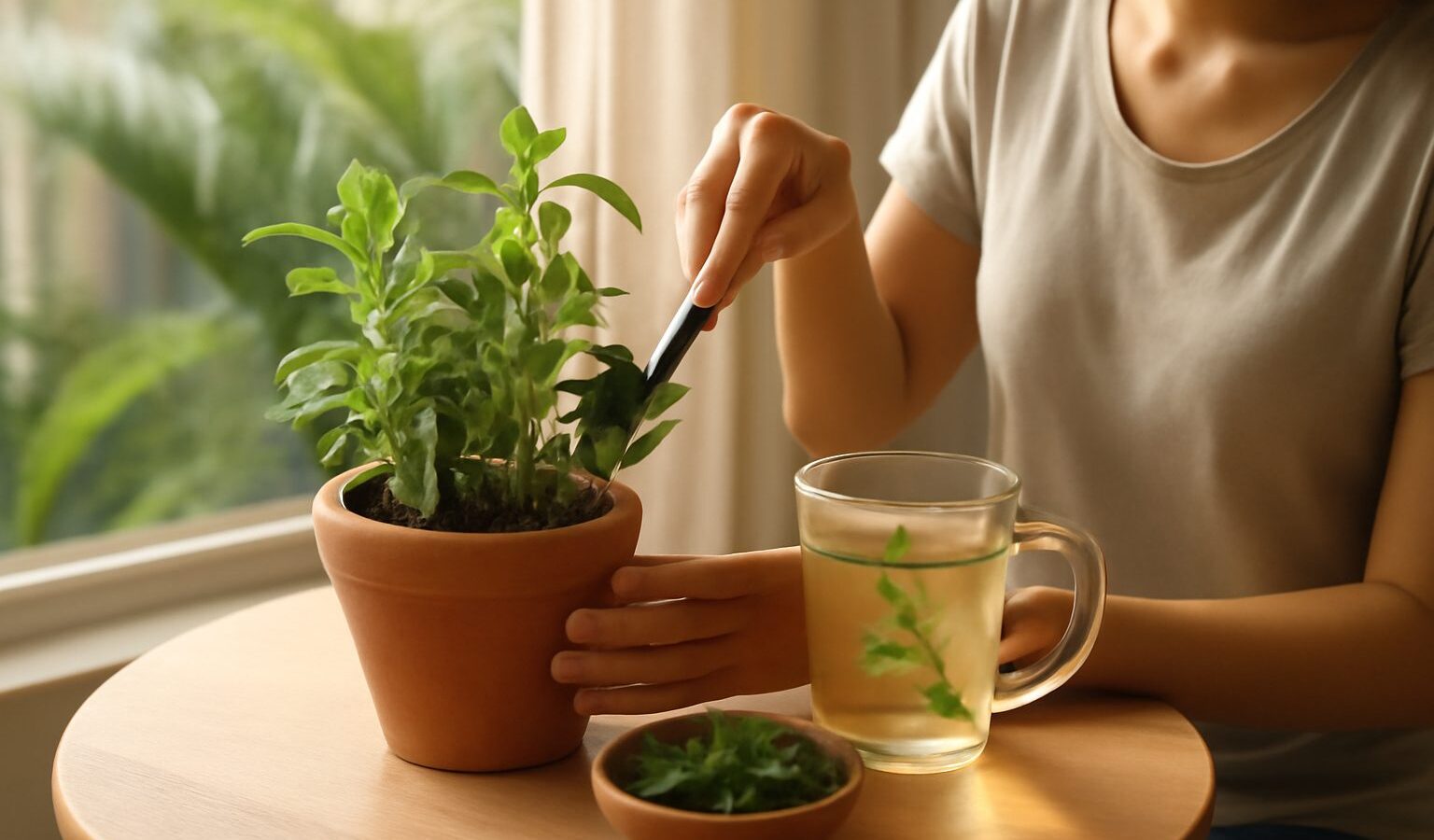
Stevia is a small, leafy herb with a naturally intense sweetness in its leaves, and it makes a fun, easy-going addition to a home herb collection. If you have been curious about growing stevia singapore style, in pots on a balcony or a bright windowsill, the good news is that this soft-stemmed plant adapts well to our warm, humid climate as long as you give it plenty of light and keep it from getting waterlogged.
This guide focuses purely on growing the plant well. Think of it as a pretty, useful herb to snip and enjoy, and treat any culinary use as you would any other kitchen herb.
Setting Up Your Stevia
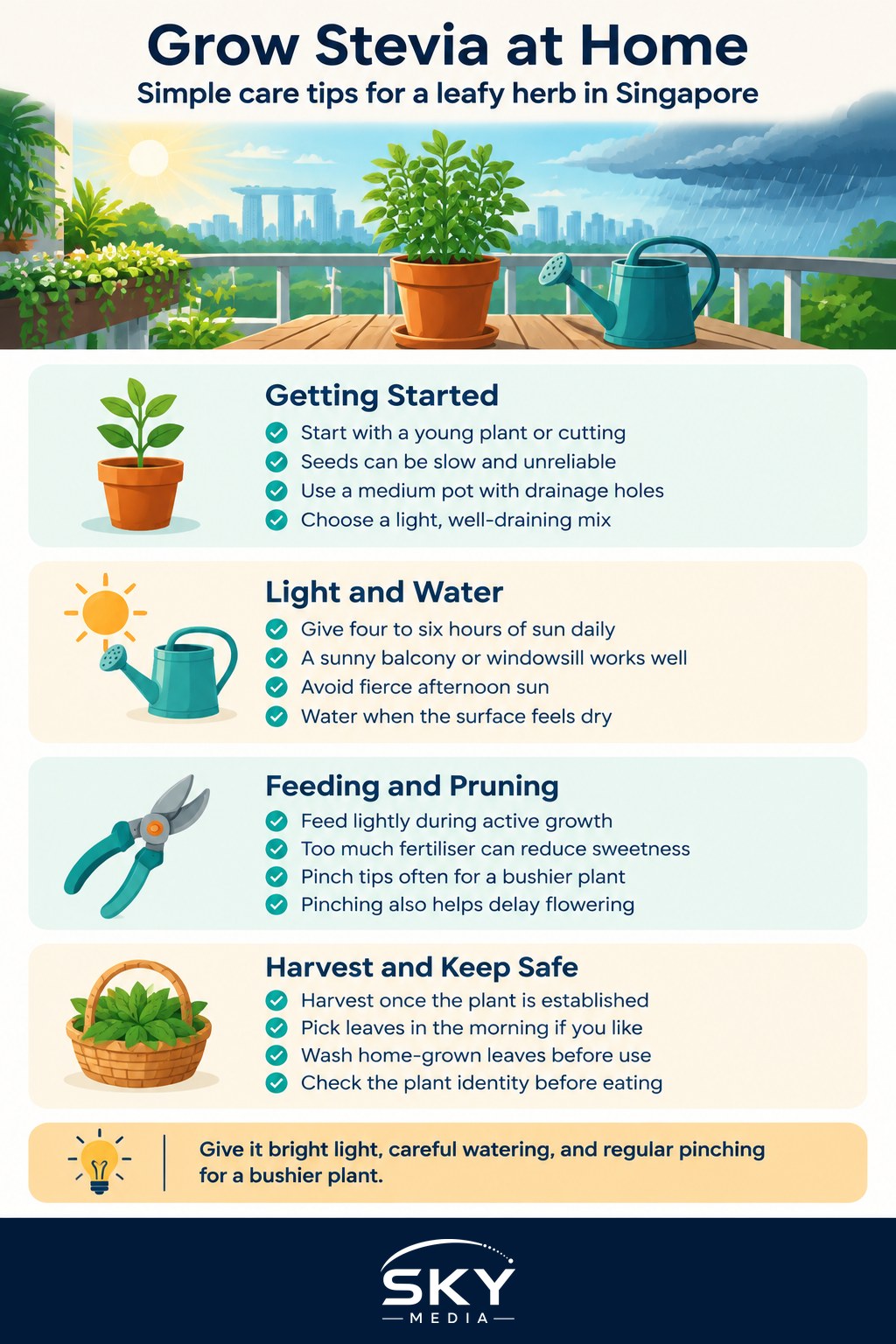
Most home growers start with a young plant or a cutting rather than seed, because stevia seed can be slow and unreliable to germinate. A healthy nursery seedling gets you off to a much faster start. If a gardening friend has an established plant, softwood cuttings root fairly readily, and our guide on how to propagate plants from cuttings walks you through the steps.
Stevia has a fairly shallow, spreading root system, so a medium pot around 20 to 25cm wide gives it room without holding too much wet soil. Good drainage holes are essential. Use a light, well draining potting mix, since stevia strongly dislikes sitting in soggy soil, which is a real risk with our frequent, heavy rain. If your mix feels dense, lighten it with some perlite or coarse sand.
Light is the biggest factor in getting sweet, flavourful leaves. Stevia wants bright conditions, ideally four to six hours of sun a day. A sunny balcony or a bright windowsill is perfect. In very fierce afternoon sun the leaves can scorch and the plant can wilt quickly, so a spot with strong morning light and lighter afternoon shade keeps it comfortable through our hottest months.
Caring for Stevia in the Tropics
Watering stevia is about consistency without excess. The plant likes evenly moist soil but will sulk or rot if it stays wet. Check the top of the soil daily in our heat, and water when the surface begins to feel dry, letting the excess drain freely. Wilting can mean the plant is either too dry or too wet, so always feel the soil before reaching for the watering can rather than watering on a fixed schedule.
Keep an eye on drainage saucers. Do not let water pool and stagnate underneath the pot, as standing water in saucers and trays is a breeding site for Aedes mosquitoes. Empty and scrub saucers regularly and follow NParks and NEA guidance on preventing mosquito breeding.
Stevia is not a heavy feeder. A light application of a balanced fertiliser, diluted as the label directs, during active growth is plenty. Too much feed, especially high-nitrogen feed, tends to produce lush leaves with less of the sweetness you are growing the plant for, so go gently and read the label.
The single most useful habit is regular pinching. Stevia naturally wants to grow tall, thin, and leggy, and if it flowers, leaf flavour tends to drop off. By pinching out the growing tips often, you encourage a bushier plant with more leafy stems and delay flowering. Our guide on pinching and topping for bushier plants covers the technique, and it makes a real difference with this herb.
Watch for soft-bodied pests such as aphids and the occasional whitefly, which like tender new growth. A firm spray of water or picking them off by hand usually handles small outbreaks. If you garden along a shared corridor, keep pots neat and check your town council rules, as explained in our guide to corridor gardening and HDB rules.
Harvesting and Using the Leaves
You can start harvesting once the plant is established and bushy, usually a few weeks after settling in. Snip stems in the morning and strip the leaves, or pinch individual leaves as you need them. Because pinching doubles as harvesting, a well-tended plant keeps producing steadily. If the plant does flower, harvest the leaves promptly, as flavour is best before and during early flowering.
Always wash home-grown leaves before use, just as you would any herb, and be sure of the plant’s identity before eating any part of it. Never eat an unknown plant or an ornamental look-alike. This article is about growing stevia, not about any health effect, so if you have questions about using stevia in your diet, check with a doctor or a reliable source rather than relying on gardening advice.
Growing stevia at home is a satisfying little project that rewards you with a tidy, leafy herb and a steady supply of fresh leaves to experiment with. Give it bright light, careful watering, and regular pinching, and pair it with more of the easiest edibles to grow in Singapore for a productive, low-fuss herb corner.
Frequently Asked Questions
Is stevia easy to grow from seed in Singapore? Not really, since stevia seed can be slow and unreliable to germinate. A healthy nursery seedling or a softwood cutting from an established plant gives a much faster start. Keep the young plant in bright light with a free-draining mix.
Why is my stevia plant wilting even though I water it? Wilting can mean the plant is too dry or too wet, so feel the soil before watering. Soggy soil from poor drainage or standing water in the saucer can rot the roots. Water only when the surface starts to dry.
Does stevia need to be pinched, and how often? Yes, regular pinching of the growing tips keeps it bushy and delays flowering, which can reduce leaf flavour. Pinch often rather than rarely. Pinched tips can double as your harvest.
Can I use fresh stevia leaves in place of sugar? Stevia leaves taste intensely sweet and can be used like a kitchen herb, but this is a gardening question beyond growing advice. For diet or health questions, such as diabetes, check with a doctor or dietitian. Wash home-grown leaves before use.
Can stevia be grown on a windowsill indoors? Yes, if the windowsill gets four to six hours of sun or very bright light. Weak light gives leggy, less flavourful growth. Use a pot with drainage holes.