
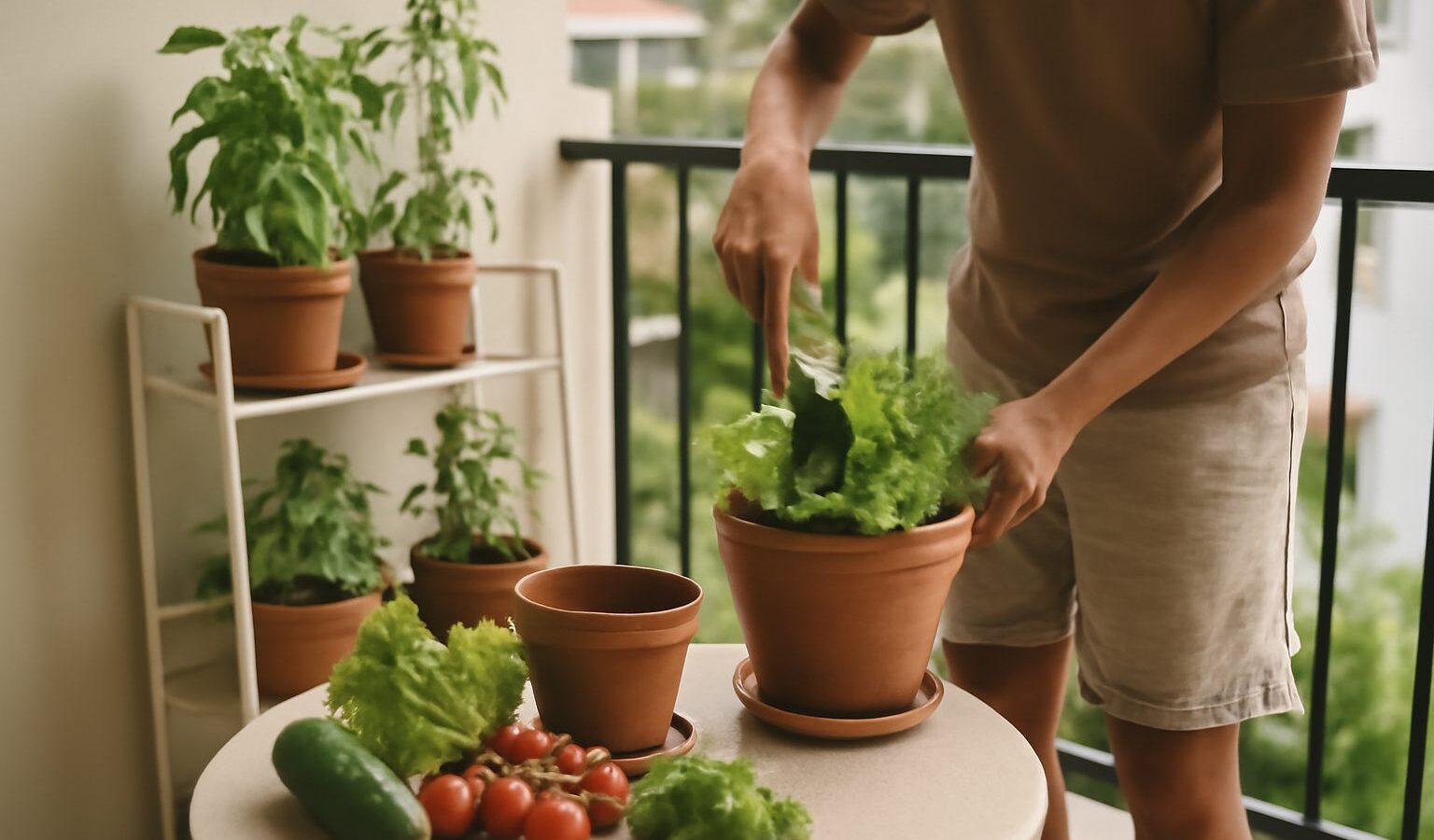
You do not need a garden, a green thumb or much money to grow something you can eat. To grow your own food singapore style is really about working with what you have: a sunny corridor, a balcony rail, a kitchen windowsill, and a climate that lets things grow all year. A pot of chilli, a tray of kang kong or a single thriving basil plant is enough to start, and it is genuinely rewarding to snip your own herbs into dinner.
This guide covers what grows well in our heat, how to handle the realities of tropical balcony gardening, and where to turn if your flat has no space at all. It is written for complete beginners, so start small and let your confidence grow with your plants.
What Grows Well in the Tropics
The good news is that our warmth suits many fast, forgiving edibles. These are the beginner-friendly picks that tend to reward first-timers:
- Herbs. Basil, mint, laksa leaf (daun kesum), pandan, curry leaf and Thai basil are hardy and useful. Mint and pandan are especially tough.
- Leafy greens. Kang kong (water spinach), cai xin, xiao bai cai and lettuce grow quickly and can be harvested young. Kang kong in particular is almost foolproof in the heat.
- Chilli. Chilli plants love the sun and, once established, can produce for a long time. A single plant can keep a household in bird’s eye chillies.
- Spring onion. You can regrow spring onion from the white root ends of ones you have bought, standing them in water or tucking them into soil.
- Others to try. Sweet potato leaves, ladies’ fingers (okra) and cherry tomatoes can do well for a keen beginner with enough sun.
Start with two or three of these rather than a whole balcony at once. Herbs and kang kong are the classic confidence-builders.
Here is a rough guide to how easy each is and how much room it needs.
| Crop | Ease for beginners | Space needed |
|---|---|---|
| Kang kong | Very easy | Small; a pot or trough |
| Herbs (mint, basil, pandan) | Very easy | Small; windowsill or rail pots |
| Spring onion | Very easy | Tiny; a cup or small pot |
| Leafy greens (cai xin, lettuce) | Easy | Small to medium trough |
| Chilli | Easy once established | Medium; a deeper pot |
| Cherry tomatoes | Moderate | Medium to large; needs strong sun |
Setting Up on an HDB Balcony or Corridor
Most home growing here happens in containers, which is perfect for flats. A few basics go a long way.
- Pots and containers. Almost anything with drainage holes works, from proper pots to recycled tubs. Leafy greens are happy in shallow troughs; chilli and tomatoes want something deeper for their roots. Make sure water can drain, or roots will rot.
- Light. This is the single biggest factor. Most edibles want several hours of direct sun a day. Observe where the sun actually falls on your balcony or corridor and put sun-lovers like chilli and tomato in the brightest spot; leafy greens and many herbs tolerate a bit less.
- Soil. A bag of quality potting mix is worth it. Garden soil alone tends to compact in pots. Mixing in your own compost, if you make it, gives plants a gentle boost.
Do keep neighbourliness and safety in mind on shared corridors: avoid blocking walkways, and secure pots on ledges so nothing can fall. When in doubt about corridor use, check with your Town Council.
Coping With Heat, Water and Pests
The tropics are generous but demanding. Three things trip up beginners most.
- Watering. In our heat, pots dry out fast, sometimes needing water once or even twice a day, especially small containers in full sun. Check by pushing a finger into the soil; water when the top feels dry. Early morning or evening is best. Self-watering pots or a tray of water can help during the day.
- Heat stress. Afternoon sun can scorch tender seedlings and greens. A little shade during the harshest hours, or positioning against the fierce west sun, keeps leafy crops from wilting and bolting.
- Pests. Caterpillars, aphids, snails and mealybugs all visit balcony gardens. Check under leaves regularly, pick off caterpillars by hand, and rinse aphids off with water. Encouraging healthy plants and not overcrowding pots prevents many problems without any sprays.
None of this needs to be perfect. Plants are resilient, and losing the occasional crop to a caterpillar is part of learning, not a failure.
Edible Gardening for Beginners, Cheaply
You can start a garden for very little. Regrow spring onion, kang kong stems and other kitchen offcuts in water before potting them on. Save seeds from a chilli or tomato you enjoyed, dry them, and try germinating them. Seed packets are inexpensive and go a long way, and many neighbours and community gardeners happily share cuttings and seedlings.
Beginners do best by keeping it simple: buy a bag of potting mix, a couple of pots, and a few seedlings or a seed packet of something easy like kang kong or basil. Water consistently, watch what happens, and expand only once something is thriving. Made-at-home compost is a great free input if you are already composting at home in Singapore, closing the loop from kitchen scraps to soil to salad.
No Space at Home? Grow With the Community
If your flat truly has no sunny spot, you still have options. NParks runs the Community in Bloom programme, which supports community gardens in many estates where residents grow ornamental and edible plants together. There are also allotment garden plots in various parks, where you can rent a raised bed and grow your own for a set period. These are wonderful for learning hands-on, sharing tips and meeting fellow growers, and they solve the space and sun problem in one go. Availability, plot schemes and how to apply can change, so check the current details with NParks.
Explore More
Growing food and gardening with others go hand in hand. If you want a plot or a green community near you, read our guide to community gardens and allotment gardening in Singapore, and to feed your plants for free from your own kitchen waste, see how to start composting at home in Singapore.