

Hanfu, the traditional clothing of the Han Chinese, has become a familiar sight in Singapore at Mid-Autumn lantern walks, Chinese New Year photo sessions, garden shoots and cultural events. If you want to try it, the first question is whether to rent or buy, and the second is which style to choose. This guide to hanfu rental in Singapore covers complete outfits, from how rental and studio packages usually work to buying your own set and understanding the main dynasty styles.
If you already have an outfit and are looking for hairpins, earrings or fans, see our separate guide on where to buy hanfu accessories in Singapore.
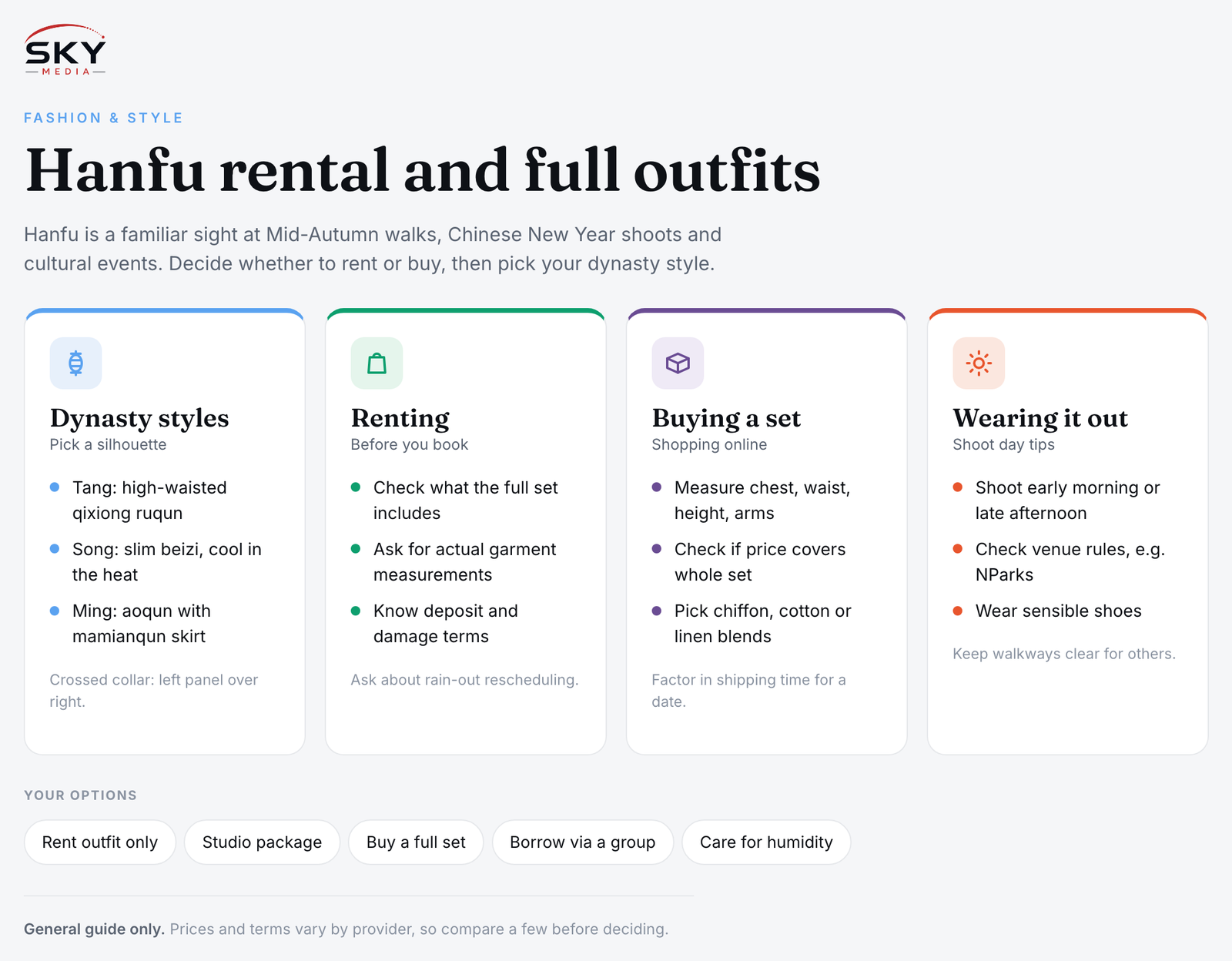
Understanding the Main Dynasty Styles
Modern hanfu is inspired by clothing from different periods of Chinese history. Each has a distinct silhouette, so knowing the basics helps you pick something you will feel good in.
- Han dynasty style. Long, wrapped robes such as the curved-hem quju (曲裾) and straight-hem zhiju (直裾). Elegant and understated, with a narrow, flowing shape.
- Wei and Jin style. Loose, airy layers with wide sleeves and a relaxed, scholarly feel. Popular for dreamy outdoor photos.
- Tang dynasty style. The high-waisted qixiong ruqun (齐胸襦裙), with the skirt tied above the chest, plus a light shawl called a pibo. Colourful, voluminous and very photogenic, though the high tie can feel unfamiliar at first.
- Song dynasty style. Slim, long open jackets called beizi (褙子) over a skirt or trousers. Light, simple and comfortable in Singapore’s heat.
- Ming dynasty style. Structured jackets (aoqun, 袄裙) or round-collared robes (yuanlingpao, 圆领袍) paired with the pleated horse-face skirt, mamianqun (马面裙). Rich fabrics and a dignified look that suits formal shoots and Chinese New Year.
Styles for men include long robes, round-collared robes and layered scholar looks. Many rental collections also include children’s sets, which are popular for family photos.
One detail to get right: on hanfu with a crossed collar, the left panel wraps over the right, so the collar forms a “y” shape when someone looks at you. Wrapping it the other way is traditionally associated with burial clothing, so double-check before you head out.
How Hanfu Rental Usually Works
You will find a few types of rental providers in Singapore:
- Photo studios with hanfu packages. These typically bundle outfit rental, hair styling, makeup and a photographer, either in-studio or at an outdoor location. Convenient if you want a polished result with minimal effort.
- Independent rental sellers. Small businesses and individuals rent out sets for a set number of days, often arranged through social media or online marketplaces. You collect or receive the outfit and dress yourself.
- Cultural societies and hanfu interest groups. Some community groups lend or rent outfits to members for events and festivals, and are a good way to meet others who enjoy hanfu.
Before you book any rental, check:
- What is included. A full set may include inner layers, skirt, outer robe and sash, but accessories and shoes are often separate.
- Sizes and measurements. Ask for the actual garment measurements, not just S, M or L.
- Deposit and damage terms. Find out how much is refundable and what counts as damage, especially for makeup stains on collars.
- Rental period and late fees, including whether delivery and return days count.
- Cleaning. Most providers handle cleaning, but some ask you not to wash items yourself.
- Cancellation and rescheduling policy, which matters for outdoor shoots that may be rained out.
Prices vary a lot depending on the provider, the outfit’s quality and what the package includes, so compare a few before deciding.
Renting vs Buying vs a Studio Package
| Option | Best for | Pros | Things to consider |
|---|---|---|---|
| Rent an outfit only | One-off festivals or casual shoots | Wide choice, no storage needed | You style yourself, deposits and return deadlines |
| Studio package | Polished photos with minimal effort | Hair, makeup and photography handled | Less flexibility on location and timing |
| Buy a full set | Regular events, festivals or hanfu hobby | Perfect fit, wear any time | Upfront cost, care and storage in humid weather |
| Borrow via a hanfu group | Trying hanfu with others | Social, often low cost | Limited sizes and styles, depends on availability |
Buying Your Own Complete Hanfu Set
If you find yourself wearing hanfu more than once or twice a year, owning a set can make sense. Many people buy from established online hanfu sellers, often based in mainland China, while some local shops and pop-up stalls at cultural events also sell sets.
Tips for buying online:
- Measure yourself carefully: chest, waist, height and arm length. Hanfu sizing often relies on height and chest measurement, and the charts can differ between sellers.
- Read the full listing. Check whether the price covers the whole set or just one piece. Sellers often list jackets, skirts and robes separately.
- Choose fabric for the climate. Chiffon, cotton and linen blends are cooler in Singapore than heavy brocade or velvet. Save the heavier Ming-style sets for air-conditioned events or evening shoots.
- Look at buyer photos where available, as studio images can differ from the real colour and fabric.
- Factor in shipping time and import charges if you need it for a specific date.
To care for your set in Singapore’s humidity, follow the care label, hand wash or dry clean delicate pieces, steam rather than iron embroidery, and store it in a breathable garment bag with silica gel or a dehumidifier to prevent mould.
Where and When to Wear Hanfu
Popular occasions include Chinese New Year, the Mid-Autumn Festival, hanfu gatherings marking traditional dates such as the Flower Festival (花朝节), weddings with a traditional theme, and cultural performances. Gardens, heritage streets and parks make attractive backdrops.
A few practical points:
- Plan for the heat. Shoot early in the morning or late afternoon, bring water and a small fan, and choose lighter layers.
- Check venue rules. Some venues require permission for professional photography or props. Check with the venue or the relevant authority, such as NParks for parks and gardens, before a larger shoot.
- Be considerate in public spaces. Keep walkways clear and be mindful of other visitors.
- Wear sensible shoes under long skirts, especially on uneven paths.
Whether you rent for a single festival or build your own wardrobe, hanfu is a lovely way to connect with Chinese heritage and create memorable photos. Start with a rental to find the style and fit you like, then buy once you know what suits you.
Explore more: Where to Buy Hanfu Accessories in Singapore, Hanfu Embroidery and Hairpiece Making in Singapore.
Frequently Asked Questions
Do I have to be Chinese to wear hanfu? No, anyone can wear hanfu as long as they do so respectfully. Rental studios and cultural events here welcome people of all backgrounds. It helps to learn the basics, such as how the collar is wrapped, so you wear the outfit in the traditional way.
Can I wear hanfu on the MRT or bus? Yes, you can, though long skirts and wide sleeves need some care. Gather the hem when boarding, mind escalators and doors, and avoid dragging fabrics on wet floors. Many people change at the shoot location, which keeps the outfit clean.
How early should I book a hanfu rental for a festival? Book as early as you can for popular dates such as Chinese New Year and the Mid-Autumn Festival, since sizes and favourite styles tend to go first. Confirm the pickup and return days, and ask about rescheduling in case an outdoor shoot is rained out.
How do I put on a rented hanfu without help? Start with the inner layers, then wrap the outer garment left over right, secure it with the sash or ties, and arrange the skirt and shawl last. Ask the provider for a guide or video, and practise once at home before the day.
Can couples or families wear matching hanfu? Yes, many people choose colours or styles from the same period so everyone looks coordinated in photos. Ask the rental provider about couple and family sets, including children’s sizes, and check that the number of pieces you need is available on your date.
Further reading: How to Dress for a Temple Wedding in Singapore