
A wedding invitation usually sends you looking for something festive and flattering. A wedding at a place of worship adds another layer: the outfit also needs to respect the space. Choosing a temple wedding outfit in Singapore means balancing two sets of expectations, the celebration and the sacred setting, and the good news is that with a few principles you can do both comfortably.
This guide covers what guests generally need to think about when a ceremony takes place at a Hindu temple, a Sikh gurdwara, a Buddhist or Chinese temple, or a similar religious site. Customs vary between communities, places of worship and individual families, so treat these as common practices rather than fixed rules, and ask the couple if anything is unclear.
Why a Temple Wedding Is Different From a Hotel Wedding
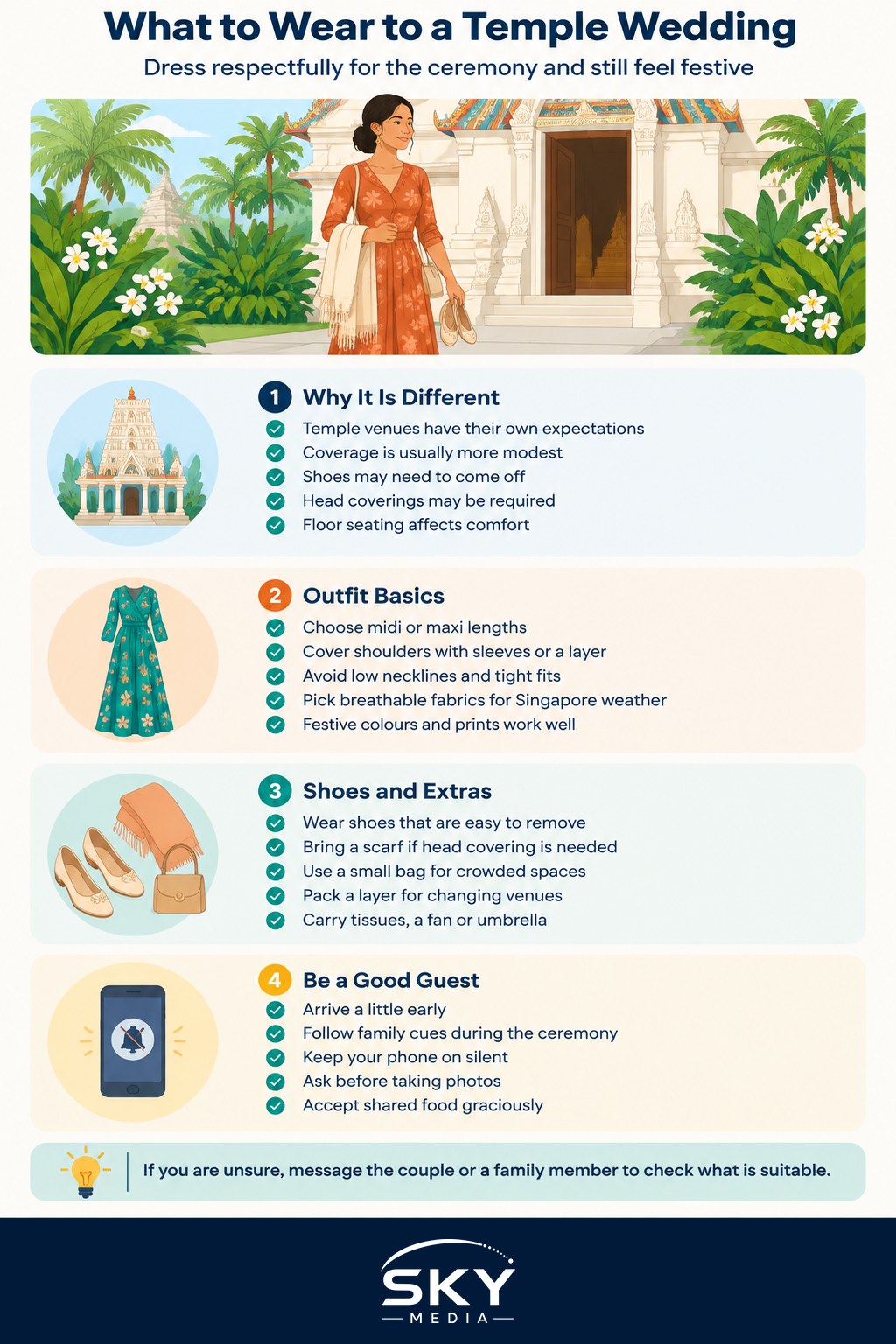
At a hotel banquet or garden reception, the dress code is set by the couple. At a place of worship, the space has its own expectations, and these apply to every visitor, including wedding guests. The typical differences are:
- More coverage. Shoulders, upper arms and knees are usually covered.
- Footwear removal. Many temples and gurdwaras ask visitors to remove shoes before entering prayer areas.
- Head coverings. Some places of worship, such as gurdwaras, ask everyone to cover their head.
- Floor seating. Ceremonies may involve sitting on the floor, which affects what is comfortable and modest.
- Colour meanings. Some colours carry particular meaning in certain traditions.
For the general rules on visiting religious sites, our guide to dressing for temples and religious sites is a helpful starting point. Here we focus on how those rules meet wedding guest style.
Quick Comparison by Type of Ceremony
The table gives common starting points. Always check with the couple or their family, because practices differ.
| Setting | Common expectations for guests | Outfit ideas |
|---|---|---|
| Hindu temple wedding | Modest coverage, shoes removed before entering, bright festive colours welcomed; some families prefer guests avoid all-black or all-white | Saree, salwar kameez or kurta; a modest maxi dress or long skirt with a sleeved top; men in kurta or a long-sleeved shirt and trousers |
| Sikh gurdwara wedding (Anand Karaj) | Head covered for everyone, shoes removed, floor seating, modest coverage | Salwar kameez with a scarf, a long dress with a light shawl; men in shirt and trousers with a head covering, often available at the venue |
| Buddhist or Chinese temple ceremony | Modest coverage, quiet conduct, shoes may be removed in some halls; many families prefer guests avoid all-black or all-white | Midi or maxi dress with sleeves, blouse and wide-leg trousers; men in a collared shirt and trousers |
| Church or other religious venue | Modest coverage, shoes kept on in most cases | Knee-length or longer dress with sleeves or a jacket; men in a shirt, often with a blazer |
If you are unsure about any detail, a polite message to the couple or a family member is always welcome. It shows care rather than ignorance.
Building the Outfit: Modest but Still Festive
A temple wedding outfit does not have to look plain. Aim for coverage in the cut, and celebration in the colour and fabric.
- Choose length. Midi and maxi skirts or dresses work well, especially for floor seating. Check that you can sit cross-legged comfortably.
- Cover the shoulders. Pick sleeves, or bring a shawl, dupatta or light jacket you can wear during the ceremony and remove later at the reception if appropriate.
- Mind the neckline and fit. Avoid very low necklines, sheer panels without lining and very tight cuts.
- Go for breathable fabrics. Singapore heat, crowded halls and limited air-conditioning in some spaces make cotton, linen blends and lightweight silks practical.
- Use colour well. Jewel tones, pastels and festive prints are usually a safe and joyful choice. Avoid outshining the couple, and if in doubt, skip colours associated with the bride’s outfit in that tradition.
- Keep accessories respectful. Jewellery is often welcome at festive weddings, but avoid noisy pieces that distract during prayers.
Men have it simpler, but the same principles apply: long trousers, a shirt with sleeves, and a traditional outfit such as a kurta if you have one and the hosts are comfortable with guests wearing it.
Shoes, Head Coverings and Other Practical Details
The small details often cause the most stress on the day.
- Footwear. If shoes come off, choose a pair that slips on and off easily. Clean, presentable feet matter, so consider a quick pedicure check or neat socks where appropriate. Avoid complicated straps.
- Head coverings. For a gurdwara wedding, bring a scarf large enough to cover your hair. Many gurdwaras provide coverings, but having your own that matches your outfit is a thoughtful touch.
- Bags. A small bag is easier to manage in a crowded hall and when sitting on the floor.
- Changing between venues. Many couples hold the ceremony at a place of worship and the reception elsewhere. A layer you can add or remove lets one outfit work for both.
- Heat and rain. Pack tissues, a small fan and a compact umbrella, especially if guests queue outdoors.
Wearing Traditional Dress From Another Culture
Guests are sometimes invited, or even encouraged, to wear traditional dress from the couple’s culture. This can be a lovely gesture when done respectfully:
- Follow the couple’s lead. If they suggest it, they will usually be happy to advise.
- Rent or buy from shops that specialise in that attire, and ask staff how it should be worn.
- Avoid items with specific religious or ceremonial meaning unless you have been told they are appropriate for guests.
- Wear it properly and comfortably rather than as a costume.
Our piece on traditional costumes and dress explains the main styles you will see across Singapore’s communities.
Behaving as a Welcome Guest in the Space
How you carry yourself matters as much as what you wear. Arrive a little early so you are not rushing through prayer areas. Follow the lead of family members on where to sit, when to stand and whether to join in any part of the ceremony. Keep your phone on silent, and check with the couple or the venue before taking photos, since some areas or moments may not allow photography. If food is served, such as a shared vegetarian meal at a gurdwara, accept it graciously and take only what you will finish.
Final Checklist Before You Leave Home
- Shoulders and knees covered, or a layer ready to cover them.
- Comfortable to sit on the floor if needed.
- Easy-to-remove shoes and presentable feet.
- Scarf for a head covering if the venue requires one.
- Colours that are festive and checked against any family preferences.
- Breathable fabric and a plan for the heat.
For broader guidance on wedding dress codes, see what to wear to a wedding in Singapore. With a little preparation, your temple wedding outfit can honour the couple, respect the place of worship and still feel like you.
Frequently Asked Questions
Can I wear black or white to a temple wedding? It is best to avoid all-black or all-white at many Hindu, Buddhist and Chinese temple weddings, as some families prefer guests do. Jewel tones, pastels and festive prints are usually a safe choice. Ask the couple or a family member if unsure.
Do I need to cover my head at a Sikh gurdwara wedding? Yes, everyone covers their head at a gurdwara, and shoes are removed. Many gurdwaras provide coverings, but bringing a scarf large enough to cover your hair that matches your outfit is a thoughtful touch.
What shoes are best when I have to take them off at a temple? Choose a pair that slips on and off easily and avoid complicated straps. Clean, presentable feet matter, so consider neat socks where appropriate. A small bag is also easier to manage in a crowded hall and when sitting on the floor.
Can guests wear traditional Indian or other cultural outfits to the wedding? It can be a lovely gesture if done respectfully. Follow the couple’s lead, buy or rent from shops that specialise in that attire, and ask how it should be worn. Avoid items with specific religious or ceremonial meaning unless guests are told they are appropriate.
Can I take photos during a temple wedding ceremony? Check with the couple or the venue first, since some areas or moments may not allow photography. Keep your phone on silent and follow family members’ lead on where to sit, when to stand and whether to join in any part of the ceremony.