
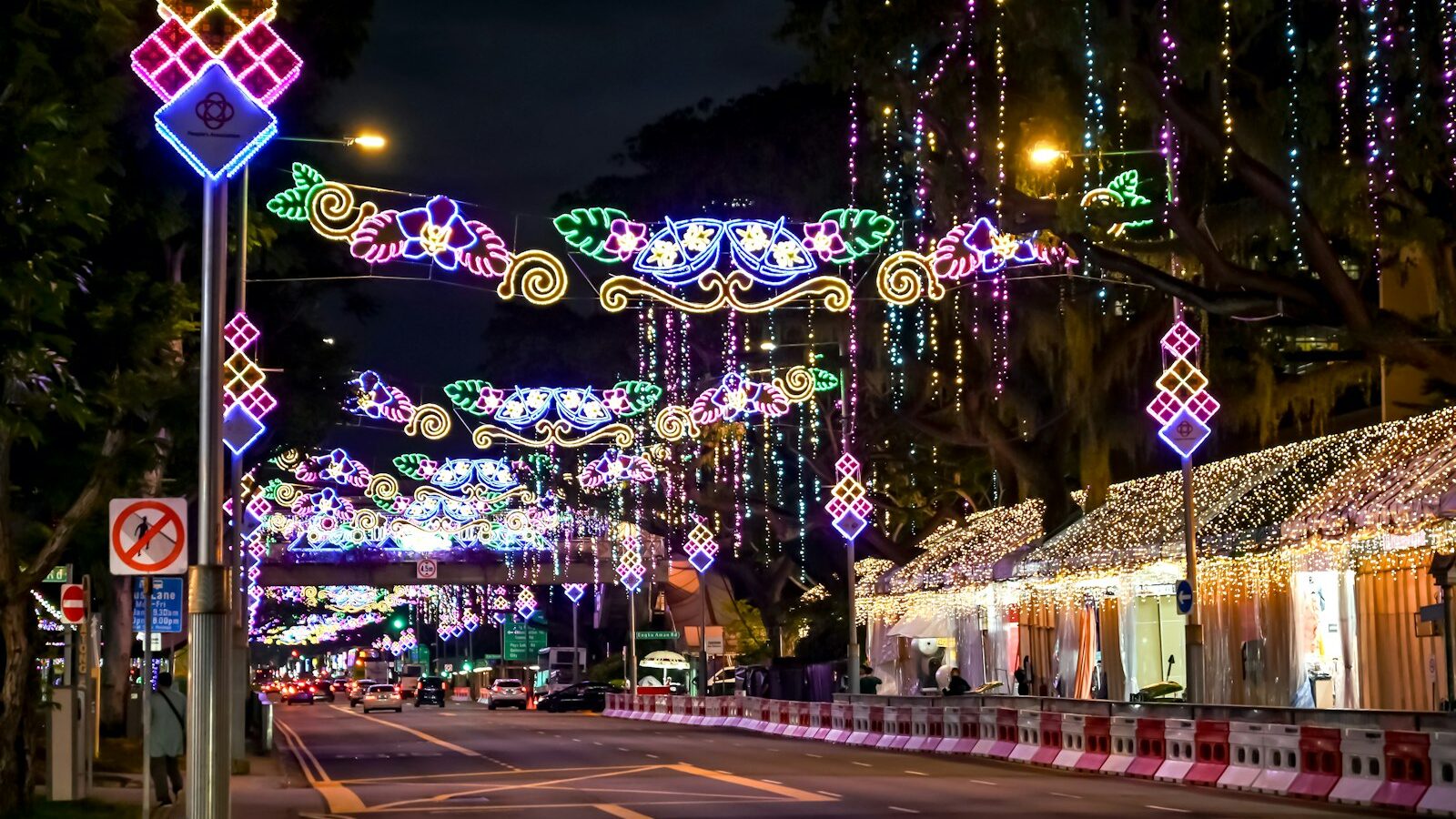
Fairy lights are the easiest way to make a flat feel festive, and in December you will see them wrapped around trees, windows, balcony railings and even corridor plants. Most of the time they cause no trouble at all. But cheap lights, overloaded power points and decorations left in shared corridors can turn a cheerful display into a fire risk. This guide covers Christmas lights safety for Singapore homes: what to buy, how to power your lights properly, and the rules that apply once your decorations leave your front door.
Buying Lights: Look for the Safety Mark
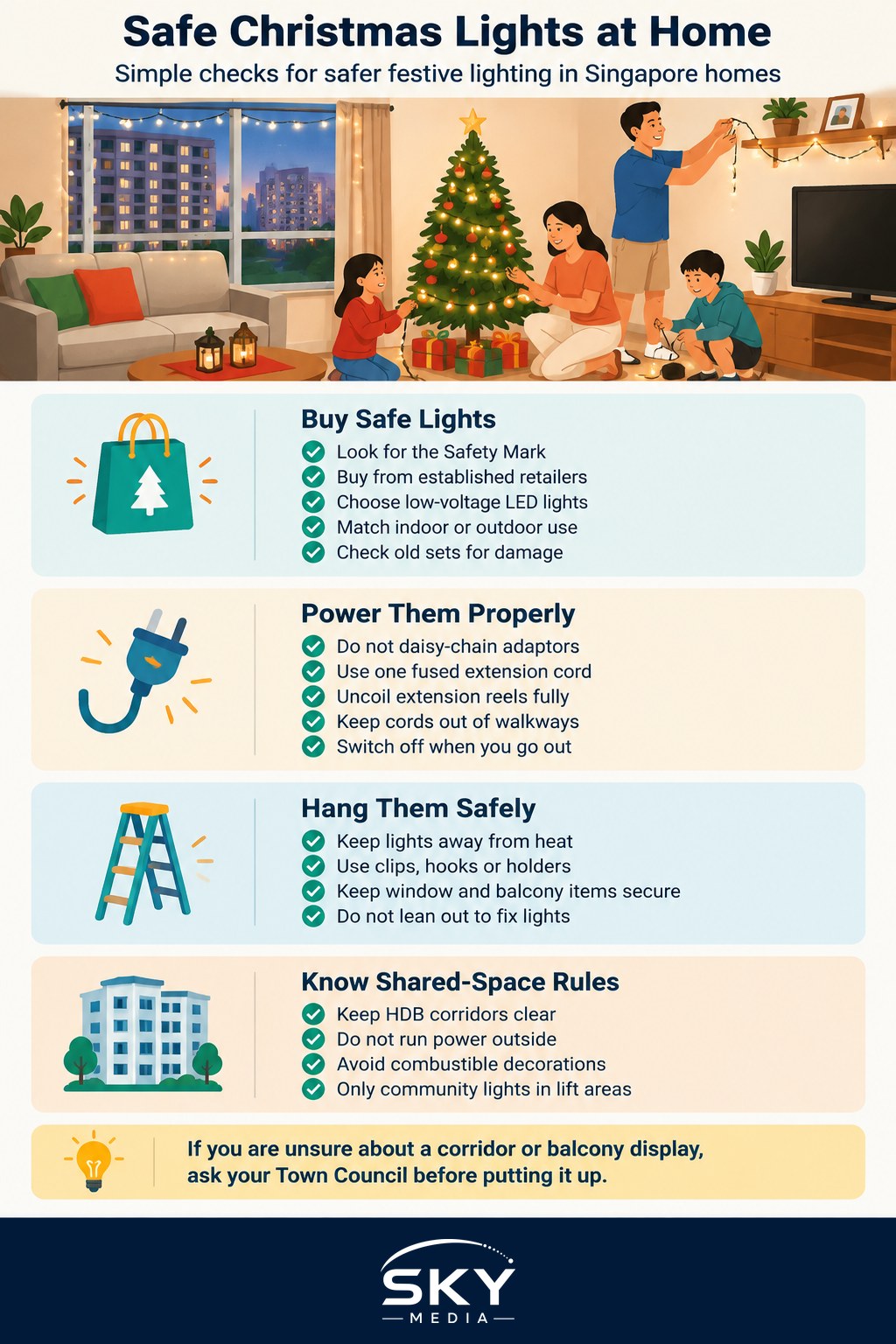
Start with the product itself. In Singapore, many household electrical products, including certain lighting and power accessories, are “controlled goods” that must carry the Safety Mark before they can be sold here. The scheme is run by the Consumer Product Safety Office under Enterprise Singapore, and the mark shows the product has been registered and tested against safety standards. You can read more in our guide to Safety Mark registration for electrical products.
When shopping:
- Buy from established retailers. Very cheap lights from overseas online marketplaces may not meet local standards, use poor-quality wiring, or come with plugs that do not fit Singapore’s three-pin sockets.
- Check the plug and adaptor. Avoid lights that need a travel adaptor to work. Adaptors that are loose or overloaded are a common source of overheating.
- Choose low-voltage LED lights where possible. LED fairy lights run much cooler than old incandescent bulbs and use less electricity. Battery-powered or USB-powered sets avoid mains wiring entirely for small displays.
- Match the light to the location. Lights meant for indoor use should not be used on a balcony or anywhere they could get wet. Check the packaging for an outdoor rating if you plan to use them outside.
- Inspect old sets every year. Before you hang last year’s lights, check for cracked or broken bulbs, frayed or pinched wires, and scorch marks near the plug. Throw away any damaged set rather than taping it up.
Powering Your Lights: Extension Cords and Power Points
Most Christmas-light problems come from how they are plugged in, not the lights themselves.
- Do not overload sockets. Plugging several multi-plug adaptors into one another, known as “daisy-chaining”, is a classic overload risk. Use one good-quality extension cord with a built-in fuse or overload protection instead.
- Uncoil extension reels fully. A coiled cable reel can heat up when carrying a load. Unwind it completely before use.
- Keep cords out of walkways. Running a cable across a doorway or under a rug creates a trip hazard and lets the wire get crushed over time.
- Do not staple or nail through wires. Use plastic clips, hooks or adhesive holders designed for light strings instead.
- Keep lights away from heat and fabric. Do not drape lights over curtains, paper decorations or near a stove, and keep them clear of beds and sofas.
- Switch off when you go out or sleep. A simple plug-in timer helps. Leaving lights running unattended all night for weeks adds risk with no real benefit.
Our guide to using extension cords and multi-plug adaptors safely covers this in more detail, including how to spot an adaptor that is getting too hot.
If your circuit trips when you switch the lights on, do not keep resetting it. A trip is your home’s protection doing its job. Unplug the decorations, then follow the steps in our guide to handling a tripped electrical circuit safely. If it keeps happening, call a licensed electrician.
Where You Can and Cannot Hang Lights
Inside your flat, you have plenty of freedom. Once you move into balconies, windows and corridors, the rules change because other residents and fire safety are involved.
| Location | What is generally fine | What to avoid |
|---|---|---|
| Inside the flat | Lights on trees, shelves, walls and windows, plugged into indoor sockets | Lights on curtains, under rugs, near heaters or cooking areas |
| Window grilles and inside window frames | Lightweight LED strings secured with clips | Anything that could fall outside the window or block window opening |
| Balcony or service yard | Outdoor-rated lights fixed firmly to the railing on the inside | Indoor lights exposed to rain, loose items that can be blown off |
| HDB common corridor | Keeping the corridor clear, with any small decoration checked against Town Council rules | Cables running from your flat, decorations blocking the escape path |
| Lift lobbies and void decks | Only community decorations organised by the Town Council or RC | Personal lights or wiring from your unit |
Two safety points matter most at height. First, anything attached to a window or balcony must be secure. In Singapore, items falling from high-rise flats are treated seriously, so never hang lights, hooks or ornaments on the outside of window frames or railings where they could drop. Second, do not lean out of windows or stand on chairs near open windows to fix lights.
HDB Corridor Rules and Fire Safety
HDB corridors are shared escape routes. In a fire, residents need to get out quickly and firefighters need clear access, which is why the Singapore Civil Defence Force (SCDF) and Town Councils take obstructions seriously.
General principles to follow:
- Keep the corridor clear. Decorations, plant stands or furniture should not narrow the walkway or block access to staircases, fire hose reels or other residents’ doors. Check your Town Council’s guidelines, which can differ, on what may be placed outside your unit.
- Do not run power outside your flat. Trailing an extension cord through your door or window to light up the corridor creates both a trip hazard and an electrical risk in a shared space. Plugging into common-area power points is generally not allowed.
- Avoid combustible materials outside. Paper and plastic decorations, large fabric items and cardboard displays add fuel to any fire in the corridor.
- Respect your neighbours. Bright, flashing lights pointed into a neighbour’s window can cause friction. A quick chat before you decorate keeps things friendly.
If you want a festive corridor, battery-powered lights on a small, secure display that sits fully within your own doorway area are a safer choice, provided your Town Council allows it. If you are unsure, ask your Town Council before you put anything up, rather than waiting for a complaint or a notice to remove it.
Fire Safety Checks for the Festive Season
Make December a good time to check your home’s fire safety in general.
- Test your fire alarm. All newer HDB flats have a home fire alarm device, and older flats benefit from one too. Press the test button to make sure it works; our guide to home fire alarm devices in HDB flats explains the rules and how to choose one.
- Keep a small fire extinguisher handy and know how to use it, especially if you host gatherings with candles or cooking.
- Never leave candles burning near lights or decorations, and blow them out before you leave a room.
- Know what to do in an emergency. If wiring sparks or smokes, switch off at the main switch if it is safe to do so, and call 995 for SCDF if there is a fire. Do not throw water on an electrical fire.
Taking Lights Down After the Season
When the festive season ends, take lights down gently rather than yanking them off. Wind each string around a piece of cardboard to stop tangles, store them in a dry box, and throw away any set that has stopped working properly. A little care now means next year’s display starts safely.
Christmas lights safety comes down to good products, sensible wiring and respecting shared spaces. Get those right and your home can sparkle all December without any drama.