
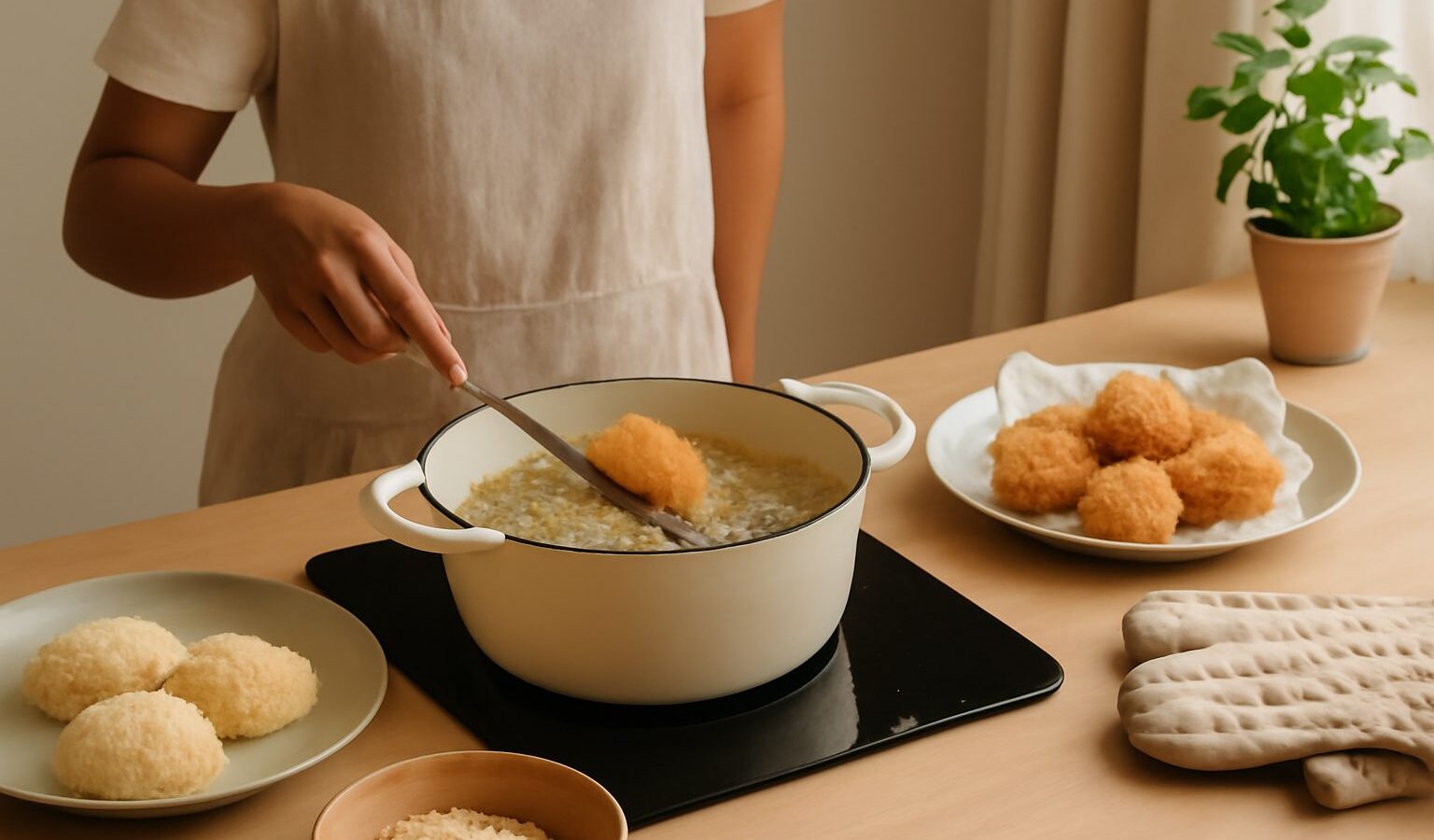
Crispy fried chicken, golden ngoh hiang, prawn fritters, hot banana goreng straight from the pan: these are some of the best things to eat, and you can make them at home. But deep frying at home in Singapore is the one kitchen skill where safety comes before flavour, every single time. Hot oil is not something to be casual about. The good news is that with a few firm habits, home frying is completely manageable, even in a small HDB kitchen.
Before we talk about crisp and colour, we talk about not getting hurt and not starting a fire. Read this part properly.
Fire safety comes first, always
Please treat these as non-negotiable rules, not suggestions. The Singapore Civil Defence Force publishes basic fire-safety guidance, and these points align with it.
- Never leave hot oil unattended. Not to answer the phone, not to check your messages, not for a minute. Oil heats fast and can reach its smoke point and then its flash point quickly. If you must step away, turn off the heat.
- Never put water on an oil fire. Water hits the hot oil, flashes to steam, and throws burning oil everywhere, turning a small fire into a fireball. This is the most dangerous mistake people make.
- If oil catches fire, smother it. Turn off the heat and slide a metal lid or a baking tray over the pan to cut off the air. Keep a well-fitting lid within arm’s reach every time you fry, so it is already there if you need it.
- Dry your food before it goes in. Water and ice crystals hit hot oil and cause violent spitting and splatter. Pat everything dry with kitchen paper first, and lower food in gently, away from you.
- Keep the area clear. No loose sleeves, no kitchen towels near the flame, no children or pets underfoot, and a clear path away from the stove.
Keep a phone nearby to call for help, and know where your fire escape is. If a fire ever grows beyond something a lid can cover, get everyone out and call the emergency line. Nothing you are frying is worth your safety.
Setting up your oil and temperature
You do not need a deep fryer. A deep, heavy pot or wok works well because the depth keeps oil from bubbling over. Fill it no more than halfway; oil rises when food goes in, and an overfull pot is a spill and fire risk.
Use an oil with a high smoke point. Neutral oils common on our supermarket shelves, such as vegetable, canola, peanut or rice bran oil, all handle frying heat. Avoid oils meant for finishing.
Temperature is everything for both safety and crispness. Most deep frying happens between 160 and 190 degrees Celsius. Too cold and food drinks up oil and turns greasy; too hot and the outside burns before the inside cooks, and the oil edges toward danger.
- A clip-on kitchen thermometer is the reliable way to know your temperature.
- No thermometer? Dip a wooden chopstick in: steady little bubbles around it means the oil is roughly ready. Or drop in a small cube of bread; it should turn golden in under a minute.
- Fry in small batches. Crowding the pot drops the temperature, and everything steams instead of crisping.
Getting food crisp, not greasy
Once safety is handled, technique gives you that shatter-crisp result. A few things make the difference between soggy and glorious.
Dry surfaces fry best, so pat marinated meat and drain battered items just before they go in. A light coating helps: cornflour or a thin batter gives a crunchier finish than plain flour. Let battered food rest a moment so the coating grips.
Keep the oil temperature steady by frying in batches and letting it recover between them. When food goes in, the reading drops; wait for it to climb back before adding more. Lift food out when it is golden and let it drain on a rack set over a tray, which keeps the underside crisp better than paper alone.
For anything with a raw centre, like chicken pieces or fritters with meat, colour is not the same as cooked. Deep golden outside can still hide a raw middle if the oil was too hot. For thicker pieces, a two-stage approach works: fry at a lower heat to cook through, rest, then a quick hot second fry to crisp. Cook poultry all the way through; use a thermometer or cut into the thickest part to check the juices run clear.
What to do with used oil
This is where many home cooks go wrong, and it matters for both your pipes and your safety. Let the oil cool completely in the pot before you touch it. Hot oil poured too soon causes burns.
Never pour oil down the sink or toilet. It congeals, clogs your drains, and causes blockages in the building’s pipes. Instead, once fully cool, pour it into a sealable container or the original bottle and put it in the rubbish. Some town areas and supermarkets have used-oil recycling points; look out for them.
Frying oil can often be reused a few times if it stayed clean. Strain the cooled oil through a fine sieve to remove crumbs, store it in a sealed container away from light, and use it again for similar foods. Toss it out once it darkens, smells off, or foams a lot when heated.
| Doneness cue | What it tells you | What to do |
|---|---|---|
| Steady small bubbles on a chopstick | Oil near frying temperature | Start frying a test piece |
| Food sinks and sits still | Oil too cold | Wait, then heat a little more |
| Rapid dark browning | Oil too hot | Turn heat down, let it settle |
| Golden and floating, bubbles slowing | Likely cooked through | Lift out, drain, check thick pieces |
| Oil smoking in the pot | Dangerously hot | Turn off heat, let it cool, do not add food |
Small-kitchen realities
In a compact HDB kitchen, ventilation and splatter are real concerns. Fry near your exhaust hood or an open window, wipe up any oil on the floor immediately so no one slips, and give yourself a clear counter beside the stove for landing hot food. A splatter screen over the pot keeps your walls and arms cleaner without trapping steam.
Start with something forgiving like prawn crackers or firm tofu to build confidence, then work up to chicken. Respect the oil, keep that lid handy, and home frying becomes a safe, satisfying part of your cooking.
Explore more
Frying pairs beautifully with the rest of your home cooking. Serve your crispy results over fluffy stove-top rice, or master the wok control you will also use for stir-frying at home. When you want that same golden colour with less oil, learn how to cook vegetables so they taste good.