

If you are planning to buy an HDB flat, the HDB Flat Eligibility letter, usually shortened to the HFE letter, is where the journey now begins. It is the single assessment that tells you what you can and cannot do before you shop for a home. The HFE letter replaced the older Housing Loan Eligibility (HLE) letter and the separate flat-eligibility checks, folding them into one application. This guide explains what the HFE letter covers, who needs it, and how it fits into buying a flat. It is general information, and you should confirm your own eligibility with HDB.
What the HFE Letter Actually Tells You
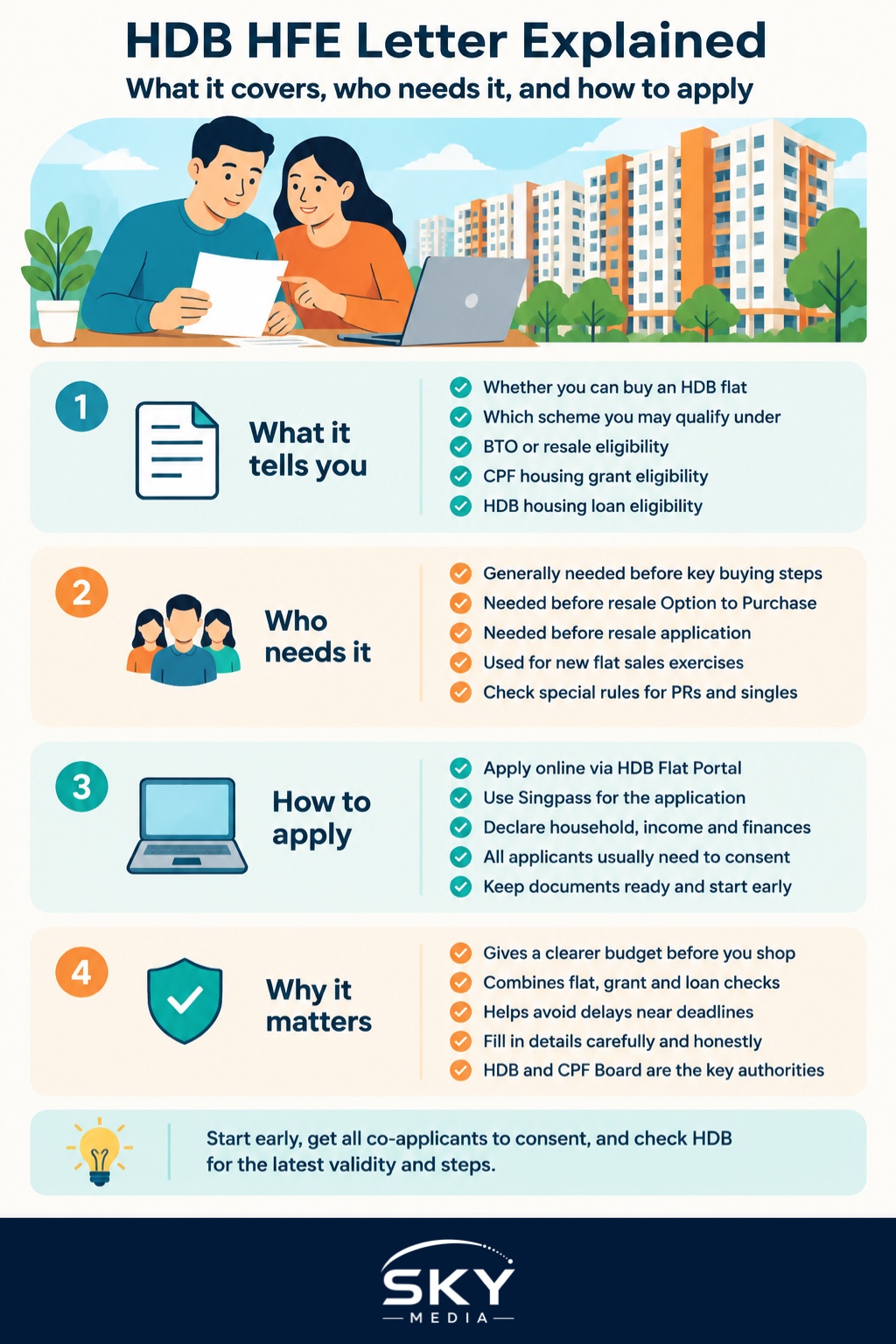
The HFE letter is a consolidated confirmation of your housing position at the time you apply. In broad terms, it sets out several things in one place so you can plan with confidence.
- Whether you are eligible to buy an HDB flat, and under which scheme, based on your household and circumstances.
- Whether you can buy a new (BTO) flat or a resale flat, since the eligibility conditions differ.
- Your eligibility for CPF housing grants, which affects how much help you may receive.
- Your eligibility for an HDB housing loan, including an indication of the loan amount you may take, if you qualify for an HDB loan rather than a bank loan.
Because it brings the flat, grant and loan questions together, the HFE letter gives you a realistic budget before you commit to anything. The specific grant amounts, income ceilings and loan limits are set by HDB and the CPF Board and change over time, so treat the letter as your personal, current answer rather than relying on figures you read elsewhere.
Who Needs an HFE Letter, and When
You generally need a valid HFE letter before you take key steps in buying a flat, whether new or resale. For a resale purchase, you typically need it before you can be granted an Option to Purchase and before you submit the resale application. For a new flat, it supports your application under the relevant sales exercise.
Eligibility is not the same for everyone. Citizen and Permanent Resident households are treated differently, and some schemes have specific conditions on citizenship, age, family nucleus and income. If your household includes a PR, or you are buying under a scheme for singles or for families, do not assume the general rule applies to you. The HFE application is precisely where HDB assesses your situation, so let the letter give you the definitive answer for your case.
How the Application Works
The HFE letter is applied for online through the HDB Flat Portal using Singpass. In outline, the process asks you to confirm your household members, declare income and financial details, and consent to the checks HDB needs to make. Everyone in the application usually has to log in with their own Singpass to give consent, which is why it helps to line up your co-applicants early.
A few practical points:
- Have your documents ready. Income and employment details, and information about anyone in your household, speed things up.
- Everyone must consent. Co-applicants and essential occupiers typically need to log in and agree, so coordinate timing.
- It takes processing time. Do not leave it to the last minute before an Option to Purchase deadline. Start early.
- It has a validity period. An HFE letter is valid for a limited time. If it lapses before you buy, you may need to reapply, so check the current validity on the HDB website.
Because the exact steps, timelines and validity can be updated, the HDB website is the authority. Use this guide to understand the shape of the process, then follow HDB’s current instructions.
HFE Letter Compared With the Old Documents
If you or your family bought a flat a few years ago, you may remember different documents. The table below shows how the HFE letter consolidates what used to be separate.
| Item | Old approach | With the HFE letter |
|---|---|---|
| Flat purchase eligibility | Assessed separately | Included in one HFE assessment |
| CPF housing grant eligibility | Checked on its own | Indicated within the HFE letter |
| HDB loan eligibility | Separate HLE letter | Incorporated into the HFE letter |
| Where you apply | Multiple touchpoints | One online application via the HDB Flat Portal |
The practical benefit is fewer separate applications and a clearer, single picture of your eligibility and budget before you start viewing flats.
Why Getting It Right Matters
The HFE letter is not a formality to rush through. It determines your budget, your grant help and your loan path, so mistakes or missing consent can stall your purchase at an inconvenient moment, especially when a resale Option to Purchase has a ticking deadline. Fill it in carefully and honestly, since it relies on your declarations.
For anything beyond the general shape of the process, defer to the right bodies. HDB is the authority on flat eligibility, HDB loans and the application itself. The CPF Board is the authority on CPF housing grants and CPF usage. If you plan to take a bank loan instead of an HDB loan, a mortgage banker can advise on that, and a conveyancing lawyer handles the legal side of a resale purchase. If an agent is helping you, they must be CEA-registered, which you can verify on the CEA Public Register.
Start your HFE application early, get every co-applicant to consent, and treat the letter as your personal green light. With it in hand, you can shop for a flat knowing what you can realistically afford and which grants and loans you qualify for.
Explore more
Once your HFE letter confirms you are ready, our guide to the HDB resale buying process walks through the next steps, and our explainer on the Enhanced CPF Housing Grant shows how grant help fits in. If you may later move up, see upgrading from an HDB flat to a condo for the bigger picture.
Related across Sky Media: Renovating Your HDB Flat: A Guide · How to Exercise in a Small HDB Flat
Frequently Asked Questions
Do I need an HFE letter if I plan to take a bank loan? Generally you still need one to buy an HDB flat, since it confirms your flat eligibility and grant position, not just loan eligibility. It also indicates whether you qualify for an HDB loan or a bank loan. Check the current requirements on the HDB website.
Can I apply for an HFE letter before I find a flat? Yes, and it is a sensible first step because it gives you a realistic budget before you start viewing. Applying early also avoids delays when a resale Option to Purchase deadline is running. Have your Singpass and co-applicants ready, then follow the steps on the HDB Flat Portal.
What can I do if my HFE application shows I am not eligible? Read the reasons given and check them with HDB, since eligibility depends on your household, income and citizenship. Circumstances can change, such as income or household composition, so you may be able to apply again later. HDB can explain which schemes might suit your situation.
Can singles or couples with a PR spouse apply for an HFE letter? Eligibility differs by household type. Singles and mixed citizen-PR households are treated under their own conditions, which can cover age, citizenship, income and flat type. The HFE application is where HDB assesses your case, so use it and the HDB website for a definite answer.
What happens if my HFE letter expires before I buy a flat? You may need to reapply, and your circumstances will be assessed afresh. That is why it helps to time the application close to when you actually plan to buy. Check the current validity period on the HDB website rather than relying on a figure from an article.
Official sources: HDB
Further reading: Second-Timer HDB Buyers: Eligibility, Grants and Rules