
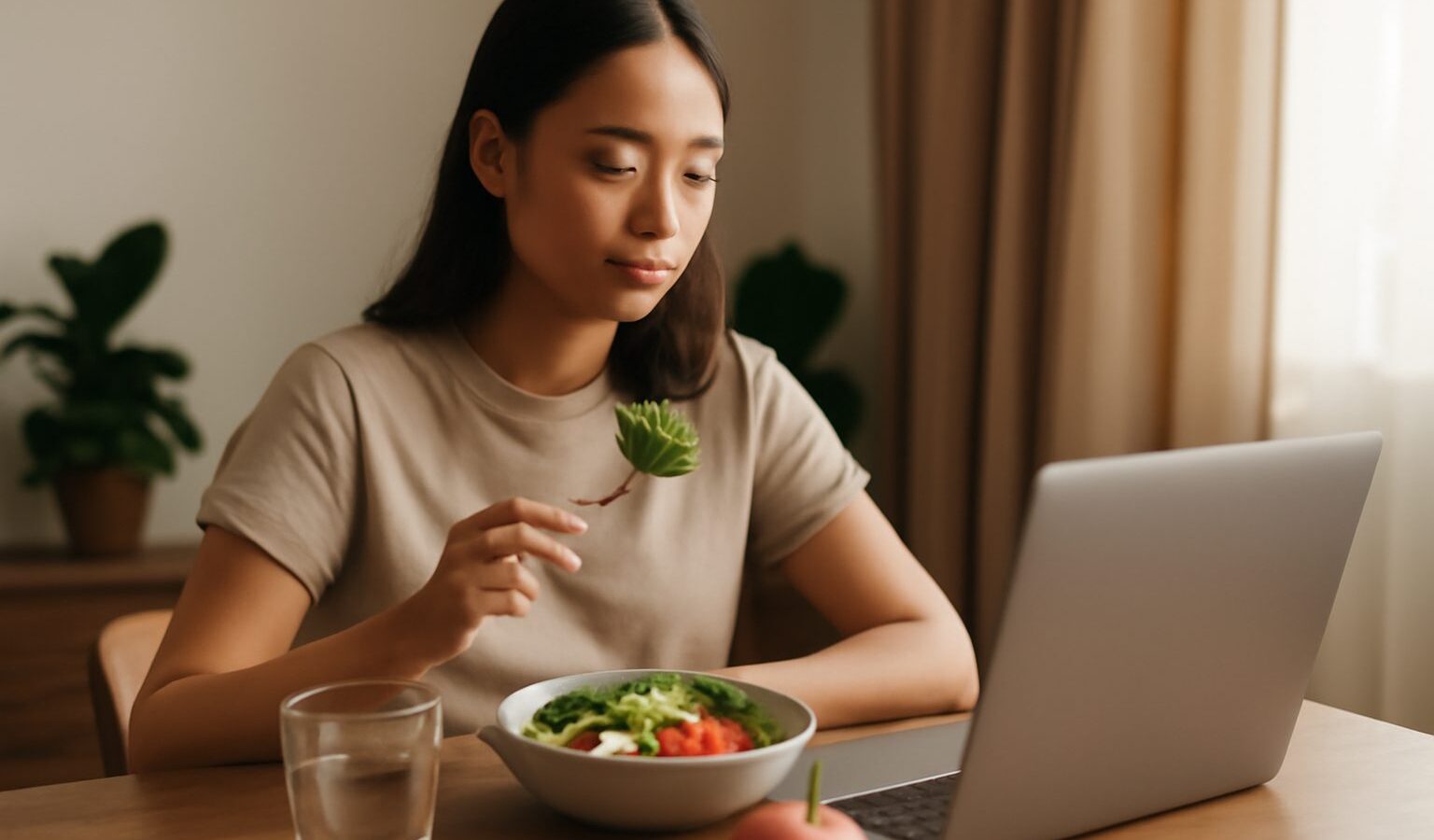
Working from home changes your whole relationship with food. The kitchen is a few steps away, the fridge is open all day, and there is no lunch buddy to pull you out for a proper meal. For some people this is a gift, a chance to cook fresh and eat calmly. For others it becomes a slow drift into all-day grazing, skipped meals and a delivery habit. Healthy eating working from home is less about strict rules and more about setting up your day so good choices are the easy ones.
A quick note before we start: this is general information, not medical or dietitian advice. If you have a health condition, a food allergy or intolerance, or you are thinking about a major change to your diet, please talk to your doctor or an accredited dietitian for guidance suited to you.
How Home Changes the Way You Eat
At the office, your eating had built-in structure: a set lunch break, a walk to the hawker centre, colleagues who nudged you to stop. At home, none of that scaffolding exists. Two patterns tend to appear.
The first is constant snacking. With the pantry within reach and stress or boredom close behind, it is easy to nibble through the afternoon without ever sitting down to eat. The second is the opposite: you get absorbed in work, skip lunch entirely, then arrive at evening ravenous and order the heaviest thing on the app. Both leave you running on unstable energy.
Naming your own pattern is the first step. Once you know whether you are a grazer or a skipper, you can set up the small guardrails that keep your day steady.
Winning the Snacking Game
Snacking itself is not the enemy. Mindless, all-day snacking on salty and sugary foods is. A few adjustments make a big difference:
- Keep tempting foods out of sight. You reach for what is easy to see. Store biscuits and chips in a high cupboard, and keep fruit, yoghurt and nuts at the front of the fridge and on the counter.
- Decide snacks in advance. Portion a handful of nuts or cut some fruit in the morning rather than eating straight from the packet at your desk, where it is easy to lose track.
- Check if you are actually hungry. Home snacking is often really thirst, boredom or a break in disguise. In the tropical heat it is easy to mistake mild dehydration for hunger, so try a glass of water first.
- Pick snacks that satisfy. Pair something with protein or fibre so it holds you, rather than a quick sugar hit that leaves you hungry again soon after. Healthy snacking ideas goes deeper here.
The goal is to make snacking a small, deliberate choice instead of a background activity that runs all day.
Building WFH Meals That Fuel Your Work
The biggest advantage of being home is that you can eat real meals on your own terms. Use it. A simple, repeatable structure beats a fancy plan you will abandon by Wednesday.
- Anchor the day with breakfast. A proper first meal steadies your energy and cuts the odds of mid-morning grazing, so keep a few fast options ready.
- Give lunch a real slot. Block fifteen minutes in your calendar and step away from the screen. Even a quick assembled plate counts if you actually sit and eat it.
- Cook once, eat twice. Make a little extra at dinner so lunch is sorted with no effort. This is where a small amount of planning pays off, and healthy meal planning for the week shows how.
- Build a balanced plate. Aim to fill most of your plate with vegetables and wholegrains, add a palm-sized portion of protein, and keep it colourful. The Health Promotion Board’s My Healthy Plate is a useful mental picture, without needing to weigh or count anything.
Being home also means the delivery app is always one tap away. It has its place on a busy day, but leaning on it daily gets expensive and often heavy. Our guide to eating healthily with food delivery helps you order better when you do.
Home Cooking Versus Delivery on a Work Day
When lunch rolls around, most WFH days come down to a quick choice between what is in your kitchen and what is on the app. Here is how they stack up.
| Lunch approach | Typical effort | Where it shines | Watch out for |
|---|---|---|---|
| Quick home-assembled meal | Low, about 10 minutes | Cheap, controls portions and salt, uses up what you have | Needs a few staples on hand |
| Reheated leftovers | Very low | Almost no effort, no waste, meal already balanced | Relies on cooking a little extra earlier |
| Food delivery | Lowest in the moment | Handy on your busiest days, wide variety | Adds up in cost; easy to over-order and pick heavy dishes |
Read down the “watch out for” column and the pattern is clear: a tiny bit of preparation, a couple of staples or last night’s leftovers, is what keeps you off the app on autopilot. Save delivery for the genuinely slammed days rather than the default.
Routines That Keep You Steady All Day
Food is only half of it. The rhythm of your day shapes how you eat just as much:
- Stay hydrated. Keep a water bottle at your desk. In our climate, with the aircon on, it is easy to under-drink and then mistake that for hunger. Plain water, tea or kopi with less sugar all count more than another sweet canned drink.
- Take real breaks. Step outside or stretch instead of turning every pause into a snack run. Movement also helps your energy far more than another coffee.
- Set a stop time for the kitchen. Late-night grazing while you finish work can creep in fast. A soft cut-off for eating helps, and it supports better sleep too.
- Protect your afternoon energy. If the 3pm slump hits hard, look at whether lunch had enough protein and fibre, and whether you are simply tired rather than hungry. How to eat for steady energy covers this in detail.
The Bottom Line
Healthy eating working from home comes down to structure, not strict rules. Name your pattern, tame the snacking by keeping better foods in reach, give your meals real slots in the day, and use delivery as a backup rather than a default. Where you want trustworthy general guidance, Singapore’s Health Promotion Board and the HealthHub site, along with the My Healthy Plate idea and the Healthier Choice Symbol, are solid references. For advice matched to your own health, a doctor or an accredited dietitian is always the right person to ask.