
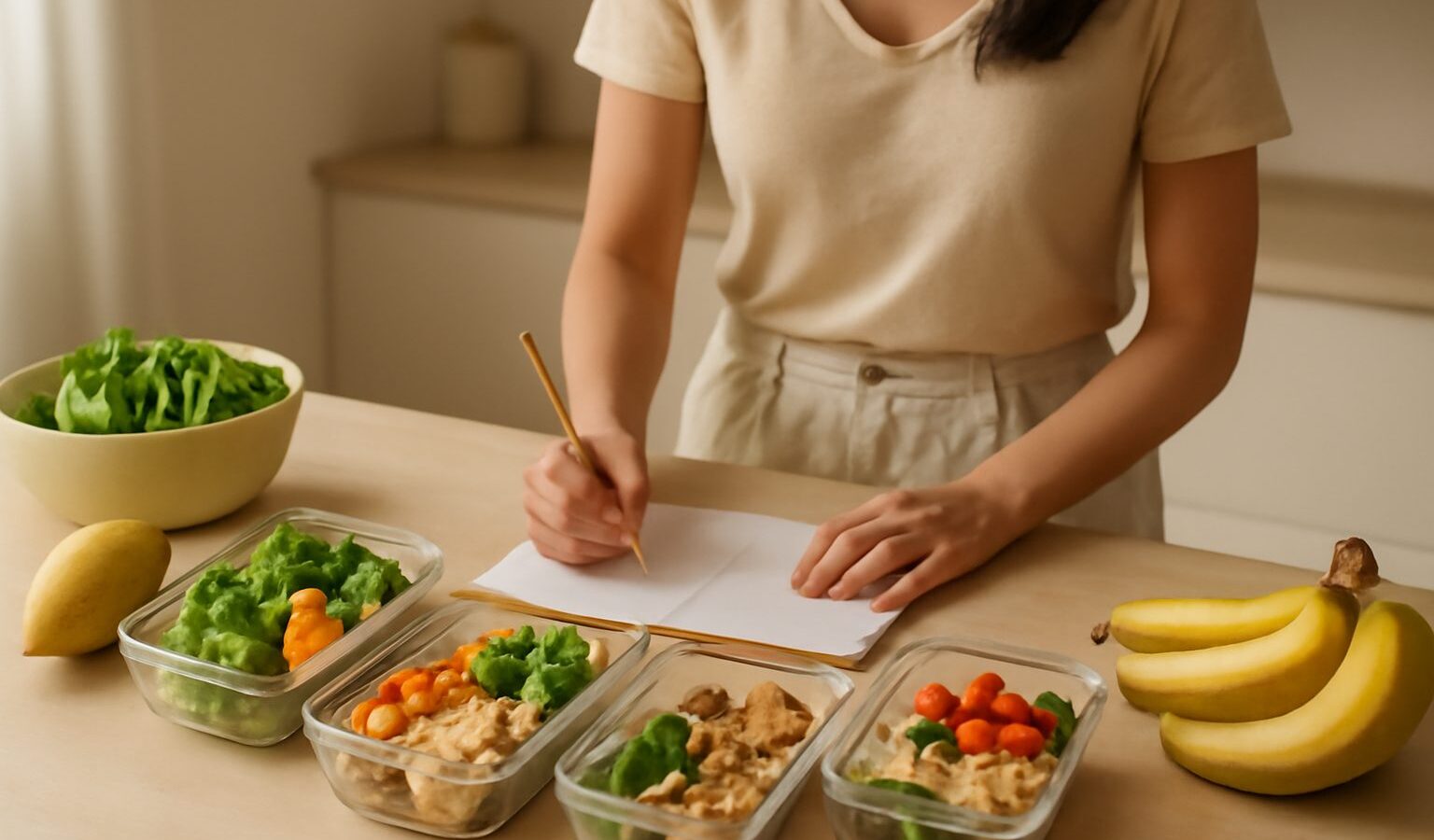
By Wednesday, willpower is thin. The 7pm question, “what’s for dinner?”, is when good intentions quietly collapse into a delivery order or instant noodles. Healthy meal planning is simply moving that decision to a calmer moment, so your tired evening self only has to follow a plan, not invent one.
Done well, a weekly plan saves time, saves money, cuts food waste and takes real pressure off the week. It does not require a colour-coded spreadsheet or cooking every meal from scratch. This is general information for everyday eating, not medical or dietitian advice; for a condition, an allergy, a pregnancy or a major change, see your doctor or an accredited dietitian.
Start With Your Real Week, Not An Ideal One
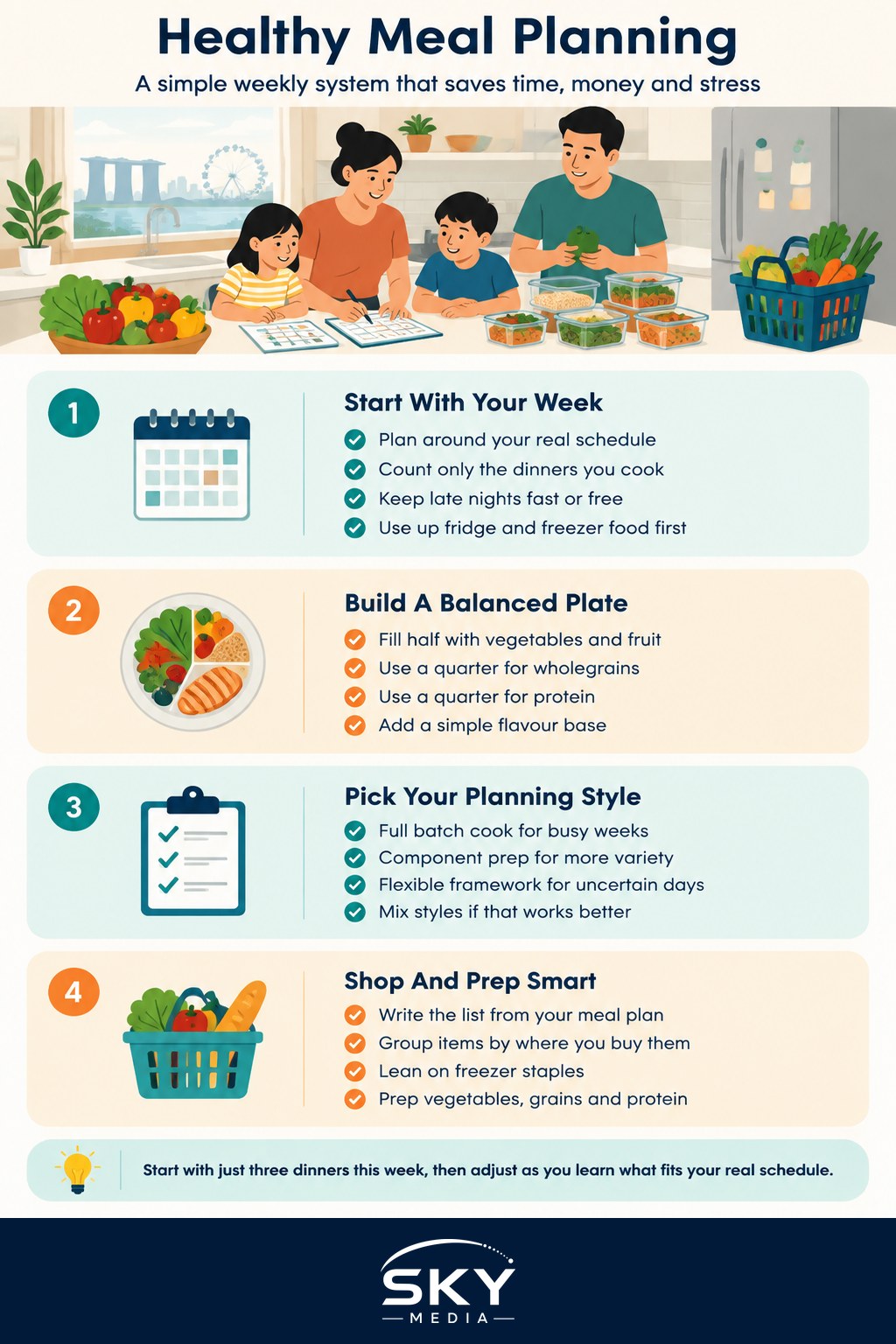
The most common reason meal plans fail is that they are built for a fantasy week rather than your actual one. Before choosing a single recipe, look honestly at the days ahead.
- How many dinners will you truly cook at home? If it is three or four, plan for that. Pretending it is seven guarantees waste and guilt.
- Which nights are late or unpredictable? Those are your slots for something fast, or an honest night off to eat out or order in.
- Who are you feeding, and are there leftovers to carry into lunch the next day?
- What is already in the fridge and freezer that should be used up first?
Planning around your genuine schedule is the whole game. If your week is genuinely packed, the companion guide on healthy eating when you have no time pairs well with a lighter plan.
Build A Balanced Plate, The Singapore Way
You do not need to count anything to plan balanced meals. A useful shortcut is the idea behind Singapore’s My Healthy Plate: fill about half your plate with vegetables and fruit, a quarter with wholegrains or other staples like brown rice or wholemeal noodles, and a quarter with protein such as fish, tofu, eggs, chicken or beans.
Plan each meal by picking one from each column:
- A protein: fish, chicken, tofu, tempeh, eggs, dhal or beans.
- A wholegrain or staple: brown rice, wholemeal bread, oats, or noodles.
- Vegetables: whatever is fresh and affordable that week, ideally two types.
- A flavour base: garlic, ginger, chilli, herbs, a splash of soy or a curry paste.
Mix and match and a handful of ingredients becomes a week of different dinners. Aiming for a couple of vegetables at most meals also nudges you towards getting your five a day of fruits and vegetables without extra effort.
Choose A Planning Style That Suits You
There is no single correct method. The best plan is the one you will actually keep. Here is how three common approaches compare, so you can pick one honestly.
| Approach | Best for | The catch |
|---|---|---|
| Full batch cook | Busy weeks, one free hour on the weekend | Can feel repetitive by Thursday |
| Component prep | People who want variety and flexibility | Needs a little assembly each night |
| Flexible framework | Unpredictable schedules, frequent eating out | Requires quick decisions on the day |
Full batch cooking means making large portions of a few dishes and reheating through the week. Component prep means cooking building blocks, cooked grains, roasted vegetables, a protein or two, then combining them into different meals each night. A flexible framework simply sets a loose theme per day, such as a noodle night or a soup night, and fills in details later.
Many people blend styles: batch one or two anchor dishes, keep a few components ready, and leave two nights deliberately open. If your past attempts have fizzled out, it is worth scanning the common meal prep mistakes to avoid before you start again.
Turn The Plan Into One Smart Shop
A plan and a shop belong together. Once your meals are sketched out, write the grocery list straight from them, grouped by where you buy, so you are not making three separate trips.
- Shop once where you can. A single weekend run to the wet market and a supermarket top-up covers most households.
- List by meal, then by aisle, so nothing essential is forgotten and nothing random sneaks in.
- Lean on freezer staples, such as frozen vegetables, fish and portioned proteins, as a buffer for nights when plans change.
- Do not over-buy fresh produce in the tropical heat, which tires greens fast; buy to match the meals you will really cook.
Getting this step right is half the battle, and the detailed healthy grocery shopping tips guide walks through labels, value and the wet-market-versus-supermarket question in full.
Prep Once, Coast Through The Week
A modest block of prep on your shopping day pays off every evening after. You do not need hours. Even twenty to thirty minutes changes the week.
- Wash and cut vegetables so they are ready to cook, not a chore waiting behind clingfilm.
- Cook a batch of a grain like brown rice, and portion it for the fridge or freezer.
- Prepare one or two proteins, marinated, boiled or roasted, ready to reheat or toss into a dish.
- Portion snacks and fruit into grab-and-go containers so the easy choice is the healthy one.
- Cook once, eat twice. Deliberate leftovers become the next day’s lunch for work with no extra effort.
In a compact HDB kitchen, store prepped food in clear containers at eye level. Food you can see is food you will actually eat before it spoils.
Keep It Flexible And Forgiving
A plan is a helpful guide, not a contract. Life in Singapore is full of last-minute suppers, colleague lunches and hawker cravings, and a good plan bends around them instead of breaking.
- Build in an “anything” night, when you finish leftovers, raid the freezer, or happily eat out.
- Let meals swap around. If Tuesday’s plan suits Thursday better, move it.
- Plan for eating out, not around it. Enjoying char kway teow or a family dinner is part of a normal, balanced week, not a failure.
- Do not aim for perfect. A plan followed most of the time beats a strict one abandoned by midweek.
Start small. Plan just three dinners this week rather than overhauling everything at once. As the habit settles, extend it. Over time, healthy meal planning stops feeling like admin and becomes the quiet system that makes eating well the path of least resistance, even on your busiest days.
Remember this is general guidance for everyday healthy eating. For advice tailored to a medical condition, an allergy or intolerance, a pregnancy, or a significant dietary change, please consult your doctor or an accredited dietitian.
Further reading: Meal Replacement Shakes Explained