

A first part-time job, a holiday role or an internship is a milestone moment for a teenager, and it often starts with two things that feel daunting: writing a resume and sitting an interview. Putting together a teen resume in Singapore can feel tricky when your child has little formal work history, and a first interview can be genuinely nerve-wracking. This is a wonderful chance for you to guide from the sidelines. Your role is not to do it for them, but to coach, encourage and help them present the real, capable young person they already are. Done well, these skills serve them for life.
Building a first resume from scratch
The biggest worry teens have is that they have nothing to put down. In truth, they have more than they think. A first resume is about showing potential, character and transferable skills, not a long career. Help your teen brainstorm everything they have done, then shape it into something clear and honest.
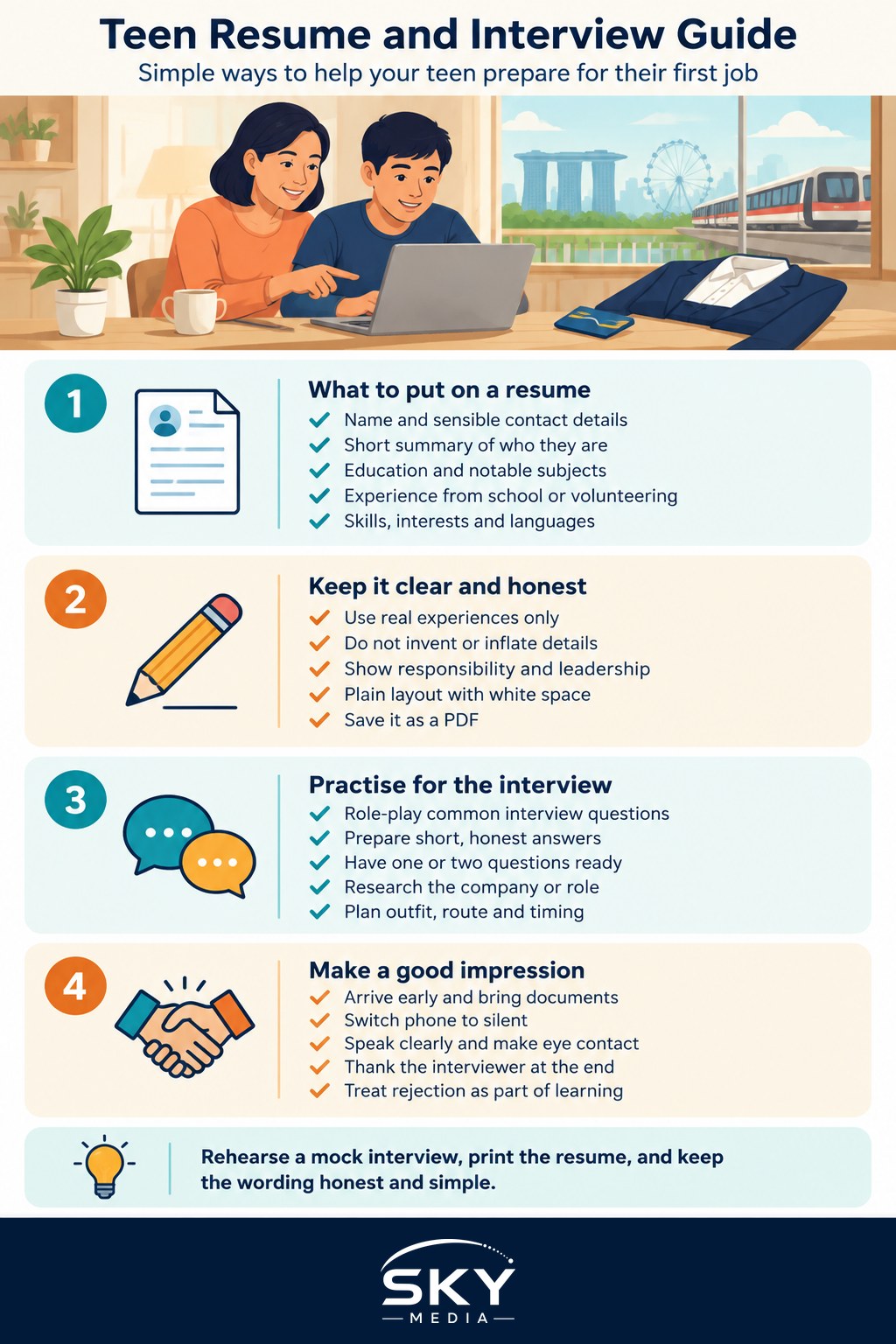
A simple, one-page resume for a teenager usually includes:
- Name and contact details at the top, using a sensible email address rather than a childhood nickname.
- A short personal summary, two or three lines describing who they are and what they are looking for.
- Education, listing their current school and level, along with any notable subjects or achievements.
- Experience, which can include volunteering, school projects, co-curricular activities, leadership roles, helping at a family business or any informal work.
- Skills, such as languages spoken, computer skills, or being reliable and good with people.
- Interests, kept brief, which can hint at their personality and give an interviewer something to ask about.
Encourage honesty above all. Never inflate or invent anything, because it tends to unravel in the interview. Instead, help your teen describe real experiences with a little more confidence. Babysitting a younger sibling shows responsibility. Captaining a team shows leadership. Serving in a school event shows they can handle people and pressure.
Keep the design plain and easy to read, with consistent formatting, no spelling mistakes and plenty of white space. Save it as a PDF so it looks the same on any screen. Ask your teen to tailor the summary slightly for each role rather than sending the exact same document everywhere. Learning to write clearly and organise information neatly is part of building your child’s independence and life skills, and it will serve them well beyond this first job.
Preparing for the interview
Once a resume lands an interview, preparation is what turns nerves into confidence. The single most useful thing you can do is a practice run. Sit down and role-play a mock interview, asking the sorts of questions a real employer might, then give kind, specific feedback. Doing this a couple of times makes the real thing feel familiar rather than frightening.
Help your teen prepare answers to common questions such as why they want the job, what they are good at, how they handle working with others, and a time they overcame a difficulty. Encourage short, honest answers backed by a real example rather than memorised speeches. It also helps them to prepare one or two questions of their own to ask at the end, which shows genuine interest.
Cover the practical basics too, because these calm the nerves:
- Research the company or role a little beforehand, so they can speak to why they applied.
- Plan the outfit in advance, aiming for neat and appropriate rather than fancy.
- Work out the route and timing on public transport, and aim to arrive early. If your teen is still finding their feet getting around independently, teaching your teen to travel independently is a useful companion read.
- Bring a printed copy of the resume and any documents requested.
- Practise a friendly greeting, a firm but comfortable handshake or polite nod, and remembering to make eye contact.
Remind your teen that an interview is a two-way conversation, not an interrogation. The employer wants to see who they are, not to catch them out. A little nervousness is completely normal and even shows they care.
Building confidence and handling the outcome
Confidence for a first interview comes from preparation and perspective. Reassure your teen that they do not need to be perfect. Employers hiring young people expect some inexperience and are often looking mainly for a good attitude, reliability and willingness to learn. Being polite, punctual, honest and keen counts for a great deal.
Coach them on the small things that leave a good impression: arriving early, switching the phone to silent, listening carefully, speaking clearly rather than mumbling, and thanking the interviewer at the end. A short, polite follow-up message thanking them for their time is a nice touch that many young applicants forget.
It is just as important to prepare your teen for the possibility of rejection. Not getting the job is a normal part of the process and not a verdict on their worth. If it happens, help them see it as practice and encourage them to ask for feedback where possible. Each attempt builds skill and resilience. Framing setbacks this way links closely to building resilience and grit in your child, which matters far more in the long run than any single interview. Celebrate their courage in trying, whatever the result.
A practical wrap-up
Helping your teen with a resume and first interview is one of the more rewarding parts of parenting a young adult, and your calm coaching makes a real difference. Help them see the value in what they have already done, keep the resume honest and tidy, and rehearse the interview until it feels manageable. Cover the practical details, prepare them gently for any outcome, and let them own the process. Whatever happens with this first job, the skills and confidence they gain will carry them into every application to come.
Frequently Asked Questions
What jobs can a teenager apply for with no experience? Teens commonly look at part-time or holiday roles in retail, food and beverage, tuition assistance or events, where attitude counts for more than experience. Rules on the minimum working age and hours apply, so check the latest requirements with MOM before applying, and make sure school commitments come first.
How should a teen answer the question about their weaknesses? Pick a real, modest weakness and show what they are doing about it. For example, being nervous speaking up, and how they have started practising in class. Avoid fake answers like working too hard. Employers value honesty and willingness to improve, especially from first-time applicants.
What should a teen wear to a first interview? Neat, clean and comfortable is the aim, not fancy. A collared shirt or simple blouse with tidy trousers or a skirt and closed shoes suits most roles. Match the dress to the workplace if you know it, and plan the outfit the day before to remove one source of stress.
Should a teen include a photo on the resume? It is not usually necessary, and many employers do not expect one for a first job. A clean, clear layout with contact details, education, activities and skills matters more. If an employer asks for a photo, use a plain, tidy one rather than a casual snapshot.
Is it okay to ask about pay in a first interview? Yes, it is reasonable to ask politely, ideally once the employer has shown interest or brought the topic up. Keep the tone curious rather than demanding, and also ask about hours and duties. Make sure you understand the terms before accepting, and ask a parent to look through any contract.